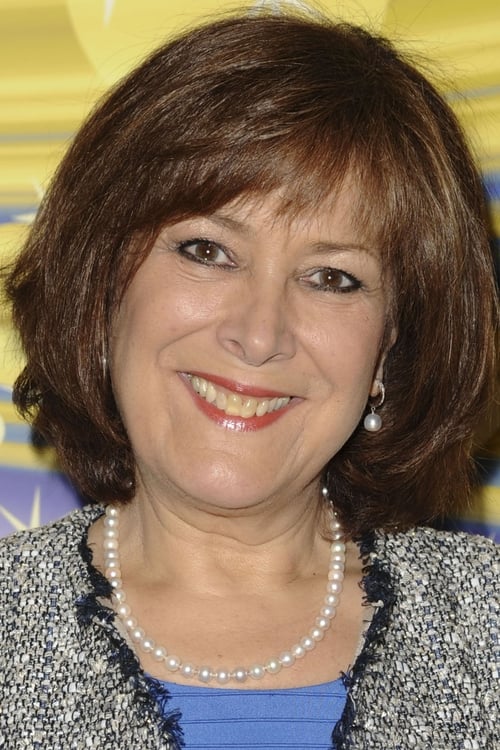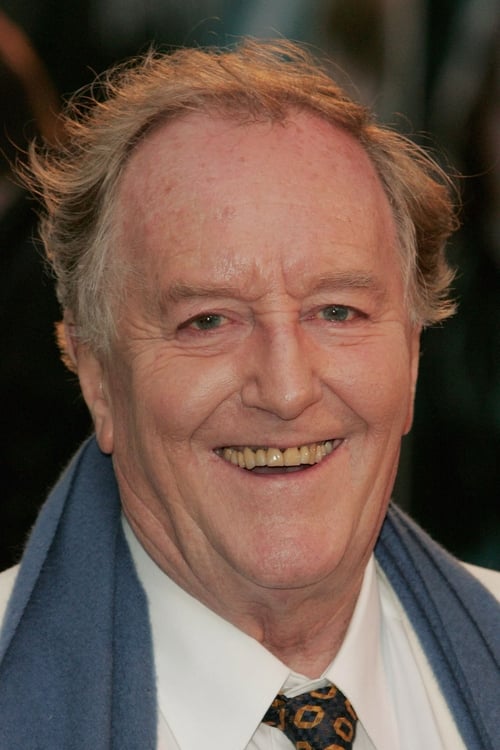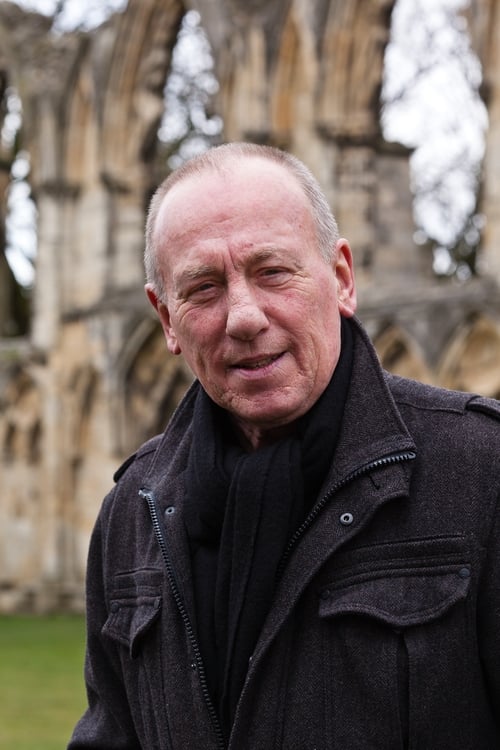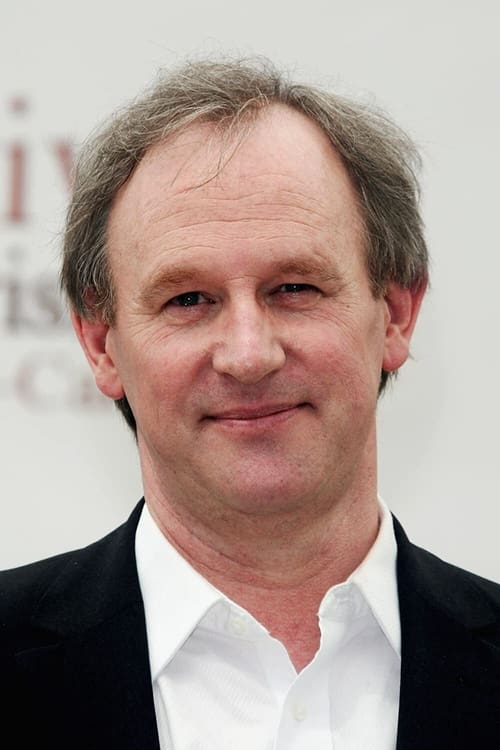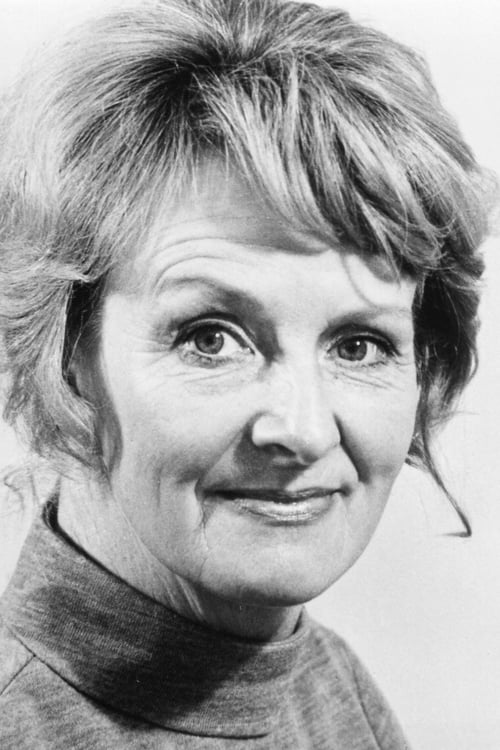




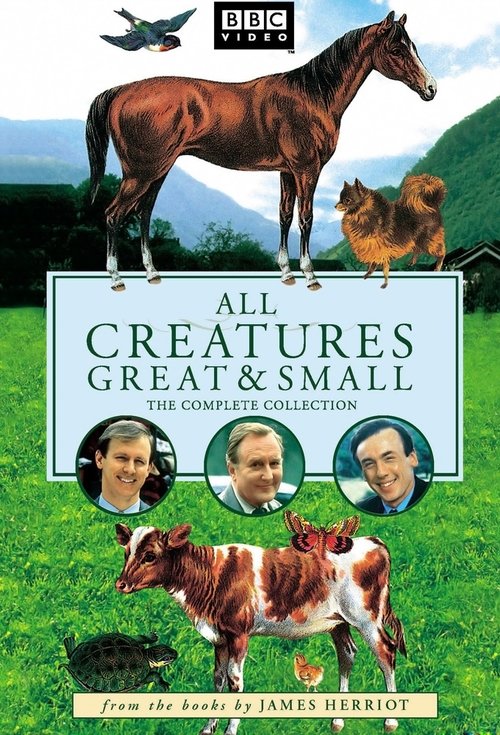
All Creatures Great and Small is a British television series made by the BBC and based on the books of the British veterinary surgeon Alf Wight, who wrote under the pseudonym James Herriot. Set in the Yorkshire Dales and beginning in the mid-1930s, it stars Christopher Timothy as Herriot, Robert Hardy as Siegfried Farnon (based on Donald Sinclair), the proprietor of the Skeldale House surgery, and Peter Davison as Siegfried's "little brother", Tristan (based on Brian Sinclair). Herriot's wife, Helen (based on Joan Wight), was initially played by Carol Drinkwater and in the later series by Lynda Bellingham.
The series had two runs: the original (1978 to 1980, based directly on Herriot's books) was for three series; the second (1988 to 1990, filmed with original scripts but generally regarded as a continuation of the 1978 series) for four. The supporting cast, both recurring and one-offs, numbers over 600, most of whom appear as farmers or clients of the surgery. The series was produced throughout its run by Bill Sellars, who was tasked in early 1977 by the BBC with the creation of a television series from Herriot's first two novels, If Only They Could Talk (1970) and It Shouldn't Happen to a Vet (1972), using the title of the 1975 film adaptation. It is part of a series of movies and television series based on Herriot's novels. The novels were written in an episodic style, with each chapter generally containing a short story within the ongoing narrative of Herriot's life. This format greatly facilitated their adaptation for a television series.
In 2020, a remake, also titled All Creatures Great and Small, was produced by Playground Entertainment for Channel 5 in the United Kingdom and PBS in the United States.
Contents
Cast
Central characters
James Herriot – Christopher Timothy (series 1–7, 90 episodes)
Siegfried Farnon – Robert Hardy (series 1–7, 90 episodes)
Tristan Farnon – Peter Davison (series 1–7, 65 episodes)
Helen Herriot (née Alderson) – Carol Drinkwater (series 1–3) and Lynda Bellingham (series 4–7) (86 episodes)
Mrs. (Edna) Hall – Mary Hignett (series 1–3)
The leading role is played by Christopher Timothy. Bill Sellars had wanted to give the role to Timothy from the outset, but the powers that be wanted to cast the role. Sellars, instead, asked Timothy if he would accept the role of Tristan Farnon. "I had a wife, I had children, I had a mortgage to pay, and I wasn't working. So I said, 'No. It's Herriot or nothing.'" Timothy put everything on the line. "I got home one night, at about 9 o'clock. My wife was washing up in the kitchen. I walked into the kitchen and she said, without turning round, 'You've got the Herriot part.'" Timothy also stated that, after all of the roles had been cast except that of Herriot, one of the directors said, "Why don't we give [the Herriot part] to Christopher Timothy and make him a name?" In 2003, Timothy said that Alf Wight wrote him a letter after the series started, saying "You are the Herriot I wrote about."
Timothy played the lead role for the full 90 episodes. He later recalled meeting the author, Alf Wight, who had "a soft, lilting Scottish accent – though I was told to keep my speech neutral to retain the universality of the part. Which I thought was complete bollocks."
Siegfried Farnon, based on Wight's real-life professional partner Donald Sinclair, is played by Robert Hardy. Writer Michael Russell sums up the character's composition thus: "He is capricious, cantankerous, whimsical, arbitrary, unreasonable, unpredictable, ill-tempered, extravagant, effusive, contradictory, etc., yet in the midst of all that, the most loyal and caring of friends." According to Wight's son, James, the Siegfried character in the novels and TV series was considerably toned down, and that Sinclair was even more eccentric than the Herriot books portrayed. The New York Times also confirmed Sinclair's eccentric real-life behaviour: he once fired a shotgun during a dinner party, informing his guests that it was time to leave.
Timothy accident
With the amount of screen time to fill, the series quickly became much more of an ensemble show, developing all the characters considerably. In particular, the role of Tristan was significantly increased. This was partly because Christopher Timothy was injured in a car accident on Boxing Day 1977 during a fortnight break between the recording of "Out of Practice" and "Nothing Like Experience" in the first series. As a result, the actor was largely restricted to studio scenes, which meant that all the scenes involving location filming be rewritten and include Davison. "I remember Christopher's accident vividly," recalled Robert Hardy. "It was a ghastly shock, and one thought, 'Well, that's the end of that. We shan't be going on.'" Timothy remembers: "The news from the hierarchy was: 'Tragic news about Christopher. Glad he's okay. Send his wife some flowers and re-cast.'"
"One of the plans was to make me James Herriot," said Peter Davison, "and then re-cast Tristan." Bill Sellars refused this option: "I said, 'I'm not doing that. It's an awful waste. We'll find another way around it.' We took the rest of the series apart, scene by scene, and all the scenes that [Peter Davison] was involved in, I extracted and took them down to the hospital, threw them on the hospital bed, and said, 'Learn those.'" This accounts for the three-week break in transmission dates between episodes 11 ("Bulldog Breed") and 12 ("Practice Makes Perfect") of the first series.
"I was plated and screwed instead of plastered," recalled Timothy, "and I was back at work in nine weeks—which was insane, in retrospect: I could barely walk, I was terrified, I'd lost a lot of weight and everybody worked round me."
"They would prop him up against a surgery table," said Peter Davison. "Then he'd start having a conversation with me. And then, at some point in the scene, I would have to move my eyes slowly across the room while two people would come in and literally carry him across to the next position."
"As [series 2] started filming, Chris had managed to find a way of walking that concealed his limp, as long as he affected a kind of John Wayne swagger, something he grew more attached to over the next couple of years," added Davison.
Recurring characters
Margaretta Scott appears as the rich dog-owner Mrs Pumphrey. One of her staff, irked at having to look after his employer's pampered Pekingese, Tricki Woo, is William Hodgekin (Teddy Turner). He longs for it to "have its chips" and succumb to illness, which is why he grumbles whenever the vets pay a visit.
In series 4, new vet Calum Buchanan (John McGlynn), based on Herriot's real-life assistant Brian Nettleton, is introduced. He and Tristan know each other from veterinary school in Edinburgh. He marries fellow Scot Deirdre McEwan (Andrea Gibb) early in series 6, and the pair emigrate to Nova Scotia.
The Herriot children, Jimmy and Rosie, are played by several actors in their various stints. Jimmy is portrayed by Harry Brayne in the 1983 special. Oliver Wilson takes over the role from the 1985 special until the end of series 5. Paul Lyon plays him in the final series. Rosie, meanwhile, is played by Rebecca Smith from the 1985 special until the end of series 5. Alison Lewis takes over for the final series.
James's early rival for Helen's affections, the well-off Richard Edmundson, was played by Norman Mann.
Plots
Ninety episodes (including the three Christmas Specials) were broadcast over seven series. Each episode is 48 minutes in length.
Production
After a meet-and-greet for the cast in June 1977, filming began the following month. "The first thing we did was a filming block on location in North Yorkshire," explained Peter Davison. "I just remember driving up and seeing this beautiful countryside that I'd never seen before. It was untouched. Initially we stayed in a little place called West Witton in Wensleydale, in between Leyburn and Askrigg." Robert Hardy, meanwhile, stayed fifteen miles by road to the northeast, at the Punch Bowl Inn in Low Row, near Reeth. "He'd found this rather grand little bed and breakfast place," confirmed Davison. "He would invite us around for dinner and would normally be sat there working on the script and would go in the next day, bang it on the table and say, 'I've rewritten this, here it is!' It was usually better."
Norman Mann, who played Richard Edmundson, recalled: "When we were up in Yorkshire, most of us stayed at the Heifer Hotel in Wensleydale, whilst Robert Hardy stayed in a different hotel. But he used to send a car over to pick us all up and we'd have dinner with him. He was the established name and he always made everybody feel so welcome."
"The filming block lasted about five weeks and was a social whirlwind. I drank too much and stayed up too late," continued Davison. There were no rehearsals for location filming. "I had to learn my lines in the make-up chair the following morning."
"Looking back at those early episodes, it's interesting to see what was accepted—or, rather, what isn't now. Every living-room scene involved glass after glass of whisky being poured and knocked back, and I was barely ever without a cigarette. Of course, the whisky was really only water with drops of burnt sugar, and I never inhaled the Woodbines. The beer, for some reason, was real, which in the drunken pub scenes caused problems."
"Our routine in the beginning was that we would rehearse for a week [at BBC Park Western] in North Acton," explained Carol Drinkwater. "Then we would have Saturday off. Then we would have to be in Birmingham on the Sunday night and Pebble Mill on Monday morning to do the interior studio scenes there. If there was filming, we would do a six-week block where we would all go north. That's how it started, until eventually Robert Hardy said he wanted it all to be on film, so for the specials we shot the interiors in Yorkshire on a sound stage on film and made it pretty much identical to the studios that we had at Pebble Mill."
Locations
All exterior scenes were filmed in North Yorkshire, mostly in the village of Askrigg, which doubled for the fictional Darrowby, and Bainbridge. Addlebrough, a 481-metre-high (1,578 ft) fell to the south of both villages, is seen prominently in several scenes. Other locations included Swaledale, Arkengarthdale and Wensleydale, as well as Langthwaite; "the Red Lion pub was used for some scenes". "We would take over Askrigg and drive the very few motorists crazy by stopping the traffic," remembered Peter Davison. Indeed, three quarters of the way through the second run the crew was banned from filming in the village due to the disruption it was causing to the lives of the residents.
Filming also took place at some of the Dales' countless farmsteads—the same ones that Alf Wight visited in the 1960s and 1970s, although the names of villages, farms and people were changed. Exterior shots were originally to be filmed in Derbyshire's Peak District, but Robert Hardy took offence to the plan and threatened to walk out of the producer's office. Some indoor scenes (including all those of the interior of Skeldale House) were shot at the BBC's Pebble Mill studios in Birmingham, a few months after the on-location portions. This is demonstrated in the first series, when Christopher Timothy is seen walking normally during the scenes filmed in Yorkshire during the latter part of 1977, but by the time the studio shots take place, after his accident, his immobility is quite obvious.
"Most of the locations were around Leyburn, where the unit had been based at the Golden Lion Hotel and Eastfield Lodge Hotel, respectively," recalled assistant floor manager David Tilley. "All the timings have to be scheduled in advance. It would be a blank sheet of paper when you started. The only thing that was pre-scheduled was the studio recording dates, which were organised by the BBC's Planning department, in conjunction with all the other series using the studios. We would then have to work out everything for each individual episode. We would always do the location filming first, so we assembled in Yorkshire to record the film inserts for 'Pig in the Middle' in the same block as 'Every Dog His Day...' I would have to make sure everyone arrived on time, either by car or bus, and that we had everything we needed to complete the scenes in time."
For the first three series, up until the two Christmas specials of 1983 and 1985, most interior scenes were recorded on video at Pebble Mill and edited together with exterior shots. This provided hardships in December 1977, when filming briefly returned to the Dales, after a block of studio recording, to capture the look of winter. The temperatures dropped well below freezing. "The snow was high and the ice was solid," explained Robert Hardy in 2003. "I remember two occasions when we were so cold, from the wind on the [moorland] tops, that we couldn't speak. We had to stop." Peter Davison recalled: "People would hand me a cup of tea and I would stick my hand in it, rather than drink it, because my fingers were so cold." For the final four series, much of the filming other than at Skeldale House was done wholly on location at the farms. "Studios aren't really like cow byres or horse stables or country farm houses," explained Hardy, "so one had to make believe a great deal in those early episodes. I mean, they made good sets, but it was better later when we stopped using the studio and did all the filming in real locations in Yorkshire. That was when it really started coming alive, because the cameras were in real situations."
Theme tune
What became the eponymous theme tune for All Creatures Great and Small was written as KPM library music in 1968 by Johnny Pearson. Titled "Piano Parchment", it was chosen by producer Bill Sellars, who had earlier selected Pearson's "Sleepy Shores" as the theme for the TV programme Owen, M.D.. Two versions of the theme were re-recorded for the opening titles of All Creatures: that of the first run was flute-orientated; meanwhile, the version used for the second was more in line with the piano-based original.
Almost all of the incidental music used in the show was written by Pearson and performed by him and his orchestra. The exceptions are the two "gypsy songs" "Ditchling Beacon" and "English Pasture", written by John Leach, which appear in the episode "Out of Practice".
1978 soundtrack
The LP, entitled All Creatures Great and Small: The Original Music from the TV Series and Other Favourite Themes and released on Rampage Records in 1978, was produced by Larry Page and Adrian Kerridge. ("Autumn Reverie", also known as "Heather", although featured several times throughout the series, is not on the soundtrack. It was originally featured on Pearson's 1968 Gentle Sounds album.)
All tracks written by Johnny Pearson except where stated.
Side one ("A")
"All Creatures Great and Small" (2:10)
"First Love" (2:39)
"Love Dream" (2:46)
"Misty Sunset" (3:28)
"Lover's Guitar" (4:36)
"Today I Met My Love" (2:49)
Side two ("B")
"Sleepy Shores" (3:06)
"Over the Hedge Rows" (3:22) (in a shortened version that appears in the episode "Faint Hearts", its ending is slowed down)
"Sublime Country" (1:52)
"Helena" (2:30)
"Sunshine" (3:18)
"Love Story" (Francis Lai) (4:56)
New pieces written after the first run of the series appeared in the second run, but these have not been released as a soundtrack. A few of them appear on Pearson's 1988 two-part release, KPM 1000 Series: Johnny Pearson Piano and Orchestra, including the notable trumpet piece "Country Fayre", the flute-driven "Fields and Hedgerows", the piano-based "A Ride in the Sun" and the orchestral "Thames Rhapsody", "Crystal Breeze", "Odd Moments", "Camelia Dance", "Lovers and Friends" and "Village Green". Also, on the first of the two editions, are two alternate versions of "Piano Parchment" (a 60-second edit and a 30-second edit).
Home media
All seven series and three Christmas Specials have been released on DVD in Region 1, Region 2 and Region 4. The 1990 Christmas Special (entitled "Brotherly Love") is regarded as being part of Series 7.
Skeldale House
Although he has not always stayed there, instead living with Caroline later in the series, Siegfried owns Skeldale House, and while he is happy—within reason—to pay for its upkeep and renovation, he is rarely seen getting his hands dirty outside the surgery. Tristan, on the other hand, takes over the household duties from Mrs Hall in "Hair of the Dog" and "Home and Away", and James has to pick up the slack when Helen is out of action, on account of a slipped disc, in the first few episodes of series 5.
The Pebble Mill set was laid out to match Skeldale House as it appeared in exterior shots. A door on the right side of the building, for example, was used to represent the entrance to the waiting room. On a couple of occasions, the cast had to go inside the Askrigg building to accommodate exterior shots on its windows but, other than a view out of the surgery window in the 1990 Christmas Special, the camera never followed them inside. In the series 3 finalé "Big Steps and Little 'Uns", Helen is shown waving James off to war from an opened second-floor window.
On the ground floor there are four rooms (clockwise from front to back): unused dining room (see below), the sitting room (the front half being the sitting area; the rear half being the dining area), the kitchen, and the surgery. Aside from the back door, another door in the kitchen leads to the surgery's waiting room. The house's only phone is in the hallway, in a nook by the stairs which also contains a grandfather clock and, later in the series, the door to the basement, where coal and wine are kept. A coat rack originally also appeared here, but was later moved to the foyer. The window above the front door announces that you are at "Skeldale House", a feature that remains today. Regarding the clock: "That clock should have been taken out and burnt," joked director Roderick Graham. "When you are doing retakes, how do you sync the tick-tock from the previous take? It was a nightmare and would drown out the dialogue."
"The staircase went nowhere," revealed Peter Davison. "If you had to run downstairs to answer the phone, it meant perching yourself on a small platform just out of shot and launching yourself into the scene."
"For the studio, we changed the colours of the surgery in the second series to give it a bit of time progression," explained David Crozier, the designer. "I'd used the whitewashed look in the first series, because I'd found hundreds and hundreds of photos from that period in Yorkshire of house interiors painted in whitewash. But as we moved closer to wartime, we went with a darker look, which became the fashion at the time."
Legacy
"There was something about the series. It had the right content," recalled producer Bill Sellars. "It became a world favourite, and at its height was actually watched by twenty million viewers."
The series occupied a slot in the TV week that helped solidify it as Sunday-evening fare. Robert Hardy remarked that: "It hit the right moment. There was a feeling still in the towns that the country was a glorious place inhabited by amazing people." TV historian Chris Diamond commented, "It's the perfect post-dinner, pre-bath time slot. You're going to be either hanging about in the living room trying to avoid dishes, or waiting to have a bath."
Hardy was also concerned that the series would be a brief affair. His worry was that it would "bore the townspeople and irritate the countryfolk". He put its success down to the fact that it featured "real people". Christopher Timothy, on the other hand, thought it had an excellent chance due to the popularity of Wight's books.
The cast became household names around the world. "I've had letters from vets, both male and female, who say they became vets because of the series," said Robert Hardy.
Christopher Timothy became the most famous vet on the planet, which became a mixed blessing. "After I did All Creatures, it was eight years before I acted on television again," he recalled. "I remember once going to see my agent and, going up the stairs to his office, hearing him screaming down the phone: 'He's not a vet, he's a bloody actor!'" "I asked Pete [Davison] once, 'How is it that you go from one role to the other and I can't get arrested on television?' He said, 'Because I didn't play James Herriot...' I think there's an element of truth in that."
"It was a big slice of my career, for which I am very, very grateful," added Robert Hardy. "The series means a great deal to me as it took up such a large span of my life."
Reunions and interviews
When Peter Davison was made the subject of This Is Your Life in 1982, Christopher Timothy, Robert Hardy and Carol Drinkwater all appeared as guests. Timothy, Davison and Jean Heywood attended Lynda Bellingham's appearance on the show in 1993. Timothy's time came in 2000, for which Hardy, Davison, Drinkwater and Bellingham were in attendance.
Christopher Timothy and Robert Hardy attended a service of thanksgiving for Alf Wight at York Minster on 20 October 1995, eight months after the author's death.
In 2003, Timothy, Hardy, Carol Drinkwater and Lynda Bellingham appeared together on Stars Reunited. Due to having other commitments, Peter Davison could not be present. Also briefly joining them, and host Dale Winton, on the couch was Jack Watkinson, MRCVS, the Yorkshire vet with whom Timothy lived and worked for a week prior to the filming of the series. Timothy has stated that, for him, it was the best week of the whole series. "I did seriously feel, with all humility, that when I turned up to start filming: 'I'm sort of equipped for this.'" Carol Drinkwater later said of this appearance: "[Dale] did an interview with each of us on our own, and he asked if I had known what a sex symbol I was? I was completely stunned, I had no idea. I mean, I used to get boxes of marriage proposals... I used to bin them, I never read them. I was very naughty. Now I answer all my mail, though there is much less of it now, of course."
"None of us ever did anything that could harm an animal," explained Timothy in another interview. "The injections were all faked and arms up a cow's bum is not difficult to do—and the cows don't mind too much... in fact, some cows quite like it! Jack Watkinson wouldn't tolerate anything that he deemed as unethical. The directors at one point sent out a note about how animals should be treated in the furtherance of entertainment, but it was always left to the attending vet's discretion. If it had gone against any of his ethical code, Jack would have refused us to do it."
Watkinson died in May 2013 after suffering a stroke. He was 84. Watkinson was the on-location technical advisor; his studio-based counterpart was Eddie Straiton. "He was an incredible character, an absolutely astonishing man," remembered Robert Hardy. Along with Donald and Brian Sinclair, Alf Wight dedicated his 1972 book All Creatures Great and Small to Straiton.