Reception
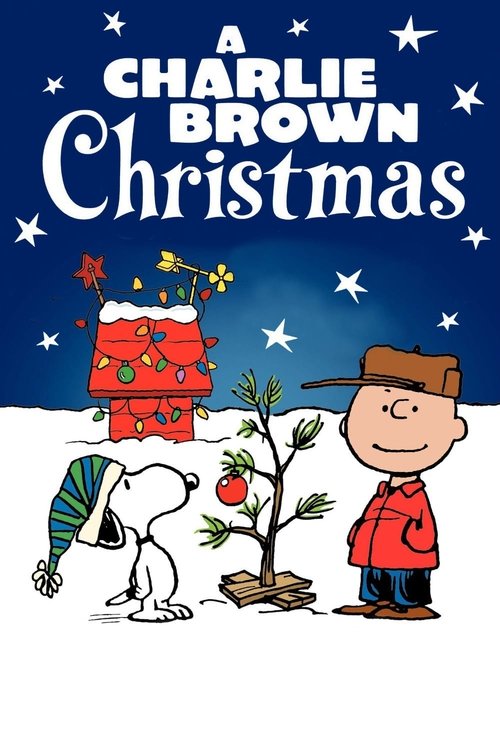
All involved believed the special would be a disaster. Melendez first saw the completed animation at a showing in a theater in the days before its premiere, turning to his crew of animators and remarking, "My golly, we've killed it." Melendez was embarrassed, but one of the animators, Ed Levitt, was more positive regarding the special, telling him it was "the best special [he'll] ever make [...] This show is going to run for a hundred years." Mendelson was similarly discouraged in his assumptions of the show's quality, and when he showed the film to network executives in New York, their opinions were also negative. Their complaints included the show's slow pace, the music not fitting, and the animation too simple. "I really believed, if it hadn't already been scheduled for the following week, there's no way they were gonna broadcast that show," Mendelson later said. Executives had invited television critic Richard Burgheim of Time to view the special, and debated whether showing it to him would be a good idea. His review, printed the following week, was positive, praising the special as unpretentious and writing that "A Charlie Brown Christmas is one children's special this season that bears repeating."
The program premiered on CBS on December 9, 1965, at 7:30 pm ET (pre-empting The Munsters), and was viewed by 45% of those watching television that evening, with the number of homes watching the special an estimated 15,490,000, placing it at number two in the ratings, behind Bonanza on NBC. The special received critical acclaim: The Hollywood Reporter deemed the show "delightfully novel and amusing," while the Weekly Variety dubbed it "fascinating and haunting." Bob Williams of the New York Post praised the "very neat transition from comic page to screen," while Lawrence Laurent of The Washington Post declared that "natural-born loser Charlie Brown finally turned up a real winner last night." Harriet Van Horne of the New York World-Telegram hailed the scene in which Linus recites scripture, commenting, "Linus' reading of the story of the Nativity was, quite simply, the dramatic highlight of the season." Harry Harris of The Philadelphia Inquirer called the program "a yule classic [...] generated quiet warmth and amusement," and Terrence O'Flaherty of the San Francisco Chronicle wrote, "Charlie Brown was a gem of a television show." Ben Gross of the New York Daily News praised the special's "charm and good taste," while Rick DuBrow of United Press International predicted, "the Peanuts characters last night staked out a claim to a major television future."
The film has an aggregated review score of 86% based on 21 reviews on Rotten Tomatoes. Of the three negative reviews, two come from the same 2020 episode of Medium Popcorn, a podcast in which both hosts gave the special a one-out-of-five stars review. The third is a 2005 two-out-of-five star review from Emanuel Levy that is no longer available.
The show's positive reviews were highlighted with an ad in trade magazines; one thanked Coca-Cola, CBS, United Features Syndicate, and the show's viewers. Fantasy released the special's soundtrack the first week of December 1965, coinciding with the special's airdate. United Feature Syndicate pushed hard to promote the special, while Word Publishing issued a hardcover adaption of the special. CBS promptly ordered four additional Peanuts specials. A Charlie Brown Christmas was awarded the Emmy Award for Outstanding Children's Program in 1966, making it the second animated TV program to win that award after Hanna-Barbera's The Huckleberry Hound Show. "Charlie Brown is not used to winning, so we thank you," Schulz joked.
When the special was aired for a second time in December 1966, it once again ranked No. 2 in the ratings, and again behind only Bonanza. In 1970, a viewer survey by Clarke Williamson ranked the special as the best Christmas special to air that year.
In 2022, an internal poll of writers at Fatherly ranked the special at 62 in a list of the 100 greatest family-friendly films of all time, one of only two productions made specifically for television to make the list (the other being the 1966 version of How the Grinch Stole Christmas!). In its summary, the writers noted that the special's technical flaws "are what makes A Charlie Brown Christmas feel distinct and special rather than generic" and that its low-budget feel fit the theme of the story.