




The Healing of Vittorio Traverni's Wife
Bone disease reversed
FaithTap · Oct 6, 2026 · 11 min read
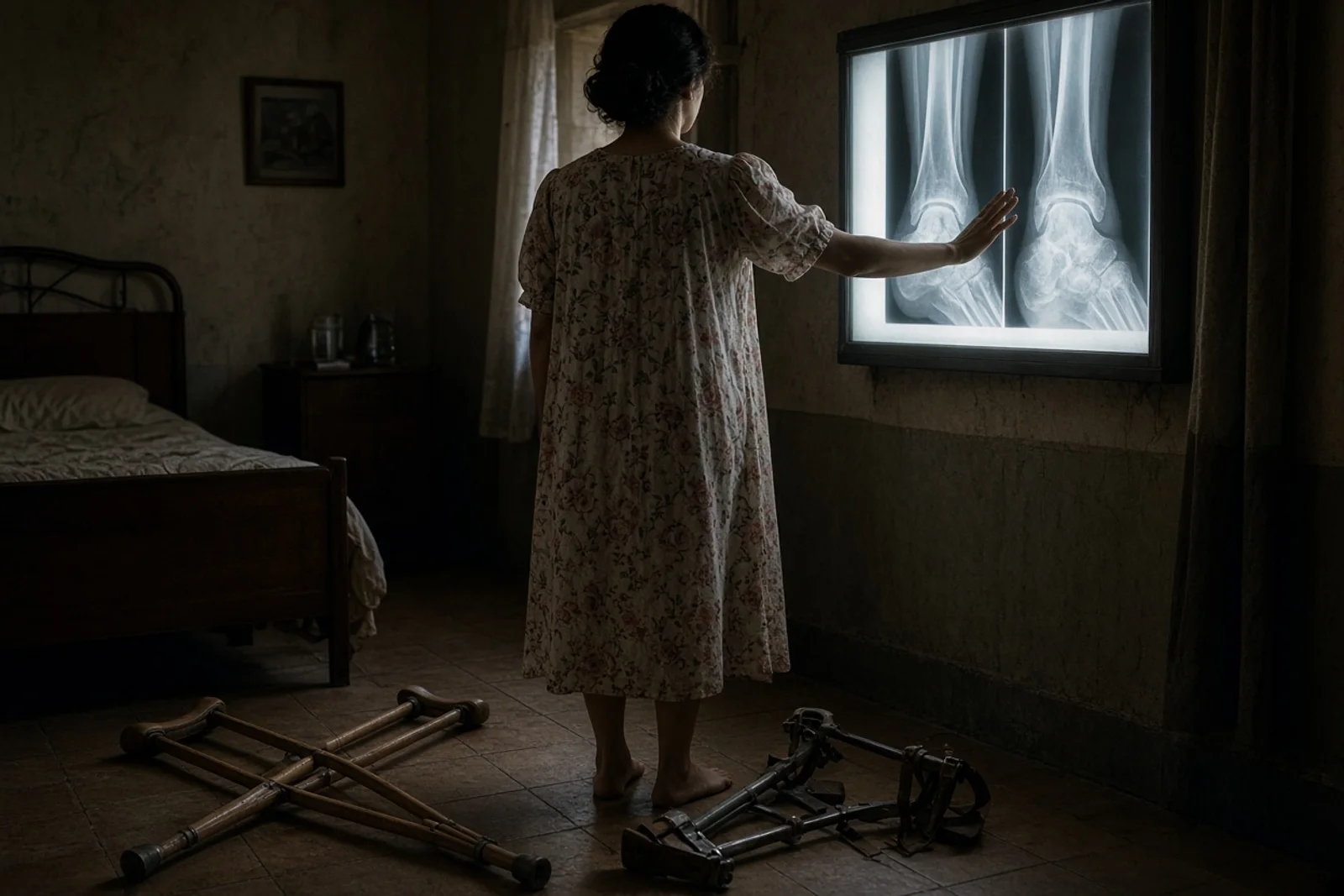
The water in the basin had gone still by the time they lowered him in. I held the sheet under his shoulders while another man supported his knees, and the cold climbed his legs first, then the ruined hip. He did not cry out. Most of them did not, not at the moment they entered. The sound came later, when the cast had been taken off and the pain returned in the night.
I had seen him three weeks earlier at the military hospital north of Verona. He lay on the same side every day, left buttock up, because the right one had no flesh left to press against the mattress. The X-ray plate they kept on the desk showed the ilium eaten away on one side and the acetabulum roof gone. The biopsy had already come back as sarcoma. They told his mother there was nothing left to try. She had brought a priest who was also her son, and the priest had told her the only place left was Lourdes.
The train from Turin reached the station at Lourdes in the late afternoon. We took him off on a stretcher because he could not stand the vibration of the wheels any longer. The cast reached from his ribs to the left knee, and the weight of it pulled his body sideways. At the hospital they had given him a paper to sign releasing the army from responsibility if he died on the journey. He signed it without reading the words.
We carried him to the baths the next morning. The line moved slowly. Women in blue capes walked beside the stretchers and said the prayers aloud. He kept his eyes open and watched the sky. When his turn came, two attendants removed the plaster in sections and wrapped him in a sheet. The water reached his chest. He stayed in it less than a minute. When they lifted him out, the sheet clung to the hollow where the tumor had eaten the bone. He asked for nothing afterward, only to be taken back to the dormitory.
On the return train he slept for the first time without morphine. I sat on the bench across from his stretcher and counted the stations. At each one he woke long enough to ask where we were, then closed his eyes again. By the time we reached the Italian border he had eaten a piece of bread and asked for water without ice. The cast still covered him, but the line of his jaw had changed. The skin lay closer to the bone.
At the hospital the ward sister did not recognize the name on the chart. She looked at the face twice before she checked the number on his wrist. They took new films that afternoon. The technician came back twice to make sure the plate had been loaded correctly. The radiologist stood at the viewer for a long time without speaking. By evening the orthopedic surgeon had called in two men from Milan. They examined the films side by side with the ones taken before the journey. The second set showed the ilium intact and the femoral head seated where it had been before the destruction began.
Micheli walked the length of the ward the next day with crutches and the remaining half of the cast. He did not use the pain medication left on the table. The doctors kept him another week while they wrote letters and made telephone calls. One of them brought a pathologist who had not seen the original biopsy. The man studied the slides under the microscope for an hour and then asked to see the patient standing. Micheli stood. The pathologist left without writing anything in the chart.
They discharged him in June with instructions to return every month. He returned the first time without crutches. The second time he carried the cast under his arm and asked what they wanted done with it. By the third visit the army had already reclassified him fit for light duty. He went back to his unit in September and finished his service the following spring.
Twelve years later the archbishop of Trento signed the declaration that made the cure the sixty-third recognized at Lourdes. The medical commission in Lourdes had examined the records in 1969 and again in 1971. Their report stated only that the disappearance of the tumor could not be explained by any known process. No further treatment had been given after the pilgrimage.