




St. Olaf Unites Norway under Christ
King ends pagan practices and builds churches.
FaithTap · Oct 6, 2026 · 11 min read
The oars bit into the fjord water and the knarrs slid toward the shingle. Salt stung my eyes. I was one of the two hundred and twenty men Olaf had chosen in London, the ones who stayed when the rest of the crews took the longships back to Normandy. My hands were still raw from the ropes. Ahead of us the hills rose steep and dark, the same hills I had left as a boy.
Olaf stood at the bow, the same broad face I had seen every day for months, only now it carried the weight of what he meant to do. He had told us on the crossing that he would not rule as the earls had ruled. He would have one law and one God. Grimketel, the bishop we had brought from England, stood beside him, silent, watching the shore.
We landed at dawn. Men from the nearest farms came down with spears but did not raise them. They knew the ships carried their own. Olaf stepped onto the wet stones and called for the five kings of the Uplands to meet him at Ringnes. He did not shout. The words carried anyway.
Three days later the petty kings arrived. They came with their housecarls and their wives and the gold rings they wore on their arms. Olaf met them in the open, no roof over his head. He spoke of the old ways dying and of the churches that would stand in their place. One by one the kings set their hands on his axe and swore. I watched their faces. Some looked relieved. Others looked as if they had already counted the cost.
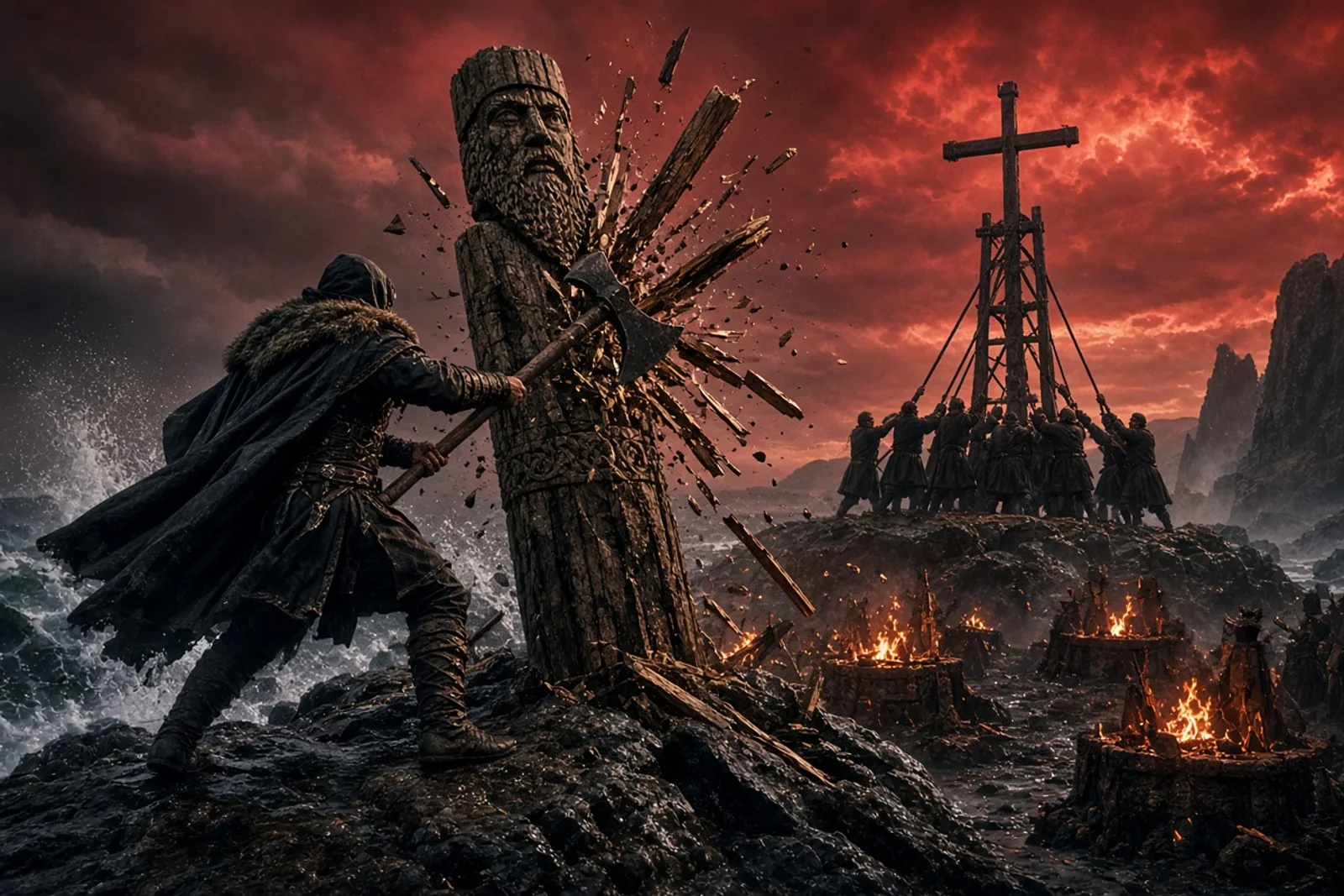
We moved north along the coast first. At every landing Olaf sent men inland with Grimketel to find the wooden images the people still fed and dressed. The bishop spoke quietly. The men with axes did not. I helped pull down a post carved with the face of Thor outside a farm near the river. The farmer’s wife stood in the doorway and said nothing. When the post burned she turned away.
Olaf marked places for churches with his own hands. He drove a staff into the ground at Borg where the waterfall roared and said the town would rise there. Men began cutting timber before the week was out. The sound of axes on pine carried farther than any horn.
By midsummer we reached the Trondheim country. The earls who had held power under the Danish crown were gone or dead. The farmers came to the thing field carrying both weapons and crosses. Olaf stood on a rock and told them the old sacrifices would stop. No more blood on the stones. No more meat left for the unseen ones. A man near me muttered that his grandfather had kept the same stone for sixty winters. He did not raise his voice.
Grimketel consecrated the first church in Nidaros on the site where the longhouse of the old earl had stood. I carried one of the benches inside. The smell of fresh pine and damp earth filled the space. Outside, the fjord lay flat under a grey sky. Olaf stayed until the last man left. He walked the benches once, alone, then came out and told us we would winter there.
Not every valley yielded at once. In the interior farms the old customs held longer. We rode with small parties, sometimes only ten men, sometimes twenty. At one steading the people had prepared a feast for the harvest god. Olaf overturned the table with his own hands. The meat fell into the fire. No one drew a weapon. The silence afterward was heavier than any fight.