




St. Genevieve Defends Paris from Attila
The shepherdess rallies Parisians in prayer during the Hun invasion.
FaithTap · Oct 12, 2026 · 11 min read
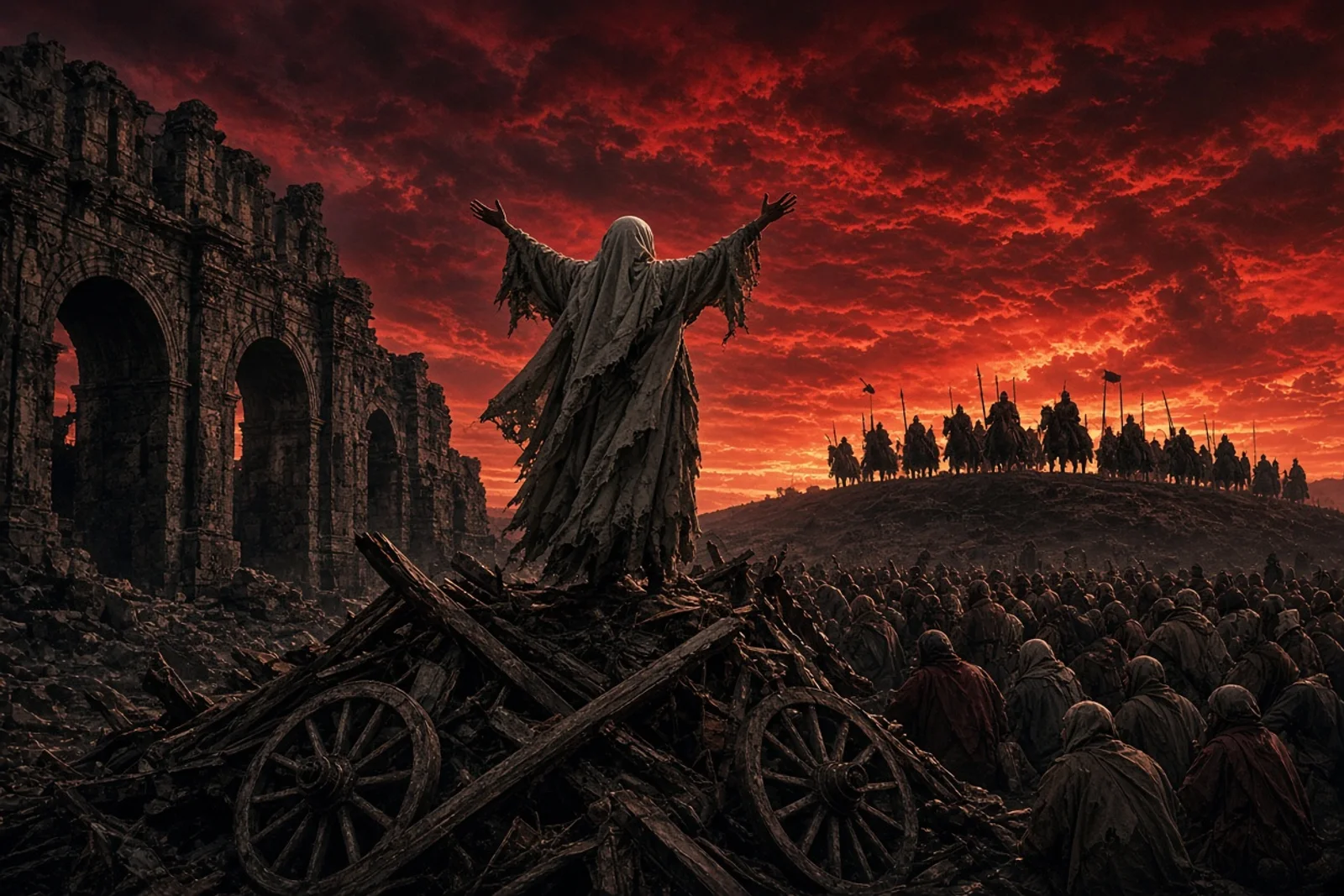
The river smelled of mud and distant smoke when the first riders came down the road from the north. I had carried water from the well that morning and set the buckets by the door of the house where my sister lived with her husband. He wanted us gone by nightfall. Genevieve stood on the steps of the church with two other women, their veils already damp from the mist. She did not raise her voice. She said the city would stand if we stayed and prayed, and that those who left would meet the Huns on the open road.
I stayed. My brother-in-law took his cart and the best of the grain and drove west before the gates closed. My sister and I walked to the square where the women had begun to gather. Genevieve moved among them, touching shoulders, naming children. She told us to fast from that hour until the danger passed. Some complained of hunger by midday. Others said nothing and kept their eyes on the northern road.
We slept in shifts on the stone floor of the church. Genevieve never left. She knelt at the rail, sometimes standing to walk the length of the nave when a child cried. Messengers came from the walls with news that the Huns had camped two days out. She listened, then returned to the rail. The air inside grew thick with the smell of unwashed bodies and lamp oil. No one lit a fire. We ate beans cold from the pot and drank from the same cup.
On the third night a man tried to open the southern gate. Genevieve heard the shouting and went down herself. She spoke to the guards until they barred the door again. Later she told the women that the men must leave the stores where they were. Some husbands came to the church steps to argue. She answered each one by name and sent them back to their houses. My sister asked what would happen if the walls fell. Genevieve said the walls would not fall if the prayers held.
We kept the vigils in turns, four hours at a time. I took the watch after midnight. The candles burned low. Genevieve walked the aisles, her steps quiet on the worn stone. When a woman fell asleep on her knees, she touched her arm and let her rest. Outside the wind changed. We heard it against the shutters. One of the older women said it blew from the east now, not the north. Genevieve nodded but did not speak.
By the fifth day the bread was gone. A priest brought what remained from the sacristy and broke it among us. Genevieve took the smallest piece. She told us to offer the hunger for the city. My sister’s hands shook when she received hers. I held them until they steadied.
News reached us that Attila had turned toward Orléans. The messenger came at dusk, breathless, his cloak torn. He said the Hun columns had wheeled away at sunrise. Genevieve thanked him and sent him to the bishop with the same message. She did not leave the church. She said the danger was not yet past and the prayers must continue until the last rider was gone from the region.
We stayed another three days. The fast loosened only when the gates opened again and wagons came from the south with grain. Genevieve walked with the first convoy to the market square. She gave the first measure to the poorest households. My sister and I carried sacks to the church cellar. The air outside felt different, lighter, though the walls still stood as they had before.
Years later I saw her again when she led the boats upriver for the siege provisions. She moved the same way she had moved among the women in the church, steady, without hurry. The soldiers at the blockade let her pass after she spoke to their captain. On the return she stood in the bow of the lead boat, watching the banks. Eleven boats reached the city. She gave thanks at the church before she distributed the grain.