




Saudi Arabia Arrests Suspect After Flydubai Cockpit Stabbing on Tel Aviv Flight
Authorities are investigating after a Flydubai first officer allegedly attacked the captain and tried to seize control of an Israel-bound flight, which made an emergency landing in Saudi Arabia. Israeli officials have called the incident a
FaithTap · Oct 3, 2026 · 4 min read
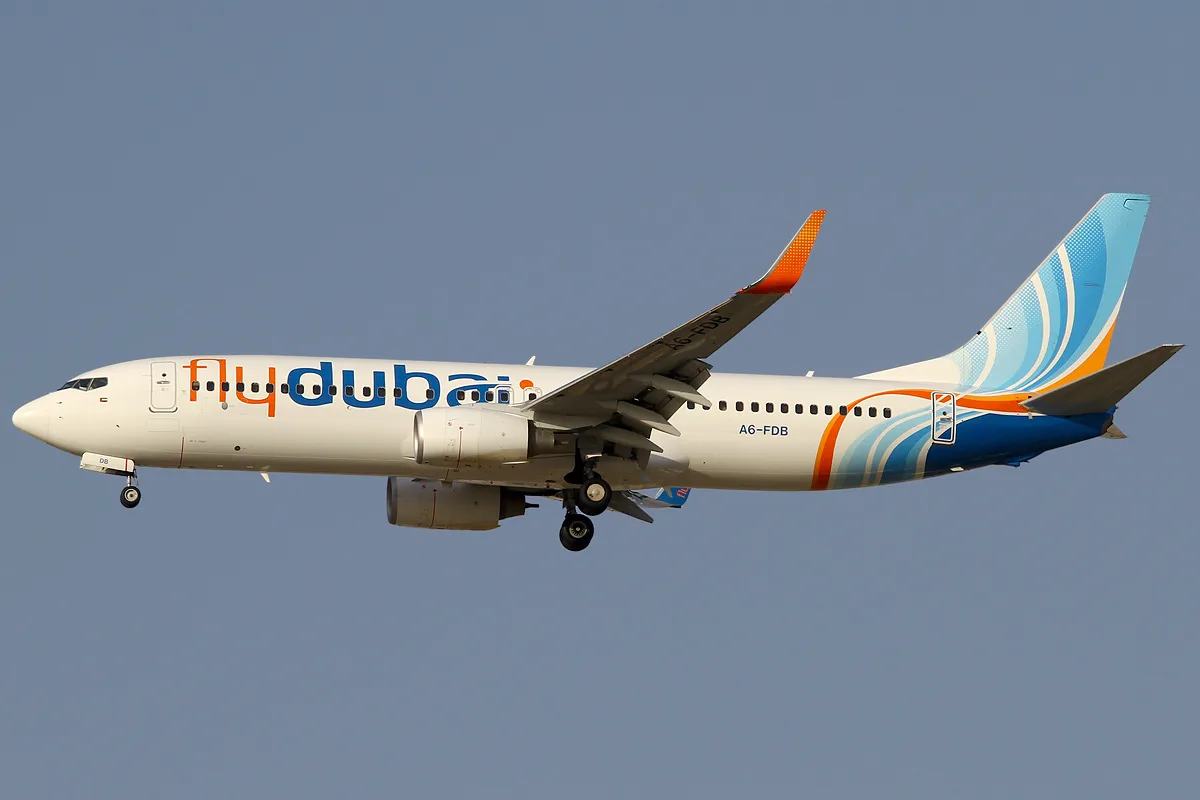
Captain Smit Machchhar lay wounded on the cockpit floor of Flydubai Flight FZ1073. The Boeing 737 MAX 8 had been bound from Dubai to Tel Aviv for about two hours when the co-pilot allegedly stabbed him.
“I was lying on the floor injured, but I told myself to go for one last push to open the door from inside,” Machchhar said later. He forced the cockpit door open.
Aviatar Alevi first took it for a mechanical failure. Then he heard the screaming. “At the start, I thought it was a plane malfunction, but then I started hearing screaming about the stabbings,” he said. “We were so scared. We didn’t know what was going to happen.”
Motti Cohen Or heard a woman shout that someone was stabbing someone in the cockpit as the jet dived toward the ground. Passengers and crew forced their way forward onto the flight deck. Yaniv Hayun was among them. “I grabbed the attacker, and choked him, pulled him out first,” Hayun said. “I started pulling the controls.” The work, he said, sat “between fear and a sense of a do-or-die situation.” “We had to win. We had to pull through and come out on top.” “Thank God, we pulled it off. We really put our heads together and worked as a team.” Asaf Rajuan was among the passengers who intervened in the scramble forward.
The plane dropped from about 33,000 feet to 17,000 feet in about a minute.
A second set of Flydubai pilots already aboard regained control and flew the aircraft out of the dive. They brought Flight FZ1073 down at Prince Sultan bin Abdulaziz International Airport in Tabuk, Saudi Arabia. The emergency landing was recorded at 9:45 a.m. local time. The jet carried 174 passengers and eight crew. Everyone aboard had survived.
Saudi authorities, working with a security team from the United Arab Emirates, opened a preliminary investigation. Their early finding was that the co-pilot had assaulted the captain. Both men were injured and hospitalized in Tabuk. The suspect was held.
Benjamin Netanyahu praised Machchhar and said the captain’s actions had helped save the 174 passengers. After the attacker was restrained, Netanyahu said, the man called for authorities to kill him, which Netanyahu characterized as evidence of intent to die in the act. He called the episode a serious security incident.
The man was Hamam Alhamami, a 29-year-old Omani national. Oman Air had grounded him in 2024 after finding he had been visiting radical Islamic websites and after he was identified, while still a co-pilot trainee, as a security risk found with extremist material. He was kept on in an administrative role. He was believed to have spent time in Syria and to have been influenced there by extremist ideas. Oman barred him from flying over those radical ideological views. He left for the United Arab Emirates.
Flydubai hired him eight months before the attack without checking with Oman Air.
An Israeli official said Alhamami’s social-media accounts had included talk of killing Jews. Early assessment held that he had acted alone and that he had indicated an intent to crash the aircraft in Israel.
Smit Machchhar, an Indian national, had more than 9,750 flying hours. He had worked more than eleven years at SpiceJet before he moved to Flydubai. His training started in 2008 at Mainland Air in Dunedin, New Zealand, and continued for eighteen months.
The passengers filling the cabin behind him were mainly Israeli. The airline was Emirati. The destination was Tel Aviv. Oman has no diplomatic relations with Israel. Those conditions reopened questions about screening on the Dubai–Tel Aviv route and about pilots from countries without ties to Israel flying it. Enforcement of any such restriction had been left largely to the airlines. Because the aircraft was registered in the UAE, headed for an Israeli airport, and forced into a landing in Saudi Arabia, the investigation ran across all three countries. The UAE was leading it. One of the questions still open was how a weapon had entered the cockpit.
Both men who had been on the flight deck remained in hospital in Tabuk. Doctors had to clear them before any transfer could begin. A replacement Flydubai aircraft took the 174 passengers onward at 5:40 p.m. Wednesday. The remaining crew returned to Dubai on another Flydubai jet. Commercial Dubai–Tel Aviv flying was suspended. Repatriation flights were arranged for stranded passengers.
After their conditions improved and doctors cleared them to travel, both pilots left Saudi Arabia for Abu Dhabi on Thursday morning. An Emirati security team accompanied the transfer. Machchhar was taken to an Abu Dhabi hospital to recover. The suspect entered UAE custody for continued questioning.