




Polycarp Refuses to Deny Christ in Smyrna
Bishop faces arena flames with calm testimony.
FaithTap · Oct 7, 2026 · 10 min read
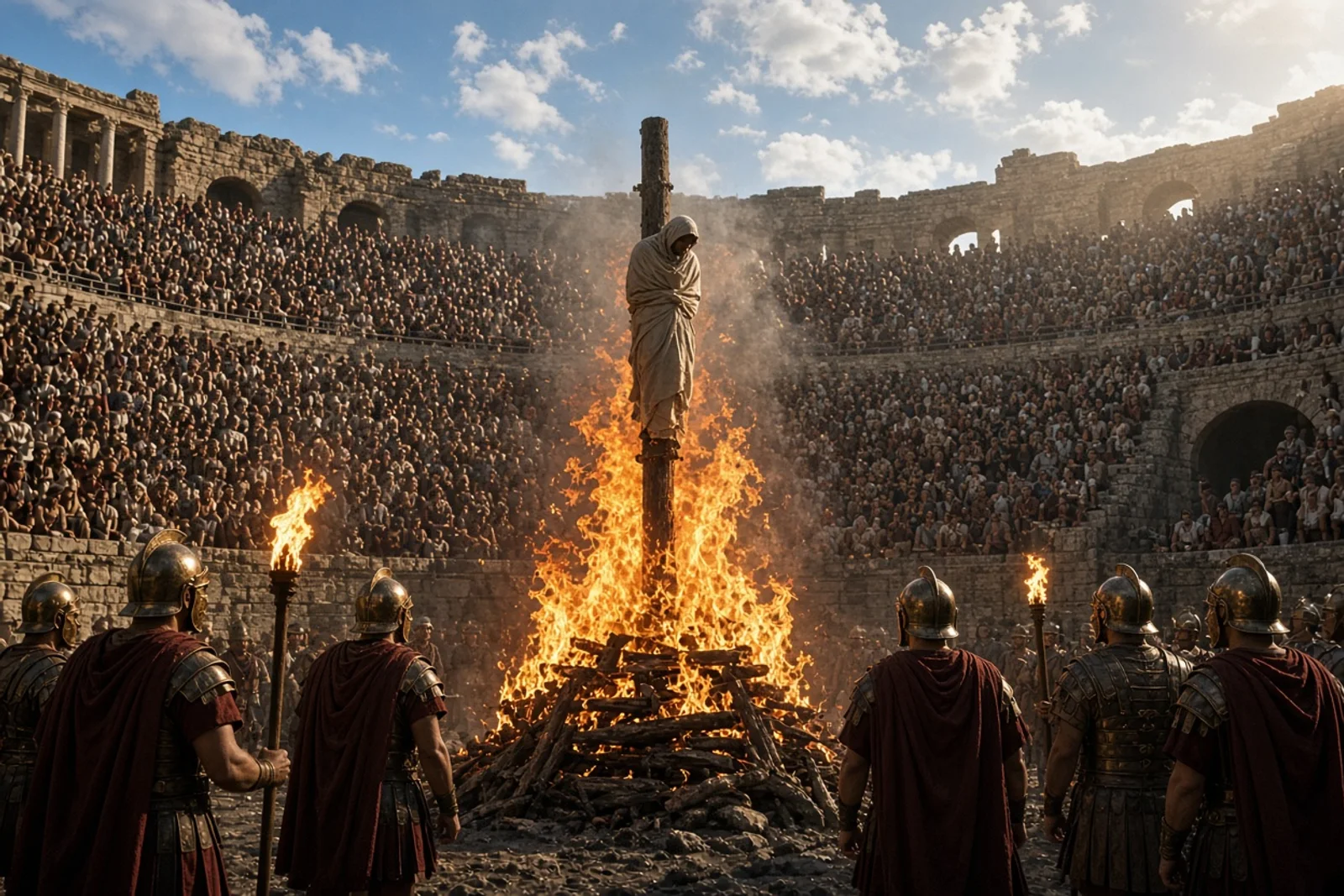
The door rattled under the weight of fists before I could reach the stairs. I had been watching from the window of the upper room as the mounted men swung into the yard, their cloaks dark with road dust and the last light of Friday. Polycarp was already descending, moving slower than the rest of us but without hurry, one hand on the rail as though he were simply coming down for the evening meal.
He spoke to the captain at the threshold the way a man greets an old neighbor. Food and drink were brought out at once. The soldiers took what was offered and stood in the doorway while he asked for time to pray. They granted it. He remained on his feet in the center of the room, and the words poured from him without pause or repetition. Two full hours passed. One of the younger guards set his helmet on the bench and stared at the floor. Another wiped his eyes with the back of his hand and looked away when the captain noticed.
When the prayer ended, the men formed around him and led him out. We followed at a distance along the track that ran toward the city. Herod and Nicetas met the party where the road widened. They helped Polycarp into their carriage and rode beside him, speaking low. I could not hear the words, only the steady rhythm of the wheels and, now and then, the old man’s single repeated answer. At the gate he stepped down too quickly and struck his shin against the step. He kept walking without looking back.
Inside the stadium the noise hit like a wall. People stood on the benches and shouted names I did not know. When word spread that Polycarp had been brought in, the shouting changed pitch. The proconsul waited on the raised platform. He asked the simple question first. Polycarp answered that he was the one they sought. Then the persuasion began, the same phrases I had heard on the road repeated now for the whole arena to hear. Respect your age. Swear by the emperor’s fortune. Offer the incense. Say the words and go home.
Polycarp turned toward the packed benches instead of the platform. He lifted one hand, palm open, and the noise dropped for a moment. “Away with the Atheists,” he said, and the gesture made it clear he meant the crowd itself. The proconsul tried again, louder this time, promising release if only the old man would reproach Christ. Polycarp’s voice carried without effort. “Eighty and six years have I served Him, and He never did me any injury. How then can I blaspheme my King and my Saviour?”
A voice none of us could see answered from above the stands. It said only that he should be strong and play the man. Those nearest me looked up at the empty sky and then at one another. The proconsul ordered the herald to announce that Polycarp had confessed himself a Christian. The crowd answered with the cry they had used for days: away with the atheists. This time the words were aimed at the single figure standing on the sand.
They stacked wood quickly. Polycarp refused to be fastened and stood with his hands behind him while the soldiers piled the timber around his feet. When the flame took, the wind carried the smoke sideways at first, then straightened. He remained upright longer than seemed possible, speaking still, though the words were lost in the roar. The fire eventually closed over him. The scent that rose was not the usual one of burning flesh but something sharper, like baking bread or cut cedar.
Afterward the soldiers broke the body with clubs so that no one could claim the bones. The crowd began to leave before the last smoke cleared. I stayed until the guards posted themselves around the ashes. One of them kicked at a charred fragment and muttered that the old man had cost them an entire afternoon. The sun had already dropped behind the western gate. I turned toward the road that led back to the farm, walking the same track we had taken that morning, only now alone.
The track bent left past the olive grove where the dust still held the print of the carriage wheels, and I reached the house after midnight with the lamp in the upper window the only light left. Marcion the scribe sat at the table copying the words Polycarp had spoken on the sand, the reed scratching steadily while two others held the parchment flat against the night breeze that came through the open door. He had already set down the proconsul’s question and the answer that followed it, the exact phrase “Eighty and six years have I served Him” written in the margin with the day’s date, the second of the month Xanthicus in the consulship of Statius Quadratus. When I entered he looked up only long enough to ask whether the guards had remained at the ashes, then returned to the line that recorded the wind shifting the smoke sideways and the scent that rose instead of the expected one.