




Nicholas Ludwig von Zinzendorf Welcomes Moravian Refugees
Count grants land and sparks 100-year prayer meeting.
FaithTap · Oct 6, 2026 · 11 min read
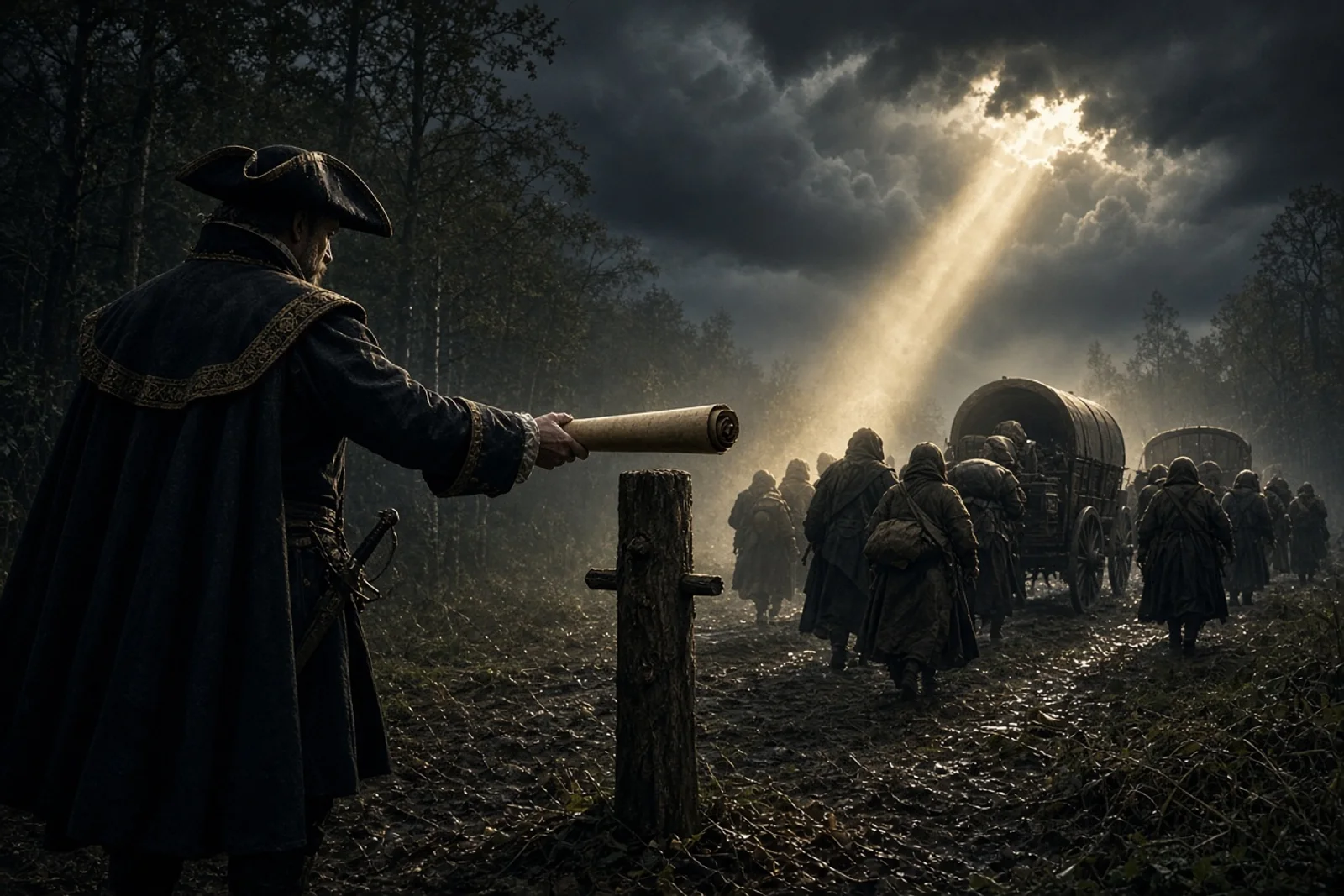
My boots cracked through the last crust of frost on the path when the steward lifted his lantern and pointed ahead. The pines thinned into a stretch of black water and reeds. Christian David walked beside me, his axe balanced across one shoulder, saying nothing. We had walked more than a month from Sehlen, sleeping in ditches and under hayricks, and the smell of wet earth now rose around us like something alive.
The steward stopped at the edge of the mire. He told us the count was still in Dresden and that the village of Berthelsdorf had no work for cutlers or weavers. He said the ground here was poor and the water unreliable, then added that we could rest in the half-finished farmhouse if we chose. His voice carried no welcome, only the weight of a duty he wanted finished before dark.
We stepped inside the roofless walls. The beams were already black with damp. One of the women from our group set her bundle on a stone and looked at the sky through the open rafters. Christian David turned the axe in his hands and asked where the count’s men had marked trees for felling. The steward pointed to a low rise where mist still clung to the trunks.
By first light the next morning the steward walked the slope with Christian David. They stopped at a straight pine. The steward prayed aloud, then drove a stake into the soil and said the first house would stand there. Christian David raised the axe. The blade bit once, twice, and on the third stroke the tree leaned. He shouted the old verse about the sparrow finding a house and the swallow a nest. The sound carried across the swamp and died against the farther trees.
We worked through the day cutting and dragging. The steward brought a cow on a rope and left it tied to a stake near the farmhouse. By evening our hands were blistered and the first logs lay stacked. No one spoke of returning to Moravia. The fire we built that night smoked heavily because the wood was green.
Count Zinzendorf came back three days later. He rode straight to the clearing without dismounting at first, only staring at the stacked timber and the half-raised frame. Then he swung down and walked among us, asking each person’s name and village. When he reached Christian David he clasped his forearm and said the land was ours for as long as we needed it. The arrangement would be temporary, he added, yet his face showed he already doubted that.
We finished the first walls by the end of the week. The count entered the single room with us on the evening the roof went on. He knelt on the packed earth and prayed that the place would be watched over and that we would watch in return. Someone repeated the words “Herrnhut” softly, and the name stayed.
More families arrived before the snow. Some came from Silesia, others from Bohemia. Lutherans and Schwenkfelders shared the same benches at the evening meal. The count visited each new household, speaking quietly with the men and women about their faith and the need to hold together. He formed small circles of two or three who would meet each morning to read and pray for one another.
Winter froze the swamp into hard ridges. We dug a shallow well that gave little water and hauled more from the village stream. The count sent extra grain from his own stores and told us to keep the cow alive through the cold. Inside the first house the bands met by the hearth, their voices low so the children could sleep.