




Apollo 13 Safe Return
Crew returns safely after oxygen tank explosion.
FaithTap · Oct 6, 2026 · 10 min read
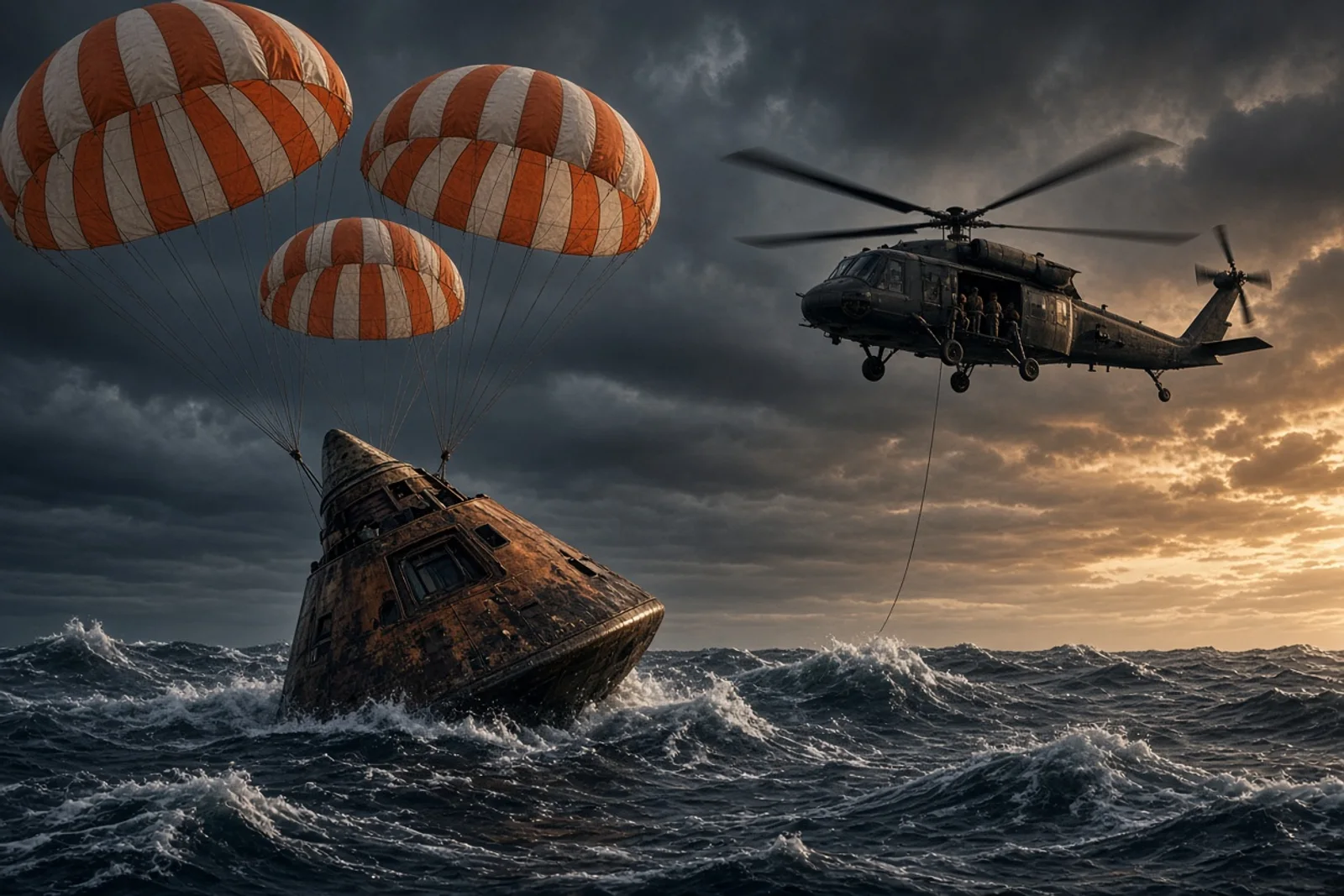
I sat at the console with the Maroon Team consoles still warm from the last shift when Windler walked back in. The room smelled of coffee and paper and the faint ozone from the big displays. Thirty-six hours to splashdown and the numbers on the consumables board looked better than they had any right to after the tank blew.
Lousma leaned into the loop and told Lovell the margins were holding. Lovell answered from 175,000 miles out with the same steady tone he used on the way out. Aquarius was keeping three men alive on power it was never built to supply. I watched the LM temperature readouts creep and the water numbers hold. Nobody in the trench said the word miracle. We just kept checking the next line on the procedure.
Swigert and Haise tried to sleep. Haise stretched out in the tunnel with his head on the ascent engine cover. Swigert took the floor. Lovell stayed awake. I could hear the faint scratch of his voice when Lousma walked him through the battery charge sequence that had never been tried before. Two of Odyssey’s batteries pulling power from the LM. The procedure was written on fresh paper that morning.
The cabin temperatures dropped again. Lovell reported fifty-one degrees in Aquarius and the forties in the command module. He and Haise were wearing two sets of underwear and the lunar overshoes. I looked at the environmental control readouts and wondered how long a man could stay sharp in that cold with carbon dioxide still climbing.
Lunney’s Black Team took over. Kerwin replaced Lousma on the capcom loop. The shift change was quiet, just hand signals and logged times. Lovell tried to rest and was back up inside two hours. Swigert and Haise woke when the battery charge started. Nobody was sleeping much anymore.
Slayton and Armstrong held separate press conferences in another building. We could see the monitors from the back of the room. Slayton spoke like a man giving a status report to his own family. Armstrong answered questions about what the crew still had to do. Outside the building the networks were already running the same footage of the launch over and over.
Kerwin read the sequence for the final six and a half hours. Activate the command module thrusters. Warm the systems. Perform the last midcourse correction with the LM jets. Jettison the service module. Photograph what was left of it if the light allowed. Then separate from Aquarius and reenter. The list was long and the margins were narrow.
I watched the trajectory team run the numbers again. The spacecraft would pass within a few thousand miles of the lunar surface on the way home. Lovell had already seen the Moon from that distance once on Apollo 8. This time he was only passing through.
The battery charge finished. Odyssey’s systems began to wake. The temperature in the command module started to rise. Lovell moved back into Odyssey to check the panels. Swigert followed. Haise stayed in Aquarius a little longer, still logging every switch.