



Looting in Milan and France tests the rule of law
Masked rioters burned barricades in Milan and torched town halls across France as Meloni and Macron drew a hard line between protest and arson, leaving businesses and police to absorb the bill.
IJR · Oct 19, 2026 · 4 min read
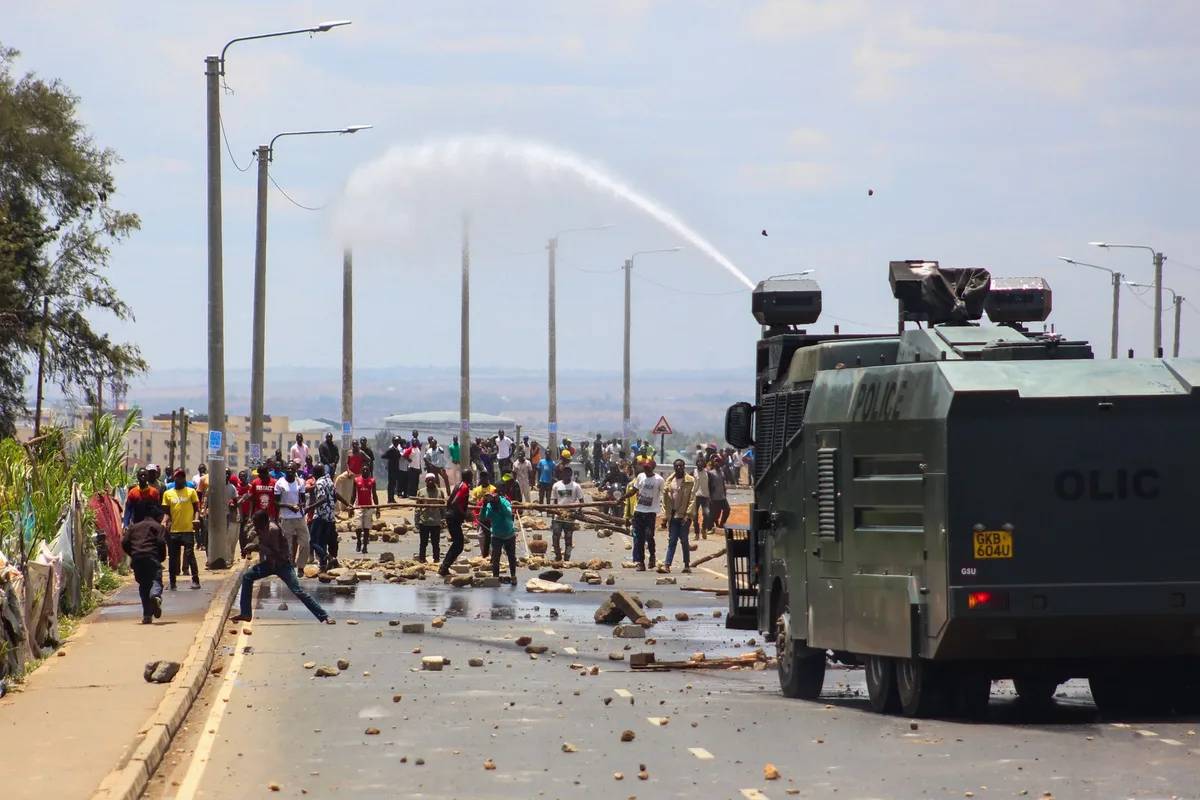
Masked protesters hurled stones and paving blocks at riot police in central Milan on Oct. 17 and set fire to barricades built from bar tables, emptying Piazza del Duomo and a luxury shopping arcade that would normally have been packed with weekend shoppers. A carabinieri car was left severely damaged. Police answered with water cannons and tear gas. At least two officers were injured and about 50 demonstrators, many of them minors, were detained, LaPresse reported. Some demonstrators took shelter behind police lines as the clashes unfolded.
Italian Premier Giorgia Meloni stated the boundary. "Demonstrating is a right. Setting our cities ablaze is not," she wrote, pointing to hooligans who exploit marches to sow chaos, attack those responsible for security, and hold entire cities hostage. Milan Mayor Giuseppe Sala said the reasons for the protests were understandable. The violence against law enforcement and the serious damage to the city, he added, are not justifiable. By the second day, riot police again used tear gas and water cannons near Piazza Duomo as hooded demonstrators smashed shop windows and torched bins. More than 60 protesters were taken in for checks. Saturday’s clashes had already produced 28 arrests. Italy’s largest trade union called a nationwide general strike for Nov. 20. Meloni convened a government meeting for Monday.
The same weekend, French cities absorbed a far larger wave of destruction. Interior ministry figures put nationwide turnout on Oct. 17 at around 550,000; the CGT union claimed 800,000. Over two days roughly 2,000 people were arrested, including 855 in Paris, of whom 550 remained in detention. Interior Minister Laurent Nunez said around 500 police, firefighters and paramedics were hurt. Fox News headlined the French toll as more than 1,800 rioters arrested as mobs looted and set buildings on fire. Around 1,500 businesses were damaged nationwide, with losses estimated in the hundreds of millions of dollars, according to the Retail and Trade Federation.
In Paris, police fired tear gas and stun grenades at hundreds gathered in Place de la République. A crowd tried to push up the Champs-Elysées and was blocked by tear gas. On the second day, a clothing store was looted near République and bikes were set alight. A cosmetics store window near the square was smashed and products thrown to the crowd; phones were hurled from a broken-into mobile phone shop. Similar scenes played out in Marseille, Lille, Nice, Lyon and Bordeaux. Town halls were forced open or vandalized in Marseille, Lille and Angers. The prefect’s residence in Bordeaux was ransacked and a police compound there vandalized. Lyon’s tourist office on Place Bellecour was set ablaze and a clothing store looted the following day.
Limoges lost its 19th-century town hall to fire. The local prefect described the attack as the work of "a wild horde." About 7,000 people marched in Limoges on Sunday in response to the devastation. Two deaths were reported in connection with the French unrest: one from a seizure during the Paris protest, another from a fall from the Arc de Triomphe. A 17-year-old boy lost his right hand to a crowd-control grenade in Saint-Etienne. A 17-year-old girl lost an eye in Mulhouse. A 15-year-old had lost a hand on Oct. 5 in Lens during an earlier protest.
President Emmanuel Macron said those who carried out vandalism, attacked administrative offices or businesses, or carried out looting—even in town halls—will be prosecuted and punished. Prime Minister Sebastien Lecornu called the violence "of extreme intensity" and framed a choice between the Republic and the rioters. Marine Le Pen said Macron’s administration was "running on fumes, exhausted and disoriented." "We are experiencing a profound crisis of trust and authority, which poses a threat to democracy," she added. Jean-Luc Melenchon described looting as "contrary to our methods."
The record supplies a contrary account of how the disorder began. Jules Petrichor, who brought his son to a march, said there was a good atmosphere and then suddenly the police started gassing people even though nothing was happening, which worsened things and left the hot-heads hot-headed. High-school voices cited living costs, school conditions, teacher shortages and distrust of politicians. Sala in Milan and Macron in Paris both separated legitimate grievance over prices and public services from the destruction that followed. That separation is the core of the conservative case. Peaceful assembly is a right. Arson, looting and attacks on officers are crimes. When 1,500 businesses absorb hundreds of millions in losses, the bill falls on owners. When 500 police, firefighters and paramedics are hurt and town halls burn, the state has failed its first duty: order so that ordinary people can work, shop and walk home without navigating barricades and tear gas.
Limited government does not mean a government too weak to keep streets open. The rule of law means masked men who throw paving blocks and torch municipal buildings face prosecution, not negotiation conducted under fire. Free enterprise cannot function when storefronts are pried open and stock thrown into the street. Public safety is not an abstraction when officers are injured. The French and Italian protests began with complaints about wages, housing and services that the record treats as real. They ended with burned civic buildings and emptied shopping streets. Meloni’s formulation leaves no gap between those two facts. Demonstrating is a right. Setting cities ablaze is not. France’s next presidential election is six months away; Italy’s general strike is set for Nov. 20.