




DOJ sues cities endangering federal officers on the job
Justice Department challenges Portland and St. Paul mask and ID rules as unconstitutional interference with federal law enforcement, officer safety, and operations authorized by Congress.
IJR · Oct 16, 2026 · 5 min read
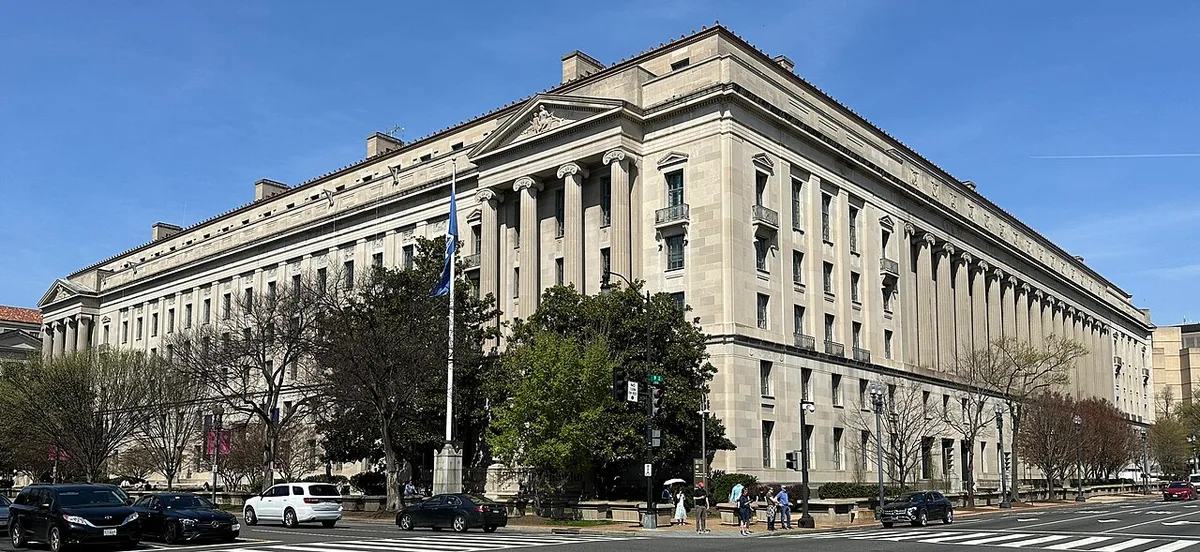
City Attorney Robert Taylor told the Portland City Council that the mask-and-identification measure before it would likely be held unconstitutional. Mayor Keith Wilson predicted the city would lose a legal challenge. Councilmember Steve Novick said failure was likely. On May 27, 2026, the council passed Ordinance 192184 anyway. It took effect June 26.
On Thursday, October 15, 2026, the Justice Department filed twin lawsuits against Portland, Oregon, and St. Paul, Minnesota, seeking to block enforcement of those cities’ rules against federal officers. The Portland complaint names City Code sections 23.30.030 and 23.30.100. The St. Paul complaint names ordinances 268A-268B. Both cases rest on the same constitutional ground: the Supremacy Clause, which establishes that federal law prevails when state or local enactments conflict with it, and that states and localities may not regulate the federal government in the performance of its duties.
Associate Attorney General Stanley E. Woodward Jr. put the principle in plain terms. “Under the Supremacy Clause of our Nation’s Constitution, states and localities cannot regulate the Federal Government and its law enforcement officers.” He continued: “They certainly cannot enact laws that place the safety of federal law enforcement at risk and undermine federal operations authorized by Congress. This Department of Justice will never tolerate the doxing or harassment of federal officers, or any law like those in St. Paul and Portland that enables violent behavior against federal law enforcement officers and their families.”
Portland’s ordinance bars officers from covering their faces and requires the display of an agency badge, last name, and identification number on outer clothing while on duty. The lawsuit states that the ordinance defines “officer” as any sworn officer of any government agency, a definition that reaches FBI, DEA, ICE, and Customs and Border Protection personnel working in the city. Enforcement can proceed through city administrative and civil processes, and the mayor or council may authorize a city lawsuit seeking a court order to force compliance. St. Paul’s City Council passed its mask ban on February 18, 2026, days after White House border czar Tom Homan announced the end of Operation Metro Surge, the administration’s immigration enforcement effort in Minnesota. Violation of the St. Paul measure is a misdemeanor.
Assistant Attorney General Brett A. Shumate of the Civil Division stated the operational core of the federal position. “The Federal Government, not state and local governments, gets to decide which equipment federal officers may or may not wear when performing their official duties.” He added: “These St. Paul and Portland local laws are a direct regulation of federal law enforcement operations and threaten severe consequences for officers and public safety alike.”
The timing of the filings was not accidental. One day earlier, the Ninth Circuit Court of Appeals permanently blocked California’s similar law, also on Supremacy Clause grounds. The Justice Department has brought parallel challenges against measures in other jurisdictions, and courts have already issued preliminary blocks in California, New York, and Philadelphia while those cases proceed. Oregon and Washington have enacted related state measures; both sit within the Ninth Circuit and are likely to be bound by the California ruling. The department has not yet sued on those state statutes.
Portland’s own record shows the city proceeded with open eyes. On October 9, the Justice Department sent a letter demanding assurances that the city would not enforce the ordinance against federal officers. City Attorney Robert Taylor answered on October 12, reaffirming the city’s intent to enforce. That exchange, documented in the complaint, converted a theoretical conflict into an imminent one. The ordinance contains a clause stating it should not be construed to supersede or diminish rights or requirements under federal law; the department’s position is that the measure still attempts to regulate federal operations and therefore cannot stand.
Supporters of the local rules have described them as measures of transparency and accountability, cast in response to masked federal immigration agents operating under the current administration. The articles reporting the lawsuits do not include substantive defenses from either city government. A Portland spokesperson declined to comment on pending litigation. St. Paul likewise declined to comment. The named St. Paul defendants include the city, Mayor Kaohly Her, the St. Paul Police Department, Chief Axel Henry, and City Attorney Irene Kao.
The safety argument runs in both directions, and the record supplies concrete illustration. Federal officials note that officers have faced harassment, doxing, and violence, and that compelling them to display full identifying information on outer clothing while performing enforcement duties can expose them and their families. U.S. Attorney Scott Bradford for the District of Oregon framed the human stake without abstraction. “Aside from being unconstitutional, laws like these impede federal law enforcement’s ability to keep Oregonians safe and endanger the brave men and women of federal law enforcement. They live in our communities. Their kids go to school in our communities. They care about our communities. They are part of our communities. It is unfair and improper to vilify them for political purposes.”