




Wealth is a craft ordinary people can learn
Wage earners stuck with empty purses or debt can reverse both by treating money as fixed habits, not luck.
IJR · Oct 18, 2026 · 11 min read
In 60 seconds
- Hard work alone leaves purses empty if you never learn the specific rules of keeping and growing capital.
- Save one-tenth of every payment the moment it arrives, before any rent, food, or want.
- Seven concrete habits—save, control spending, invest, guard against loss, own your dwelling, insure the future, raise your earning power—beat any single trick.
- Gold multiplies under wise counsel toward real purposes and flees vague, high-promise schemes you do not understand.
- Even deep debt and disgrace reverse through a written, proportional repayment plan that also keeps a savings share.
- What looks like luck is usually years of unglamorous, reliable effort that outsiders never saw.
The big idea
Clason argues wealth comes from a handful of repeatable habits—save a fixed share first, put it to verified work, protect it before trouble, and keep raising what you can earn—not from luck, birth, or labor alone. The same rules work for a steady scribe, a ruined debtor, and a former slave because the method is general, not situational.
The book in brief
Bansir the chariot builder and Kobbi the musician compare empty purses after years of skilled work. Their childhood friend Arkad is Babylon’s richest man. They assume luck or birth decided it. They go ask him how he did it instead of resenting him.
Arkad says he was once a poor scribe on the same wages. A money lender told him a portion of all he earned was his to keep. He began setting aside one-tenth of every payment before any other expense. That tenth became capital that earned on its own. The sequencing—save first, spend second—was the origin of his fortune.
When the king asks Arkad to teach the city’s poor, he gives seven concrete cures: save a tenth, control spending by separating needs from expanding desires, make savings earn, guard against unverified loss, turn a dwelling into an asset, insure future income, and raise earning ability. He later tests his son Nomasir with gold and five laws on a clay tablet. Nomasir loses heavily on a brickmaking venture he does not understand, then recovers by small, advised loans to farmers and merchants he can judge.
An old soldier’s tale of Babylon’s walls frames protection as something built in calm years, not after siege begins. Dabasir, ruined by careless spending and enslaved after fleeing creditors, returns and proposes a written split of every earning—living costs, proportional debt payments, and his own savings—recorded on clay with each creditor. Sharru Nada, once a slave, shows a young companion that his caravan fortune grew from accepting unglamorous tasks others refused, then reinvesting by the same rules. Rodan the spear maker, handed fifty gold pieces, learns from a lender to refuse his brother-in-law’s vague trading scheme and make smaller loans to tradesmen with clear, productive plans.
The book lands on the claim that these habits are teachable technique, not personal secret, and that they hold from steady wages to less than zero.
Context
George S. Clason published the book in 1926. It mattered because it turned banking-industry thrift campaigns into memorable Babylonian parables that reached millions of working people who would never read a ledger.
The key ideas
1
Work is not enough
Hard work and good intentions still leave you poor if you never learn the specific mechanics of keeping capital.
What they assumed
Wealth is luck, birth, or some gift they lack
What changes first
They treat money as a craft with rules and go ask for them
Bansir and Kobbi are skilled, steady, and not foolish. Their purses stay empty while Arkad’s fills. They default to luck or birth as the only explanations left.
Clason rejects both stories. Poverty is not simply the natural result of insufficient effort. Wealth is not reserved for the specially gifted. Money-building is a craft with identifiable rules, the same way chariot-building or music has rules.
Most people never learn those rules because no one teaches them. The first move is not more labor. It is the willingness to ask someone who already knows, instead of resenting their success or guessing at fortune.
In practice: Bansir and Kobbi stop comparing empty purses and go ask Arkad directly how he became rich.

2
Pay the tenth first
The only reliable way to build wealth is to keep one-tenth of every payment before any other expense touches it.
Arkad earned the same scribe wages as his friends. The turn came when Algamish told him a coin kept beats a coin spent, and that he must decide the kept portion before he decides any spending.
He made one-tenth untouchable. At first the remaining nine-tenths felt tighter than the old full wage. Trial and adjustment showed he could still cover needs and wants by being deliberate with the ninety percent.
Over years the tenth became capital he could lend. That capital generated income separate from his labor. Expenses always expand to fill whatever is left; therefore saving after expenses is not saving.
In practice: Arkad sets the tenth aside the day he is paid, then runs his household on what remains.

3
Seven cures, not one trick
Financial security rests on seven concrete, repeatable habits rather than a clever stroke or good fortune.
The king wants the method taught to poorer citizens. Arkad refuses abstraction. He gives a checklist any wage earner can apply.
Save at least a tenth. Separate genuine necessities from desires that swell to match income. Put savings to work earning more. Entrust money only where soundness is verified. Make the dwelling an asset instead of endless rent. Prepare income for old age and family before the need is urgent. Raise skill, ambition, and self-respect so the earning base itself grows.
Most failure, he claims, is skipping one or more of these ordinary steps—not rare misfortune. The list is deliberately plain enough for someone with no finance education.
In practice: Arkad teaches the city’s poor the seven practices as a direct checklist on their own wages, not as philosophy.
4
Five laws that keep gold
Gold grows under wise counsel toward real purposes and shrinks fastest when chased into ventures you do not understand.
Gold flees
Ventures you do not understand; forced high or fraudulent returns
Gold clings
Saved tenth; wise use; counsel from people skilled in handling it
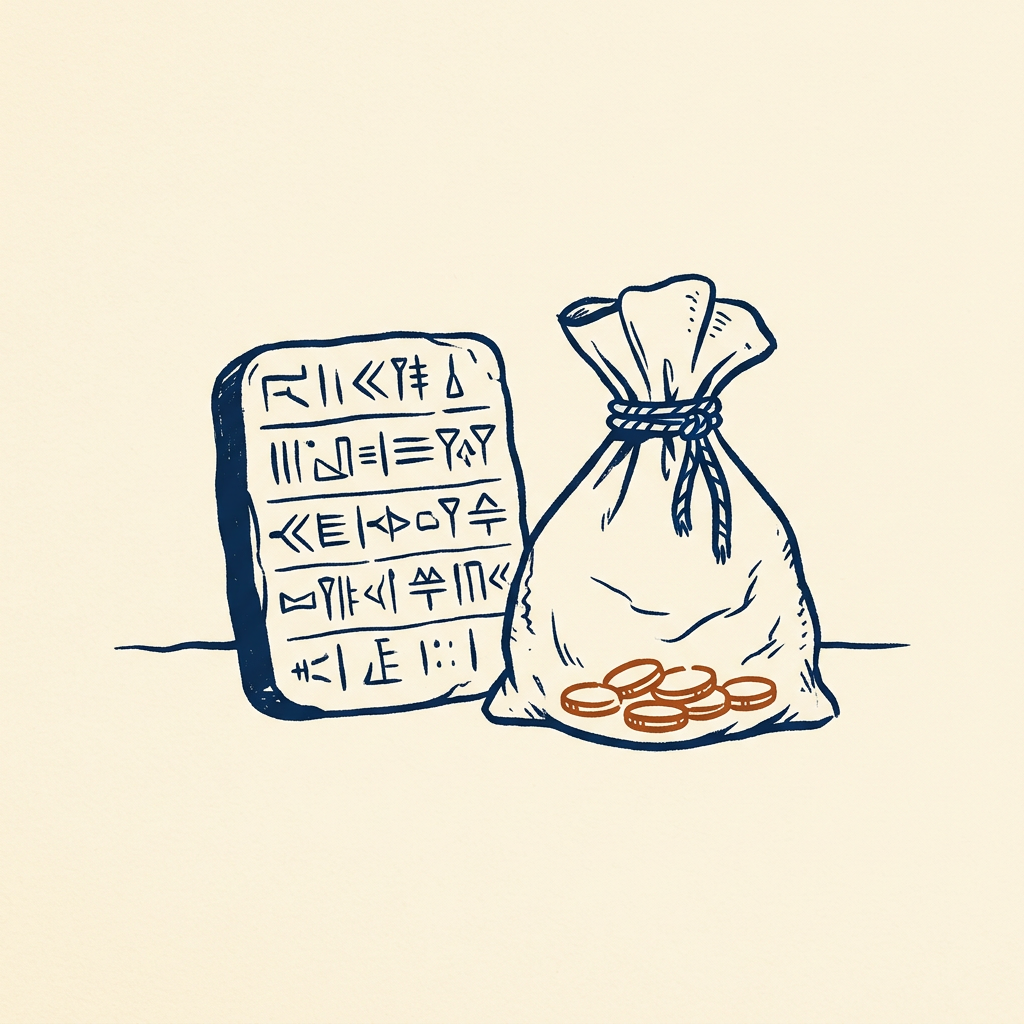
Arkad gives his son Nomasir a bag of gold and a clay tablet of five laws, then sends him away for ten years. The laws cover saving a tenth, finding profitable use, investing only under skilled guidance, avoiding businesses you do not understand, and refusing impossible or fraudulent returns.
Nomasir first pours a large share into a friend’s brickmaking venture he cannot evaluate. He loses. He recovers by lending smaller sums to farmers and merchants he can judge directly, guided by an experienced broker, for modest reliable returns.
He returns having multiplied the gift through years of disciplined, advised lending—not one brilliant deal. Success depends less on spotting a spectacular chance than on avoiding the predictable ways capital is destroyed.
In practice: Nomasir loses on the brickworks he does not understand, then rebuilds through small loans to farmers whose harvests he can see.

5
Build the walls early
Protecting wealth means deliberate safeguards built in calm years, not confidence that trouble will skip you.
After trouble starts
Protection is costlier and often too late
While calm lasts
Reserves, insurance, and verified places for money already stand
Banzar the old soldier tells how Babylon survived a siege because walls raised years earlier at great cost held against an enemy no one had named when the bricks were laid.
Clason makes the metaphor direct: insurance, emergency reserves, and diversified verified investments are walls. Safety is an active, sometimes expensive project undertaken while things are quiet. Skipping protection because today looks stable misses the entire point of a wall.
Refuse loans or deals that promise unusual returns without independent check. Seek people whose living is evaluating risk correctly. Keep a portion of savings reachable without loss in hardship. Building after danger is visible costs more and often comes too late.
In practice: Babylon’s walls, costly in peacetime, hold when an unanticipated enemy arrives.

6
Debt has a written path back
Even ruin and slavery reverse through a fixed, disclosed split of every earning—living costs, creditors, and your own savings—not through rescue or denial.
Dabasir once prospered, then lost everything to careless spending and unpaid debts. He flees creditors and is enslaved. A fellow slave teaches him the same core: keep a portion of any income, however small, and repay systematically.
He escapes, returns to Babylon, and faces creditors instead of hiding. He proposes fixed shares: living expenses, a proportional slice divided among creditors each month, and a slice kept as his growing savings. Exact terms go on clay tablets with each creditor. Vague shame becomes a trackable obligation with an end point.
Transparency, steady proportions even in thin months, and years of patience replace both denial and despair. The cures are tested here from less than zero.
In practice: Dabasir records on clay, with each creditor, the exact monthly share they will receive from his earnings.

7
Luck is unseen effort
What looks like luck from outside is usually the visible tip of years of disciplined, low-status work others refused.
The roadside waiter
Refuses ordinary work for years; opportunity never feels worthy
The slave who took details
Buys supplies, keeps small promises, reinvests; fortune follows
Sharru Nada, a wealthy caravan merchant, tells young Hadan Gula his fortune began decades earlier in slavery. He bought supplies and managed details other traders thought beneath them. He accepted responsibility, delivered on small commitments, and reinvested by the same rules Arkad taught.
He contrasts this with a man who waited by the roadside for years for a worthy opportunity, refused available work as beneath him, and stayed poor his whole life. Opportunity is rarely missing; it is frequently declined.
Sharru Nada hires and trains former slaves and struggling workers in his caravans. Most people fail, he argues, not from lack of capability but from lack of sustained effort applied early and consistently on unglamorous tasks.
In practice: Sharru Nada rises by handling supply details other traders ignore, then trains former slaves the same way.

8
Judge the plan, not the tie
Sound lending judges the borrower’s proven ability and concrete purpose; family pressure and big promised returns destroy capital.
Rodan the spear maker receives fifty pieces of gold as a reward. His sister presses him to lend it to her husband for an ambitious trading scheme neither man fully understands.
A money lender tells him the loan’s soundness rests only on demonstrated ability and a clear purpose, not kinship or the size of the hope. He contrasts the brother-in-law’s vague venture with a farmer who wants a small sum for irrigation tools, backed by a provable plan to raise yield and repay from a specific harvest.
Rodan declines the family request despite the discomfort and makes several smaller loans to tradesmen whose purposes and repayment capacity he can verify. The emotional cost of refusing friends is a predictable price of keeping gold. A small loan to a visible productive use beats a large loan to a vague ambition.
In practice: Rodan refuses his brother-in-law’s scheme and lends smaller sums to tradesmen whose work and repayment he can see.
Key terms
- Pay yourself first Keeping a fixed share of income before any other spending.
- One-tenth The minimum fraction of every payment set aside as untouchable capital.
- Seven cures Arkad’s checklist: save, control spending, invest, guard, own your dwelling, insure the future, raise earnings.
- Five laws of gold Rules for how gold grows under wise use and counsel, and flees ignorance or forced returns.
- Walls of Babylon Protections—reserves, insurance, verified places for money—built before crisis, not after.
- Make gold multiply Putting savings to work through sound lending or investment instead of letting them sit idle.
- Lean purse The state of having little, cured by the seven concrete habits rather than luck.
What to do
- Move at least ten percent of this week’s paycheck into a separate account before any bill or purchase.
- List every recurring expense and cut one habitual purchase that is not a genuine necessity.
- Contact each creditor and propose a written repayment schedule based on a fixed share of income.
- Before any new loan or investment, write one sentence on exactly how the money will earn a return and how you will check it.
- Take one unglamorous task or skill practice this week that raises what you can earn later.
Questions to think with
- If one-tenth of every payment were already gone before you shopped, what would you drop first without harming real needs?
- Which of the seven cures have you skipped most often, and what concrete step would close that gap this month?
- Where are you treating a family or friendship tie as proof that a loan is safe?
- What protection—reserve, insurance, or verified place for money—could you build now while nothing is on fire?
- Which low-status task have you been refusing that might be the actual door to higher earning?
The other side
The book is thrift propaganda from 1920s banks and insurers, not economic research; it offers no data and uses Babylon only as decoration. Its advice is reasonable but generic and treats poverty mainly as failed personal habit, saying nothing about medical debt, stagnant wages, or housing costs that can make a tenth impossible before any choice. The Dabasir tale uses slavery as a metaphor for debt without facing slavery as injustice, which lands tone-deaf. Investment counsel is pre-modern—direct lending to known people, silent on markets, inflation, and taxes—so later readers treat it as motivational habit-forming, not technical guidance. It serves people who already have some discretionary income; it says little to those who do not.
Who it's for
A young wage earner who has never saved despite steady pay, someone who believes their debt is permanent, or any reader who wants financial rules through story instead of spreadsheets. Best for people who already have a little room to allocate and need the habit frame more than market technique.