




The next crisis always wears a costume no one expects
From tulip bulbs to crypto tokens, the same greed and fear keep driving booms and busts while the props change.
IJR · Oct 19, 2026 · 14 min read
In 60 seconds
- Technology, markets, and headlines shift constantly, but greed, fear, ego, denial, storytelling, and tribalism stay fixed across centuries.
- Forecasting the next disruption fails because disruptions arrive in forms no one recognizes; what repeats is how people act when money is cheap and skepticism is mocked.
- A generation’s trauma leaves scars that outlast the recovery, so Depression-era habits still shaped saving and stock avoidance into the 1950s and 1960s boom.
- Persuasive stories beat accurate caveats, and people treat their own case as the exception to base rates that have defeated most people in similar spots.
- Value compounds over patient decades while ruin can arrive in days, so buffers against catastrophe matter more than maximizing every gain.
- Most long-term results come from a handful of extreme wins, which means staying exposed while defending against the risks no one has named yet.
The big idea
Housel argues that durable knowledge is knowledge of people, not of events, because the psychology behind booms, panics, and progress does not change even when the instruments do. The practical posture is short-term defense against unpredictable shocks paired with long-term exposure to compounding and rare outsized wins.
The book in brief
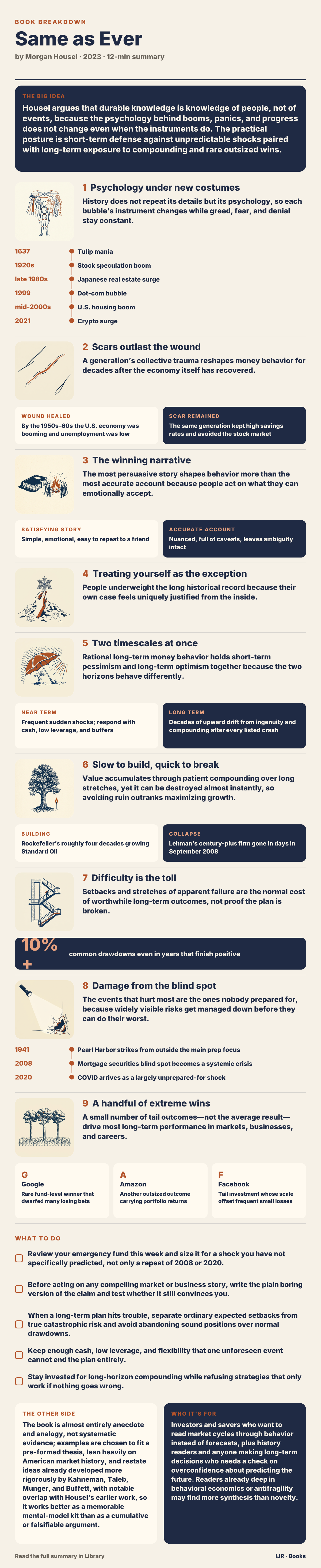
Housel starts from a simple frustration: people study history to predict the next crisis, yet the next crisis always arrives dressed in a costume no one has seen. Dutch tulips in 1637, dot-com stocks in 1999, and crypto in 2021 look nothing alike, but each ran on the same itch for easy wealth once everyone nearby seemed to be getting rich. The opening move is to stop asking what will happen next and start asking how people behave when conditions rhyme with the past.
He then shows why current data often misleads. The generation that lived through the Great Depression kept high savings rates and avoided stocks into the booming 1950s and 1960s; the wound had healed, the scar had not. At the same time, the most emotionally satisfying story spreads faster than the most accurate one, so bubbles accelerate when a clean narrative about the future becomes easy to repeat. People also treat their own deal as unprecedented, discounting the base rate of how similar cases usually end.
The middle of the book resolves an apparent contradiction in money behavior. Short-term shocks are frequent and sudden, so cash buffers, low leverage, and room to survive a bad year are rational. Long-term outcomes have historically trended upward across decades of ingenuity and compounding, including recoveries after 1929, 1973, 2000, and 2008. The common error is reckless optimism about the near term and paralyzed pessimism about the long term.
Housel then stresses a structural asymmetry: careers, companies, fortunes, and reputations usually take years or decades of unglamorous work to build and can be destroyed in days once confidence breaks. Rockefeller spent roughly four decades building Standard Oil; Lehman Brothers collapsed in a matter of days in September 2008. Because downside moves faster than upside, avoiding ruin outranks maximizing gain. Struggle itself is not proof the plan is broken; painful drawdowns of 10 percent or more are common even in years that finish positive, and quitting at ordinary hardship forfeits the later recovery.
The closing chapters turn to risk and outcomes. The disasters that hurt most are the ones no one prepared for—mortgage securities before 2008, Pearl Harbor in 1941, COVID’s arrival in 2020—because visible risks get hedged down while blind spots grow unchecked. And most total return in venture, public markets, and careers comes from a small number of extreme wins, so the sound life is one that survives an unrecognized shock while still leaving room to catch the rare outcomes that dominate the long run.
Context
Morgan Housel released Same as Ever in 2023 to reframe financial and historical literacy as behavioral literacy, arguing that understanding people is more durable knowledge than understanding events. The book functions as a set of short essays around recurring human tendencies rather than a research monograph, and it overlaps themes Housel had already popularized for a wide investing audience.
The key ideas
1
Psychology under new costumes
History does not repeat its details but its psychology, so each bubble’s instrument changes while greed, fear, and denial stay constant.
- 1637Tulip mania
- 1920sStock speculation boom
- late 1980sJapanese real estate surge
- 1999Dot-com bubble
- mid-2000sU.S. housing boom
- 2021Crypto surge
Housel opens by noting that people study past crises hoping to spot the next one, yet the next one always arrives looking unfamiliar. Tulip mania, the late-1990s web stocks, and the 2021 crypto surge share almost no surface features—flowers, websites, digital tokens—yet each was fueled by a story of fast wealth that overrode skepticism once peers appeared to be getting rich.
The forecastable piece is not the asset or the headline. It is the behavior that appears when prices rise quickly without an obvious ceiling and a critical mass of participants decides the old valuation rules no longer apply. The same pattern showed up in 1920s stock speculation, late-1980s Japanese real estate, and mid-2000s U.S. housing, each time with a fresh justification for why the moment was unique.
His practical shift is to stop asking what will happen next and start asking how people tend to act when money is cheap, early insiders have already won, and doubt is mocked as a failure of imagination. Durable knowledge, on this view, is knowledge of people rather than of events.
In practice: Dutch flower markets, 1920s stocks, late-1980s Japanese real estate, and mid-2000s U.S. housing each produced a fresh ‘this time is different’ story around the same itch for easy gains.

2
Scars outlast the wound
A generation’s collective trauma reshapes money behavior for decades after the economy itself has recovered.
Wound healed
By the 1950s–60s the U.S. economy was booming and unemployment was low
Scar remained
The same generation kept high savings rates and avoided the stock market
Housel uses the cohort that came of age in the Great Depression to show how one hard decade can set habits that outlive the hardship. Even in the 1950s and 1960s, with the U.S. economy strong and unemployment low, many who had lived through the 1930s kept unusually high savings rates and stayed out of stocks, distrustful of a system that had wiped out their parents.
The visible wound—mass unemployment, bank failures—had closed. The scar, a permanent wariness of risk, stayed embedded in how that generation spent, saved, and raised children. People do not reset risk tolerance from today’s data; they anchor to the worst episode they personally endured, and that anchor can last a lifetime.
That is why advice that fits one cohort can fail the next: the scars differ. To understand cautious or reckless money behavior, personal history often matters more than the current balance sheet. Extrapolating from recent calm misses the extreme experience most likely to shape someone’s real decisions.
In practice: Depression survivors still avoided stocks and saved heavily into the 1950s–1960s boom long after unemployment had fallen and the economy had recovered.
3
The winning narrative
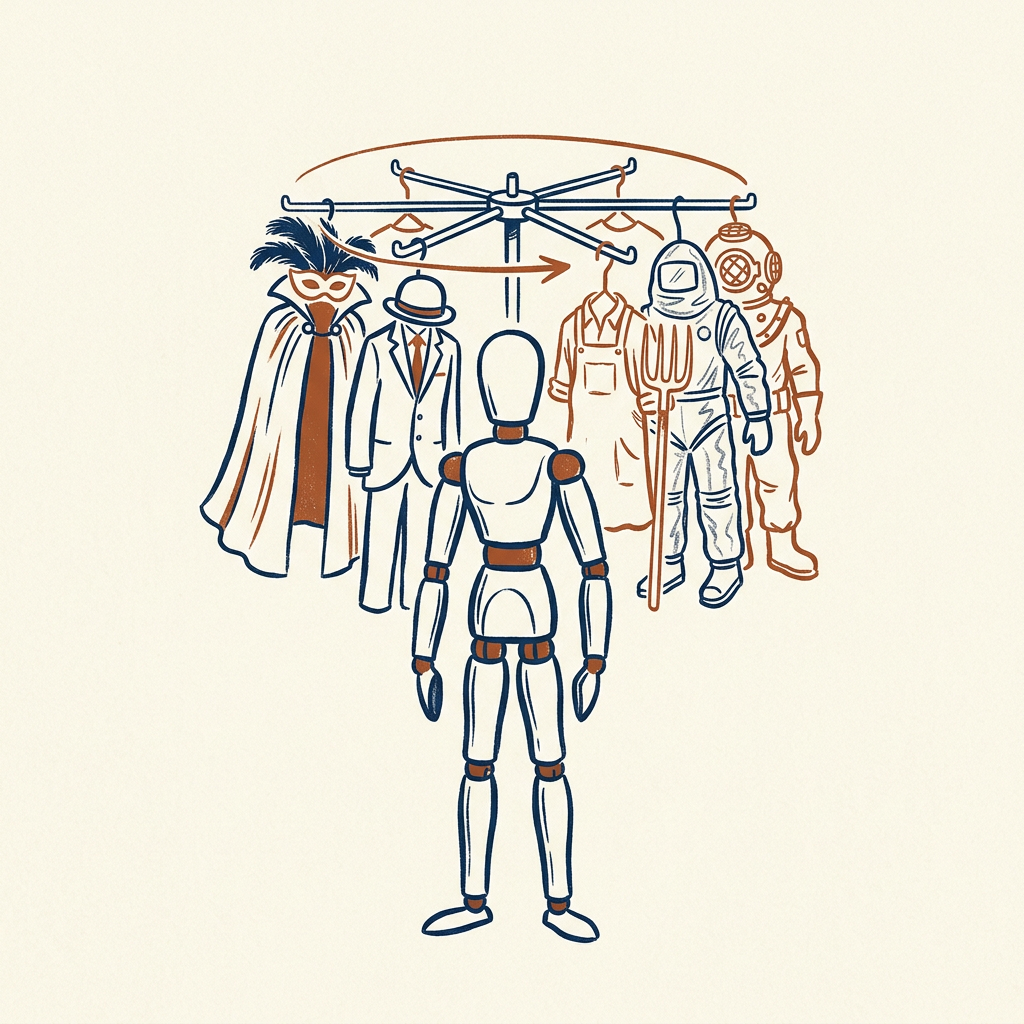
The most persuasive story shapes behavior more than the most accurate account because people act on what they can emotionally accept.
Satisfying story
Simple, emotional, easy to repeat to a friend
Accurate account
Nuanced, full of caveats, leaves ambiguity intact
Facts alone rarely move crowds. A clean, emotionally satisfying narrative wrapped around a partial truth usually outruns a complicated, fully caveated explanation. Simple claims—a stock that will multiply many times over, a diet that promises effortless results—travel farther than nuanced accounts because nuance is harder to act on and less satisfying to repeat.
Housel is not calling people stupid. A good story does real cognitive work: it makes an uncertain world feel resolved and controllable, while an accurate but messy explanation leaves people stuck in ambiguity. Prices therefore rise fastest not when fundamentals improve fastest but when a future story becomes easy to tell and hard to resist, letting new buyers join without independent analysis.
The same mechanic helps misinformation about markets, health, or politics outcompete careful reporting. The discipline he wants is simple: before accepting an explanation because it feels good, ask whether it would still convince you if it were boring.
In practice: Bubble prices accelerate when a clean story about the future becomes easy to retell, so new buyers pile in without doing their own work.

4
Treating yourself as the exception
People underweight the long historical record because their own case feels uniquely justified from the inside.
Every founder, investor, or policymaker tends to experience their situation as the exception to patterns that have already played out many times. A founder raising money in a valuation surge can list specific reasons—better product, better team, better timing—why the company is unlike the hundreds of overvalued firms that came before.
Base rates, the historical frequency of an outcome across many similar cases, get discounted because the inside view feels personal and specific while the reference class feels generic. Late-stage boom investors nearly always have a rational-sounding story for why current prices are fair even though overvaluation has preceded nearly every prior crash.
The same blind spot appears whenever someone assumes they will beat odds that defeated most people who tried the same path, from small-business survival to marriage and career bets. Base rates do not tell you your exact future; they tell you what usually happened to people who thought they occupied a similar spot, and that reference class still deserves weight.
In practice: Late-stage investors in repeated market booms always have a story for why today’s prices are rational despite the historical pattern of overvaluation before crashes.

5
Two timescales at once
Rational long-term money behavior holds short-term pessimism and long-term optimism together because the two horizons behave differently.
Near term
Frequent sudden shocks; respond with cash, low leverage, and buffers
Long term
Decades of upward drift from ingenuity and compounding after every listed crash
Near-term events—recessions, crashes, personal emergencies—are frequent, sudden, and hard to time, so the sound response is defensive: cash reserves, limited debt, and a buffer large enough that a bad year does not become ruin. Long-term outcomes, by contrast, have historically trended upward across decades because ingenuity, growth, and problem-solving tend to outlast single setbacks.
Housel notes the U.S. stock market recovered from every prior crash he flags, including 1929, 1973, 2000, and 2008, given enough time. The common mistake is applying the wrong posture to the wrong horizon: reckless optimism about short-term risk paired with permanent pessimism about the long run.
People scarred by a downturn often collapse both stances into lifelong caution and miss subsequent decades of compounding. The better design survives the next unpredictable shock without needing to name it, while still letting long-term capital stay invested.
In practice: The U.S. market eventually recovered from the crashes of 1929, 1973, 2000, and 2008, rewarding those who kept long-term exposure after absorbing the short-term hit.

6
Slow to build, quick to break
Value accumulates through patient compounding over long stretches, yet it can be destroyed almost instantly, so avoiding ruin outranks maximizing growth.
Building
Rockefeller’s roughly four decades growing Standard Oil
Collapse
Lehman’s century-plus firm gone in days in September 2008
Building a career, company, fortune, or reputation usually takes years or decades of steady, often boring effort. Destroying the same thing can take days once confidence evaporates. Forests grow for decades and can burn in an afternoon.
Because downside can move so much faster than upside, a single catastrophic loss erases years of careful compounding while a single missed chance at extra gain rarely does comparable damage. That asymmetry pushes Housel toward resilience over optimization: more cash than feels necessary, debt levels that still work in bad times, and skepticism toward any plan that requires nothing to go wrong.
Any long-term design must first survive the fast, sudden risks before it can collect the slow, steady gains. Fragility is the hidden tax on otherwise attractive upside.
In practice: Rockefeller spent roughly four decades building Standard Oil, while Lehman Brothers, with more than a century of history, collapsed within days in September 2008 once confidence vanished.

7
Difficulty is the toll
Setbacks and stretches of apparent failure are the normal cost of worthwhile long-term outcomes, not proof the plan is broken.
10%+
common drawdowns even in years that finish positive
People consistently underestimate how much hardship is baked into anything valuable, so they read ordinary pain as evidence they chose wrong. The stock market’s own record delivers strong average returns over long spans yet still posts painful declines in the vast majority of individual years.
Drawdowns of 10 percent or more are common even in years that finish positive overall. An investor who expects a smooth upward line treats every drop as a signal to abandon the approach and then misses the recoveries that historically followed. The same pattern appears in businesses, skills, and relationships: payoff usually arrives only after a stretch that feels, from the inside, like it is not working.
Housel treats this not as a system flaw but as the way reward is rationed. If the path were easy, everyone would take it and competition would erase the prize. The needed skill is telling a normal expected setback apart from genuine catastrophic failure, and treating difficulty as the price of admission rather than a warning light.
In practice: Market history shows drawdowns of 10 percent or more are common even in years that end up positive, so investors who demand a smooth path quit before the recovery.
8
Damage from the blind spot
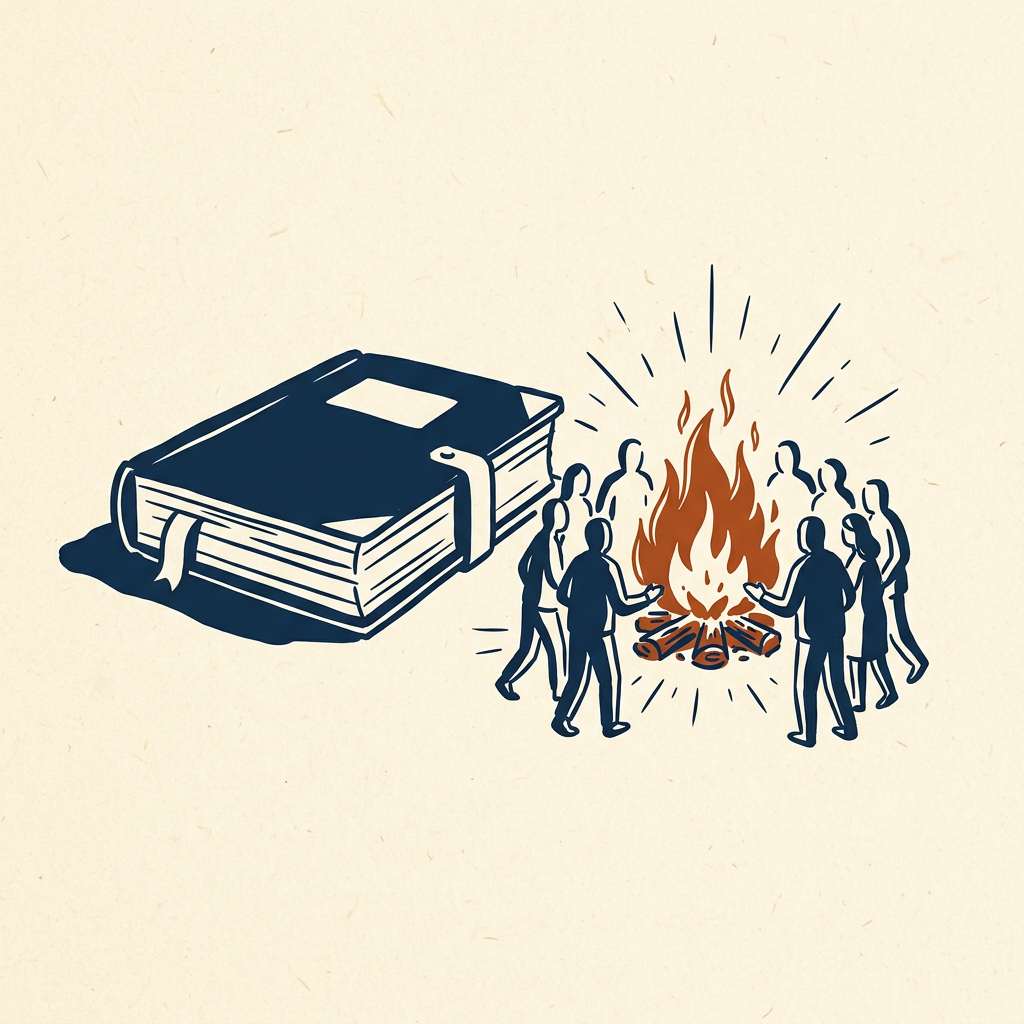
The events that hurt most are the ones nobody prepared for, because widely visible risks get managed down before they can do their worst.
- 1941Pearl Harbor strikes from outside the main prep focus
- 2008Mortgage securities blind spot becomes a systemic crisis
- 2020COVID arrives as a largely unprepared-for shock
Risks that dominate news, war games, and market hedges rarely deliver the largest damage; visibility itself triggers defense that shrinks the blow. Housel’s central case is 2008: few mainstream economists or regulators treated mortgage-backed securities as a systemic threat beforehand, and the surprise itself magnified the harm because institutions had not hedged a risk they had not named.
The same pattern fits Pearl Harbor in 1941 and COVID’s arrival in 2020. Large-scale damage tends to come from the dark corner, not the spotlight. If enough motivated people worry about a specific danger, they reduce exposure and thereby reduce ultimate impact even if the event occurs.
Risks that never enter public discussion receive no such mitigation and can grow until they force a reckoning. You cannot protect yourself by listing today’s loudest fears; those are already being priced and defended. The useful move is to assume a meaningful setback will arrive from an unrecognized direction and to hold cash, flexibility, and redundancy so the shock is not existential.
In practice: Before 2008 few mainstream voices flagged mortgage-backed securities as systemic; the unrecognized nature of the risk left institutions unhedged and deepened the damage.

9
A handful of extreme wins
A small number of tail outcomes—not the average result—drive most long-term performance in markets, businesses, and careers.
- GGoogleRare fund-level winner that dwarfed many losing bets
- AAmazonAnother outsized outcome carrying portfolio returns
- FFacebookTail investment whose scale offset frequent small losses
Housel closes on the distribution of results. In venture capital, a large share of the total returns earned by top funds over decades has come from a handful of investments, while most individual bets lose money or barely break even. The strategy still works because the size of the rare winners swamps the frequency of the losers.
He extends the point to public markets and to ordinary careers: a small number of stocks account for a disproportionate share of long-term market gains, and a small number of decisions or relationships often dominate a person’s financial life. Judging a portfolio, a strategy, or a life by its typical or average outcome misses what actually determines the total.
What matters is whether the approach leaves room to participate in the rare outsized win. Combined with the earlier asymmetry of slow building and fast ruin, the overall posture is clear: defend against catastrophic loss while staying exposed long enough for the extreme positive outcomes to matter.
In practice: Top venture funds have drawn a large share of decades of total returns from a handful of companies such as Google, Amazon, or Facebook inside their portfolios, while most other bets lost money or broke even.
Key terms
- Behavioral literacy Treating knowledge of fixed human tendencies as more durable than knowledge of specific events or forecasts
- Scarring How a lived trauma permanently resets risk tolerance long after the economy or the wound itself has recovered
- Persuasive narrative A simple emotionally satisfying story that moves people faster than a fully accurate but complicated account
- Base rate The historical frequency of an outcome across many similar cases, used as a humility check against the inside view
- Inside view The tendency to treat your own reasons and situation as uniquely exempt from patterns that defeated others
- Horizon split Holding defensive pessimism for sudden near-term shocks while keeping optimism for multi-decade compounding
- Build-destroy asymmetry The structural fact that value usually takes years to create and can vanish in days once confidence breaks
- Blind-spot risk Danger that stays unmanaged precisely because it has not yet entered public worry or institutional hedges
- Tail-driven results The pattern that a few extreme wins, not average outcomes, account for most long-term totals
What to do
- Review your emergency fund this week and size it for a shock you have not specifically predicted, not only a repeat of 2008 or 2020.
- Before acting on any compelling market or business story, write the plain boring version of the claim and test whether it still convinces you.
- When a long-term plan hits trouble, separate ordinary expected setbacks from true catastrophic risk and avoid abandoning sound positions over normal drawdowns.
- Keep enough cash, low leverage, and flexibility that one unforeseen event cannot end the plan entirely.
- Stay invested for long-horizon compounding while refusing strategies that only work if nothing goes wrong.
Questions to think with
- Which personal scar still shapes your saving or investing more than today’s data does?
- What story are you currently finding satisfying, and would the boring version still convince you?
- Where are you treating your situation as the exception to a base rate that has usually gone the other way?
- Is your buffer built for the last crisis you lived through or for a risk you cannot yet name?
- Does your long-term plan leave room for a few extreme wins, or only for average outcomes?
The other side
The book is almost entirely anecdote and analogy, not systematic evidence; examples are chosen to fit a pre-formed thesis, lean heavily on American market history, and restate ideas already developed more rigorously by Kahneman, Taleb, Munger, and Buffett, with notable overlap with Housel’s earlier work, so it works better as a memorable mental-model kit than as a cumulative or falsifiable argument.
Who it's for
Investors and savers who want to read market cycles through behavior instead of forecasts, plus history readers and anyone making long-term decisions who needs a check on overconfidence about predicting the future. Readers already deep in behavioral economics or antifragility may find more synthesis than novelty.