




Six automatic triggers that make people say yes
Cialdini argues that compliance runs on a handful of mental shortcuts that salespeople, recruiters, and others learn to fire on command.
IJR · Oct 8, 2026 · 13 min read
In 60 seconds
- Most yeses come from automatic rule-of-thumb reactions to a single cue, not careful thought.
- An unsolicited gift or a staged concession creates a felt debt strong enough to override preference.
- A small free commitment quietly rewrites self-image so larger later requests feel consistent.
- Crowds and similar others define correct action, especially when a situation is ambiguous.
- Liking, authority symbols, scarcity, and shared identity all manufacture compliance apart from merit.
- The practical defense is treating the bodily rush of pressure itself as a trip wire to pause and recheck.
The big idea
Cialdini argues that persuasion rarely works through logic; it works by triggering automatic shortcuts—reciprocity, consistency, social proof, liking, authority, scarcity, and later unity—that evolved to help us navigate complexity. Because the shortcuts are efficient and usually useful, professionals who fake the cues can produce the same automatic yes even when the underlying reality does not match.
The book in brief
Cialdini starts from ethology and a simple claim: humans, like other animals, run fixed-action patterns. A mother turkey will mother a stuffed predator if it plays a chick’s chirp; people likewise obey single cues such as “expensive equals good.” A jewelry store that accidentally doubled the price of turquoise sold it out, because buyers used price as a quality proxy. Shortcuts are adaptations to information overload, not stupidity—yet anyone who learns the cue can fire the program for profit.
He then walks through six core principles. Reciprocity turns an unwanted flower or a deliberately large-then-small request into felt obligation. Commitment and consistency show how a tiny free yes—copying a mild essay, posting a small lawn sign—locks people into larger later acts that match the new self-image. Social proof explains laugh tracks, bystander inaction, and suicide contagion: under uncertainty we copy similar others. Liking catalogues how attractiveness, similarity, compliments, and pure “I like you” messages lower resistance. Authority shows that lab coats, titles, and phone voices produce obedience even against moral distress. Scarcity shows that sudden shortage, bans, and rival bidding inflate desire independent of use value.
A later revision adds unity: shared “we” identity—kin language, co-creation, arbitrary group labels—produces deeper loyalty than mere liking. Cialdini closes on defense. Abstract knowledge of the principles is not enough; the triggers fire below deliberation. The usable habit is noticing the internal signal of being rushed or disproportionately stirred, then forcing a conscious recheck of whether the cue is genuine evidence or a manufactured trigger.
Context
Cialdini built the account from undercover training inside sales organizations plus decades of social-psychology findings. The original 1984 framing catalogued six principles; a 2016 revision added unity as a seventh. The book mattered because it turned scattered lab results and street tactics into a single usable map of how compliance is manufactured.
The key ideas

1
The automatic click
Most compliance is a fixed-action response to one cue, so anyone who fakes the cue can trigger the yes.
Careful inspection
Buyer examines turquoise on its own merits
Price cue fires
Doubled price reads as quality; stock sells out
Cialdini opens with the ethology parallel: a turkey mother accepts a stuffed polecat—her natural predator—once it emits a recorded chick chirp. The single sound runs the whole maternal program; the rest of the evidence is ignored. Humans, he claims, run similar programs. Full analysis of every request is too costly, so we lean on rules such as “expensive equals good” or “people don’t ask without reason.”
Those rules usually save time. They become dangerous only when someone who understands the pattern deliberately presents the cue while the underlying reality does not match. The rest of the book is a catalogue of the six (later seven) cues professionals have learned to pull on command.
The practical upshot is that “I thought it through” is often a post-hoc story. The decision was already made by the shortcut the moment the cue appeared.
In practice: An Arizona jewelry store could not move turquoise; an assistant misread a note and doubled the price instead of halving it, and the pieces sold out within days because buyers treated higher price as proof of quality.

2
The reciprocity debt
An unsolicited gift or a staged concession creates obligation strong enough to override dislike and preference.
Cialdini traces the rule to survival: groups that returned favors could share resources and specialize labor because a costly help today could be trusted to come back. The norm is so deep it fires even when the gift was unwanted, the giver is disliked, and the return asked is far larger than what was received.
A related move is rejection-then-retreat. The requester opens with a large ask almost certain to be refused, then retreats to the smaller ask they actually wanted. The target experiences the retreat as a concession and feels bound to meet it with a concession of their own, even though the whole sequence was planned.
The rule therefore covers both free gifts and the choreography of negotiation. Once the feeling of debt is active, preference about the actual trade often loses.
In practice: Hare Krishna fundraisers in 1970s airports pressed a flower into a traveler’s hand before refusal was possible, then asked for money; many who discarded the flower moments later still donated. In a Boy Scout test, a large zoo-chaperone request almost everyone refused, followed by a smaller circus-ticket ask, tripled ticket compliance versus asking for tickets alone.

3
Small yes, big lock-in
A freely chosen small commitment rewrites self-image so later larger requests feel like consistency, not new asks.
76% vs 17%
large billboard yes after small sign vs never asked
People need to appear—and to be—consistent with what they have already said or done; inconsistency reads as unreliable. Once a small active, public, effortful, self-chosen act is on the record, later behavior bends to match the new picture of the self.
Commitments stick hardest when written, witnessed, hard to perform, and experienced as voluntary. Initiation rituals, public pledges, and loyalty oaths all exploit that stickiness. A related sales move is the low-ball: secure agreement on sweet terms, then quietly worsen them; many buyers still close because they have already mentally owned the outcome.
The engineering sequence is therefore predictable: obtain a minor free yes first, let self-image shift, then present the real request as simple consistency with who the person now is.
In practice: In Freedman and Fraser’s 1966 work, California homeowners who had agreed to a tiny safe-driving sign later accepted a large unsightly billboard at about 76 percent versus 17 percent for those never asked the small favor. Chinese-run Korean War POW camps started American prisoners on mild anti-American copy for rice, then used those statements to grow collaborators without overt torture.

4
The crowd as proof
Under uncertainty we treat an action as correct in proportion to how many similar others we see doing it, which can freeze whole groups.
Social proof says validity rises with the number of people observed doing the act, especially when the situation is unclear and the models look like us. The shortcut is usually adaptive; it becomes costly exactly when independent judgment is most needed.
In ambiguous emergencies each bystander reads everyone else’s calm as evidence that nothing is wrong, producing pluralistic ignorance and collective inaction—the reverse of the common-sense expectation that more witnesses mean more help. Media reports of suicide likewise seed detectable spikes in suicides and fatal accidents among demographically similar people in the regions that saw the heaviest coverage.
Advertisers therefore prefer “people like you” testimonials for everyday goods and save celebrities for aspirational ones. The same mechanism that steers ordinary choice also amplifies contagion and bystander freeze.
In practice: Audiences rate televised jokes funnier and laugh longer with a laugh track even while insisting they dislike laugh tracks and are not influenced. After the 1964 Kitty Genovese murder, Latané and Darley’s account framed the reported non-intervention as pluralistic ignorance among many watching neighbors.

5
Yes to people we like
Liking is a manufactured shortcut—via looks, similarity, praise, and pure contact—that lowers resistance apart from the offer’s merits.
We assume people we like have our interests at heart, so their requests meet less scrutiny. Attractiveness throws a halo: the same person is rated more talented, kind, and honest, and the effect shows up in voting even when voters deny appearance mattered. Similarity works the same way; sales training drills finding shared hometowns or hobbies before the pitch because people say yes more readily to those who seem like them.
Compliments raise liking and compliance even when the target suspects the flattery is self-serving. Repeated friendly contact with no immediate ask builds the same reservoir. Commercial models that put an existing friend between the buyer and the product simply rent that pre-built liking.
The offer’s features often matter less than whether the asker has already been cast as likable.
In practice: Canadian federal-election studies found attractive candidates received more than two and a half times the votes of unattractive ones. Joe Girard, repeatedly the top car salesman by Guinness records, mailed every past customer a monthly card that said only “I like you.” Tupperware parties split profit with the hostess because her friendships, not product specs, close the sale.
6
Symbols over substance
People obey perceived authority—even against judgment and morals—often reacting to titles, coats, and uniforms rather than real expertise.
65%
Milgram volunteers who went to maximum shock
Genuine expertise is often worth deferring to; the problem is that the automatic trigger fires on the surface markers alone. Titles, lab coats, suits, and luxury trappings can produce the same compliance as earned authority.
Classic demonstrations show ordinary people continuing harmful acts simply because a credentialed figure said to continue, and show trained professionals violating their own rules for an unverified voice that sounded official. Con artists and sellers borrow the same markers—white coat, “doctor,” uniform—without the underlying warrant.
The needed habit is therefore not blanket distrust but two quick checks before the yes: is this person expert on this exact matter, and is their advice free of self-interest that would distort it?
In practice: In Milgram’s 1961 Yale experiments, 65 percent of volunteers delivered what they believed was the maximum shock to a protesting subject because a lab-coated experimenter told them to continue. In Hofling’s 1966 hospital study, 95 percent of nurses prepared to give a dangerously excessive, unauthorized dose on a phone order from an unknown ‘doctor.’
7
The pull of almost gone
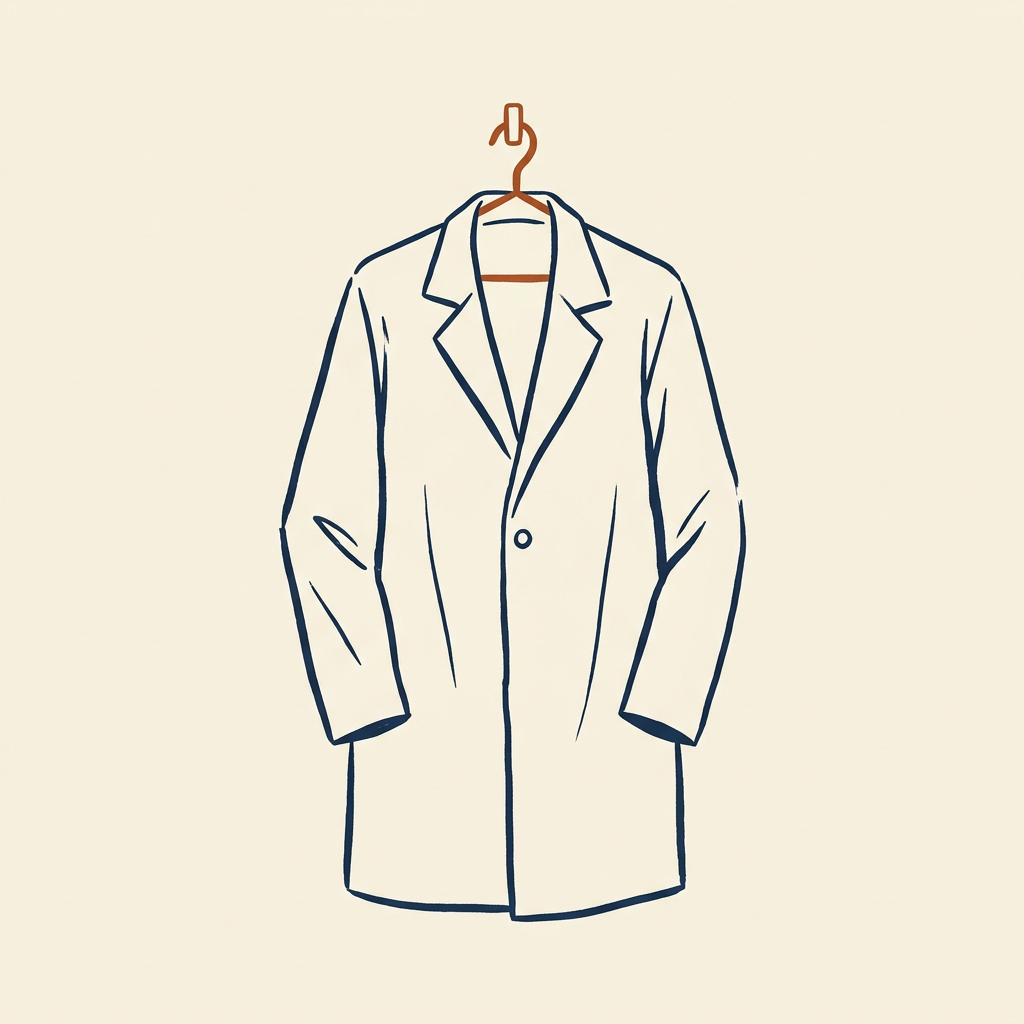
Perceived rarity, sudden loss, or forbidden status raises desire more than the item’s use value, because loss of freedom stings.
Jar of ten
Identical cookies rated lower
Jar of two (or suddenly two)
Same cookies rated more desirable and higher quality
Humans weight potential loss more heavily than equivalent gain; scarcity cues signal that freedom of choice is about to shrink. Limited-time language, low stock counts, and countdowns all hitch a ride on that aversion. Sudden drop from plenty to few intensifies the effect beyond steady scarcity.
The same pattern covers restricted information and blocked romance: a ban or parental interference can raise the value of the speech or the partner without any change in content. Auctions add rival bidders so the threat becomes “lose to someone else,” not merely “lose the object.”
Artificial deadlines and staged short supply therefore manufacture urgency that has nothing to do with how useful the thing will be once owned.
In practice: Worchel’s 1975 participants rated identical cookies more desirable and higher quality from a jar of two than from a jar of ten, and still higher when the jar had just been reduced from full to two. University of North Carolina students found a political speech on coed dorms more persuasive and more sought-after once it was labeled banned, even without hearing it. Research on dating couples linked parental interference to intensified romantic feeling—the Romeo and Juliet effect.
8
We are the same kind
Shared identity—“we,” kin language, co-creation—produces deeper compliance than liking because it collapses self and other.
- Shared identity‘We,’ kin words, co-creation collapse self/other
- Mere likingEnjoyment of the person without same-kind bond
- StrangerNo halo, no debt, full scrutiny of the ask
Added in the 2016 revision, unity is distinct from liking. Liking says “I enjoy this person”; unity says “this person and I are the same kind,” recruiting kin-based loyalty. Fraternal orders, congregations, and fan groups lean on brother/family/we language to lock in durable obedience.
Even thin, arbitrary shared categories move behavior. Being told you share a birthday, a fingerprint type, or a lab-assigned label with a stranger raises rated trust and willingness to help with no other information exchanged. Marketers invite customers to name or design products so the result feels partly theirs and loyalty deepens past what ads alone achieve.
Because the category feels like a biological fact rather than a tactic, unity is both powerful and hard to notice while it is working; political and religious movements that cast outsiders as threats to “our” group convert the same instinct into extreme demands.
In practice: Experiments showed that sharing a birthday, fingerprint pattern, or arbitrary group label with a stranger increased trust and helping. Co-creation—letting customers help design or name a product—makes them treat it as partly their own.
9
Catch the rush first
Abstract knowledge of the principles fails in the moment; the reliable defense is treating the felt pressure itself as a stop signal.
The triggers are automatic and fire below conscious analysis, so reciting the list while a request is underway rarely blocks them. Cialdini’s proposed habit is to notice a specific internal cue—the sense of being rushed, pressured, or emotionally stirred beyond the real stakes—and use that feeling as a trip wire that halts the exchange for a conscious recheck.
Concrete tests follow from each principle. For scarcity: do I want this for its use, or for the status of having something rare? For reciprocity: would I accept the same trade from someone with no angle; if the gift only matters because of the debt, keep it and refuse the return. For authority: is this person expert on this exact point, and free of distorting self-interest?
The same pause applies to consistency, social proof, and liking—ask whether the small prior yes, the crowd, or the charm is actual evidence for the choice at hand. Cialdini notes the vigilance is effortful and imperfect; professionals who live by these tactics will still get through sometimes.
In practice: Before answering any ask that arrives with an unsolicited gift, a tight deadline, or warm familiarity, he advises naming the principle at work first; in negotiation, treat a large-then-small sequence as two separate asks, not a favor you owe.
Key terms
- Click, whirr The automatic firing of a fixed mental program once its single trigger cue appears
- Reciprocity The felt duty to repay a gift or concession, even an unwanted or staged one
- Rejection-then-retreat Opening with a large request sure to be refused, then dropping to the smaller real ask so the drop feels like a concession
- Commitment and consistency The drive to align later behavior with an earlier free, active, public act so the self-image stays coherent
- Low-ball Securing agreement on good terms, then worsening them after the person has already mentally committed
- Social proof Treating an action as more valid the more (especially similar) people are seen doing it
- Pluralistic ignorance Everyone reading everyone else’s calm as proof that nothing is wrong, so no one acts
- Halo effect Attractiveness spilling over into ratings of talent, kindness, and honesty
- Scarcity Raised desire for what seems rare, dwindling, or forbidden, driven by loss of freedom more than use value
- Unity Shared ‘we’ identity that collapses self and other and produces kin-like loyalty beyond mere liking
What to do
- Pause before any yes that arrives with a free gift, tight deadline, or sudden warmth and name which principle is firing.
- In a negotiation, judge the smaller ask on its own merits after a large opening request; do not treat the drop as a concession you owe.
- When compliance urge feels stronger than the stakes, stop and ask what exact cue just triggered it.
- Before deferring to a title, badge, or coat, ask whether the person is expert on this specific matter and free of self-interest in your answer.
- For any scarce offer, separate the item’s actual usefulness to you from the anxiety of missing out.
Questions to think with
- Which of the seven triggers most often catches you in ordinary shopping or work requests?
- When was the last time a small free yes quietly obligated you to a larger one?
- How do you tell genuine expertise from the coat, title, or tone that only looks like it?
- Where does shared ‘we’ language in your workplace or politics ask for more than ordinary liking would?
- What bodily signal tells you that you are being rushed, and do you treat it as a stop sign?
The other side
Cialdini himself states that simply knowing the principles does little in the moment, that the needed vigilance is effortful and imperfect, and that professionals who study these tactics full-time will still occasionally get past it; much of the support is classic experiments plus undercover sales observation rather than a single controlled field test of the whole framework.
Who it's for
Salespeople and marketers who need to see why some pitches land, anyone who has said yes and later regretted it, and managers or negotiators who must spot manufactured pressure in meetings and contracts will get the most from reading the full book.