




Some systems get stronger from shocks—here is how
Taleb’s framework gives investors, skeptics of top-down policy, and anyone building a career a way to court useful volatility instead of suppressing every stressor.
IJR · Oct 8, 2026 · 14 min read
In 60 seconds
- Fragile things break under stress, robust ones resist it, and antifragile ones improve from it—a third category most risk tools never named.
- Confident forecasting hides rare ruin: calm years can be turkey-years that manufacture catastrophic exposure rather than prove safety.
- A barbell of extreme safety plus small, capped, high-upside bets beats the fragile middle of moderate diversified risk.
- Optionality turns uncertainty into fuel through asymmetry—cheap bounded losses and open-ended gains, not luck.
- When decision-makers offload downside, they build hidden fragility for everyone else; skin in the game is a structural fix.
- Prefer subtracting harm over adding interventions, and give bodies and institutions the intermittent stressors they need to stay healthy.
The big idea
The true opposite of fragile is antifragile: systems that gain from disorder, from muscles and startups to decentralized economies. Because extreme shocks cannot be predicted, Taleb says the work is to shape exposure—barbells, optionality, skin in the game, via negativa—so volatility strengthens you instead of wrecking you.
The book in brief
Taleb starts from a missing word. We know fragile and robust, but nothing for what gets better under stress. He coins antifragile and anchors it with Damocles under the sword versus the Hydra that grows two heads for every one cut off. Nature, evolution, and working economies run on antifragile parts; trying to erase their small shocks—through debt-fueled calm, overtreatment, or bureaucratic control—does not create safety. It hides fragility until it arrives larger. Airlines improve after every crash because each one is studied and fixed; pre-2008 banks suppressed small failures until a systemic one nearly took the whole system down.
From there he attacks prediction. In Extremistan, rare extremes dominate; traditional statistics fit Mediocristan. The turkey fed for a thousand days grows sure humans are kind until the day before Thanksgiving. Banks, governments, and people can live the same calm. The quiet is not evidence of low risk. So stop asking what will happen and ask how the structure responds if something extreme does.
The practical answer is the barbell: most resources in extreme safety, a small slice in speculative high-optionality bets with capped downside and unlimited upside, and nothing in the moderate middle that looks prudent while carrying hidden tail risk. That shape generalizes into optionality—many cheap trials, most failing small, a few compounding without limit—the convex payoff that made tinkering build more practical knowledge than top-down theory.
He then ties fragility to incentives. People who keep upside and dump downside on others systematically load risk onto the system; bank executives’ boom bonuses with no clawback are the modern case, Hammurabi’s builder who dies if the house kills the owner the ancient corrective. Intervention itself is another source of harm—iatrogenics—so via negativa prefers subtraction to addition. Bodies need hormesis: intermittent stressors. Time filters non-perishable things through the Lindy effect. He closes by pitting Soviet-Harvard top-down planning against decentralized tinkering with skin in the game: small local failures teach cheaply; one big central failure does not.
Context
Taleb published Antifragile in 2012, extending the turkey problem he had already used in The Black Swan and developing the skin-in-the-game theme that later became its own book. The summary gives little further biographical or reception detail.
The key ideas
1
The missing third category
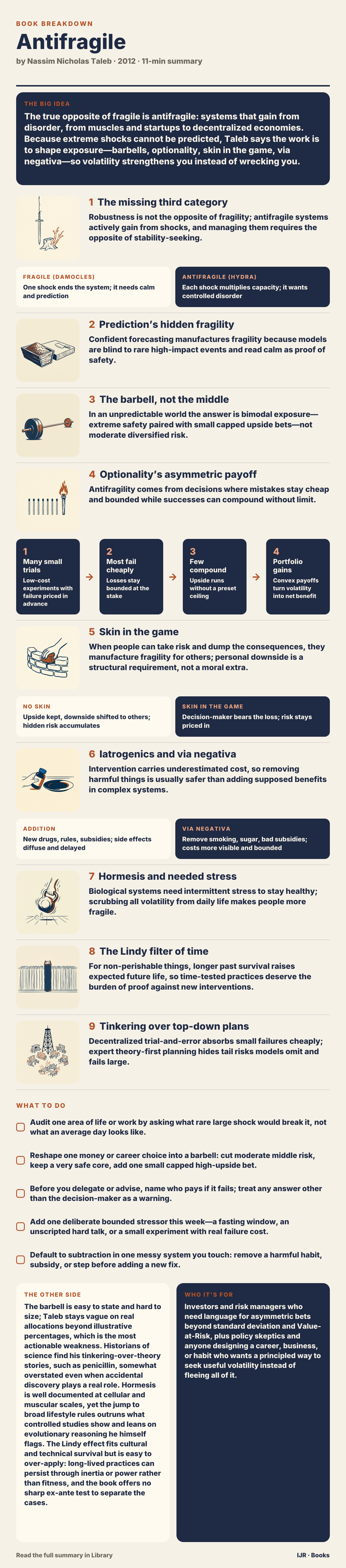
Robustness is not the opposite of fragility; antifragile systems actively gain from shocks, and managing them requires the opposite of stability-seeking.
Fragile (Damocles)
One shock ends the system; it needs calm and prediction
Antifragile (Hydra)
Each shock multiplies capacity; it wants controlled disorder
Taleb opens on a linguistic hole. We can name what breaks under stress and what withstands it, yet we had no everyday word for what grows stronger. He supplies antifragile. The gap is not cosmetic. A fragile system wants calm and forecasts; an antifragile one wants controlled disorder. Treat them the same and you get the wrong strategy.
He sets the triad with myth before any math: Damocles is fragile—one sword-drop ends him—while the Hydra is antifragile, two heads for every one lost. That pairing becomes the book’s anchor. Nature, evolution, and living economies are full of antifragile substructures. Erase their small volatility and you do not buy safety; you store up a larger break.
The recurring contrast is airlines versus banks before 2008. Every airline crash is investigated and written into procedure, so the system improves from accidents. Banks used leverage and complexity to suppress small failures until a systemic shock nearly destroyed the global financial system. The book from here on is about which structures turn volatility into improvement and which turn it into collapse.
In practice: Airlines grow safer after crashes because each failure changes the rules; mid-2000s banks hid small failures until one large failure nearly took the system down.

2
Prediction’s hidden fragility
Confident forecasting manufactures fragility because models are blind to rare high-impact events and read calm as proof of safety.
Once the triad is in place, Taleb targets our faith in forecasts. Domains ruled by rare extremes—Extremistan—are not the mild bell-curve world of Mediocristan where ordinary statistics work. In Extremistan, the extreme is the story.
He revives the turkey problem: fed daily for a thousand days, the bird’s confidence that humans are benevolent rises every day until the day before Thanksgiving. Every prior data point supports the wrong model. The stable feeding schedule itself creates the illusion of safety while building catastrophic exposure. Institutions make the same error. Years without a hit are not a measurement of low risk; they can be the accumulation of hidden fragility.
Pre-2008 banking leverage and the models used by ratings agencies and risk officers treated the absence of past collapse as evidence of future safety—turkey-years. The practical shift is simple: stop asking what will happen; ask how the structure would respond if something extreme did. You cannot predict the event, but you can still control exposure to it. That reframing organizes the rest of the book.
In practice: A turkey’s thousand calm feeding days raise its statistical confidence right up to the slaughter, the same pattern Taleb sees in quiet, leveraged bank years before 2008.

3
The barbell, not the middle
In an unpredictable world the answer is bimodal exposure—extreme safety paired with small capped upside bets—not moderate diversified risk.
If prediction fails, structure the downside and the upside instead of betting on a well-forecast medium outcome. Taleb’s barbell puts a large majority of resources—figures he illustrates as 85-90 percent—into something extremely safe, such as cash or ultra-conservative instruments, and a small remainder into highly speculative, high-optionality bets whose loss stops at the amount put in while the gain can run without a ceiling.
What you refuse is the middle: moderately risky positions that feel prudent because they are diversified yet carry unbounded tail risk. That is the trap that caught holders of supposedly safe AAA-rated mortgage securities in 2007-2008. The barbell is not a compromise between safety and risk; it is a rejection of compromise, because the moderate slot in Extremistan often smuggles fragility in under the look of prudence.
The same shape travels outside finance. A writer keeps a stable day job as the safe leg and pursues creative work with unbounded upside as the risky leg, rather than a single ‘moderate’ creative salary tied to one fragile employer. Size the legs wrong and the idea fails; the summary notes Taleb stays vague on exact allocations beyond illustrative cases.
In practice: A writer’s safe paycheck plus side projects with uncapped upside, instead of one mortgage-sized salary from a single employer, mirrors the 85-90 percent safe and small speculative split.
4
Optionality’s asymmetric payoff
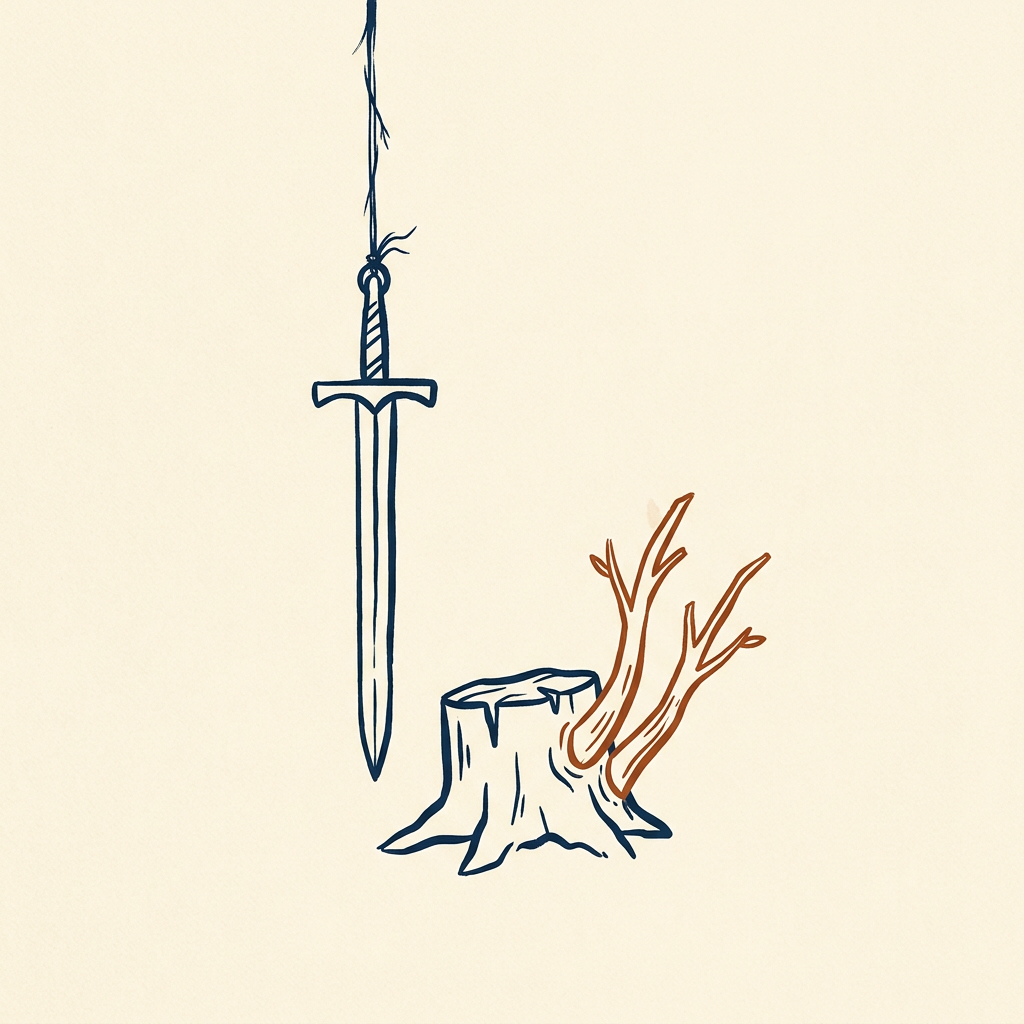
Antifragility comes from decisions where mistakes stay cheap and bounded while successes can compound without limit.
- 1Many small trialsLow-cost experiments with failure priced in advance
- 2Most fail cheaplyLosses stay bounded at the stake
- 3Few compoundUpside runs without a preset ceiling
- 4Portfolio gainsConvex payoffs turn volatility into net benefit
The barbell’s risky leg works only because of a deeper property Taleb calls optionality. A good decision structure lets you run many small, low-cost trials. Most fail cheaply. A few succeed out of proportion. That is the logic of tinkering, which he says built more of civilization’s practical knowledge than top-down theorizing.
He points to technology history—penicillin and numerous drug discoveries—emerging from serendipitous tinkering and observation more than from directed research programs. The structural feature is convexity: a payoff curve where a positive surprise pays more than the matching negative surprise costs. Without that asymmetry, risk-taking is only gambling; with it, volatility becomes fuel.
Silicon Valley-style venture portfolios are the institutional form even when left unnamed: many small startup bets, most expected to fail completely, one or two huge wins carrying the fund. Optionality is not a celebration of speculation in general. It is a celebration of a specific shape—capped loss, uncapped gain—that converts exposure to uncertainty into long-run benefit.
In practice: A venture-style book of many small startup bets expects most to die and needs only one or two outsized winners to make the whole book work.
5
Skin in the game
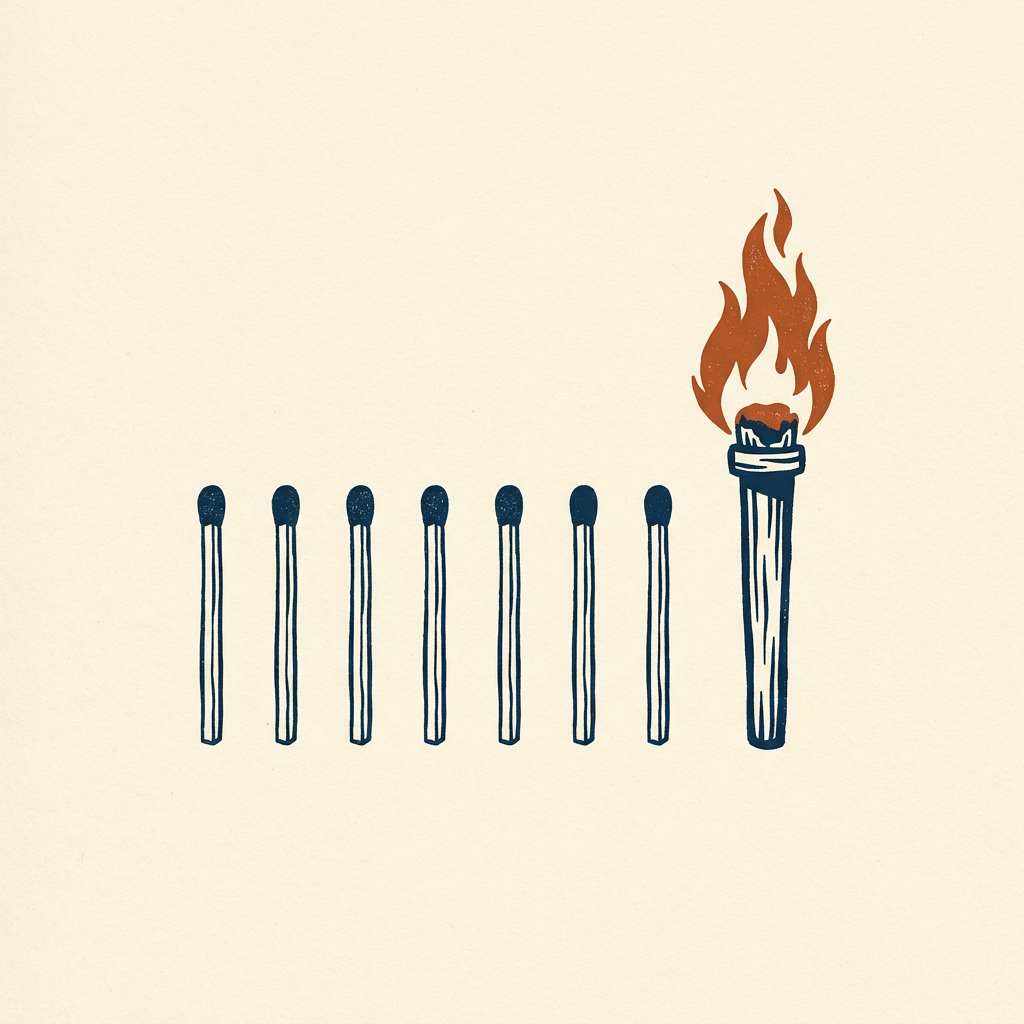
When people can take risk and dump the consequences, they manufacture fragility for others; personal downside is a structural requirement, not a moral extra.
No skin
Upside kept, downside shifted to others; hidden risk accumulates
Skin in the game
Decision-maker bears the loss; risk stays priced in
Taleb’s agency problem is simple. Decision-makers who keep the upside and offload the downside will systematically load hidden risk onto everyone else. Their personal payoff is asymmetric the wrong way: reward if it works, no penalty if it does not.
Bank executives before 2008 collected enormous bonuses in the boom and faced no clawback when the same strategies caused systemic collapse; losses landed on shareholders, taxpayers, and the wider economy. He sets that against Hammurabi’s code: a builder whose house collapsed and killed the owner was put to death, so the builder’s own skin entered every construction choice.
Modern professional structures in finance, government forecasting, and academic policy advice have engineered that feedback out. Classes of people can be confidently wrong at scale and pay nothing—long optionality without matching exposure. The heuristic follows: ask who pays if this goes wrong. If it is not the person deciding, expect hidden fragility to be growing in that system. This is the mechanism behind earlier fragility-hiding: the people building fragile structures are insulated from the collapse.
In practice: Pre-2008 bank bosses kept boom bonuses with no clawback when strategies failed, unlike Hammurabi’s builder who died if the house killed its owner.
6
Iatrogenics and via negativa
Intervention carries underestimated cost, so removing harmful things is usually safer than adding supposed benefits in complex systems.
Addition
New drugs, rules, subsidies; side effects diffuse and delayed
Via negativa
Remove smoking, sugar, bad subsidies; costs more visible and bounded
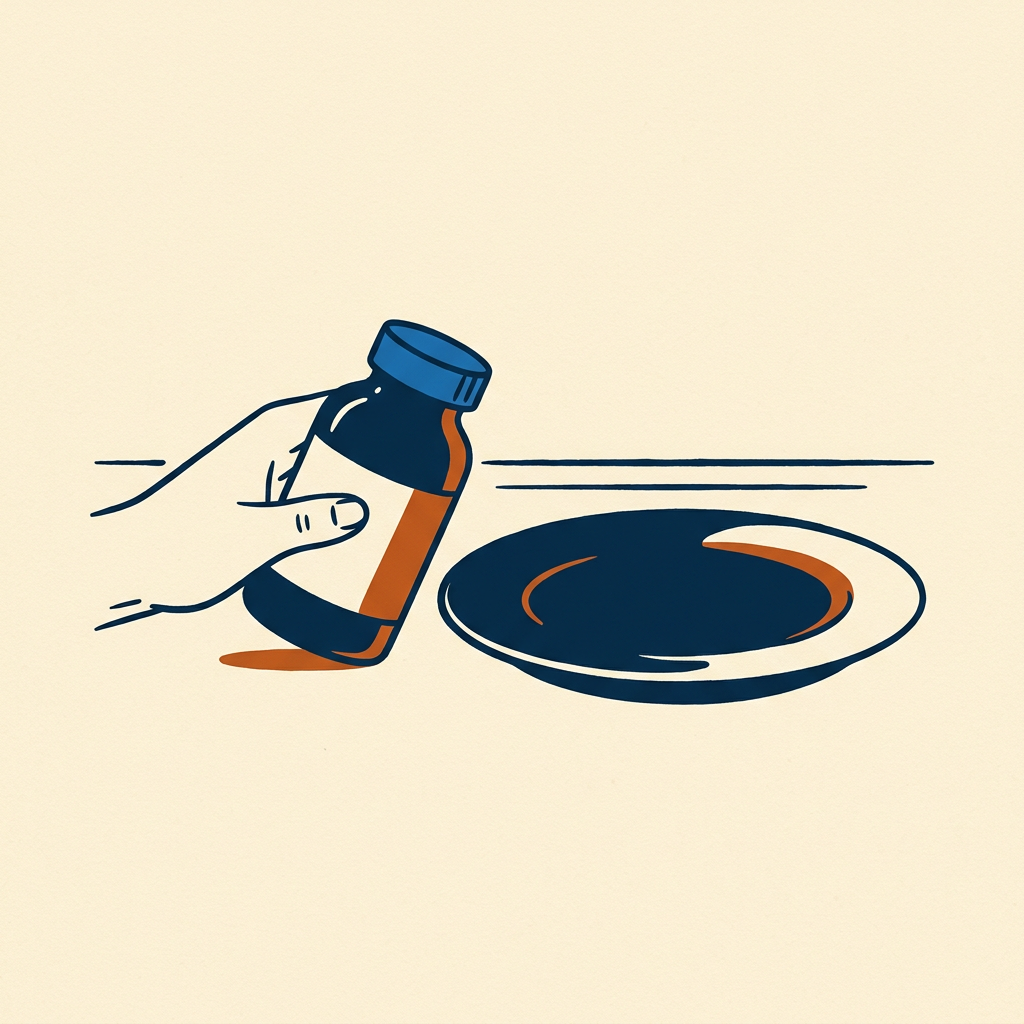
Taleb borrows iatrogenics—harm from the healer—and stretches it to any well-meant intervention in a complex system: medicine, stimulus, foreign policy, parenting. Intervention is never neutral. Each added treatment, rule, or subsidy plants new fragilities and delayed side effects that are harder to see than the original problem, which is vivid and immediate.
Via negativa is the counter-move: prefer subtraction to addition. In medicine, intervene hard only when the condition is severe and expected harm from doing nothing clearly beats expected harm from treatment; otherwise remove risk factors—smoking, sugar, sedentary living—rather than layer new drugs whose tail effects often appear only after wide, long use. Thalidomide stands as the historical warning against indiscriminate prevention in low-risk patients.
In policy the same logic favors stripping counterproductive subsidies and rules instead of stacking new ones, because each extra rule is another fragility point in an already tangled system. Interveners rarely pay for unintended harm, which is why subtraction—whose costs are more visible and bounded—is the more accountable default. The chapter deepens skin in the game: without personal cost, addition looks free.
In practice: A doctor drops smoking and sugar for a low-risk patient instead of adding a preventive drug whose side effects may surface only after mass long-term use, as with thalidomide.
7
Hormesis and needed stress
Biological systems need intermittent stress to stay healthy; scrubbing all volatility from daily life makes people more fragile.
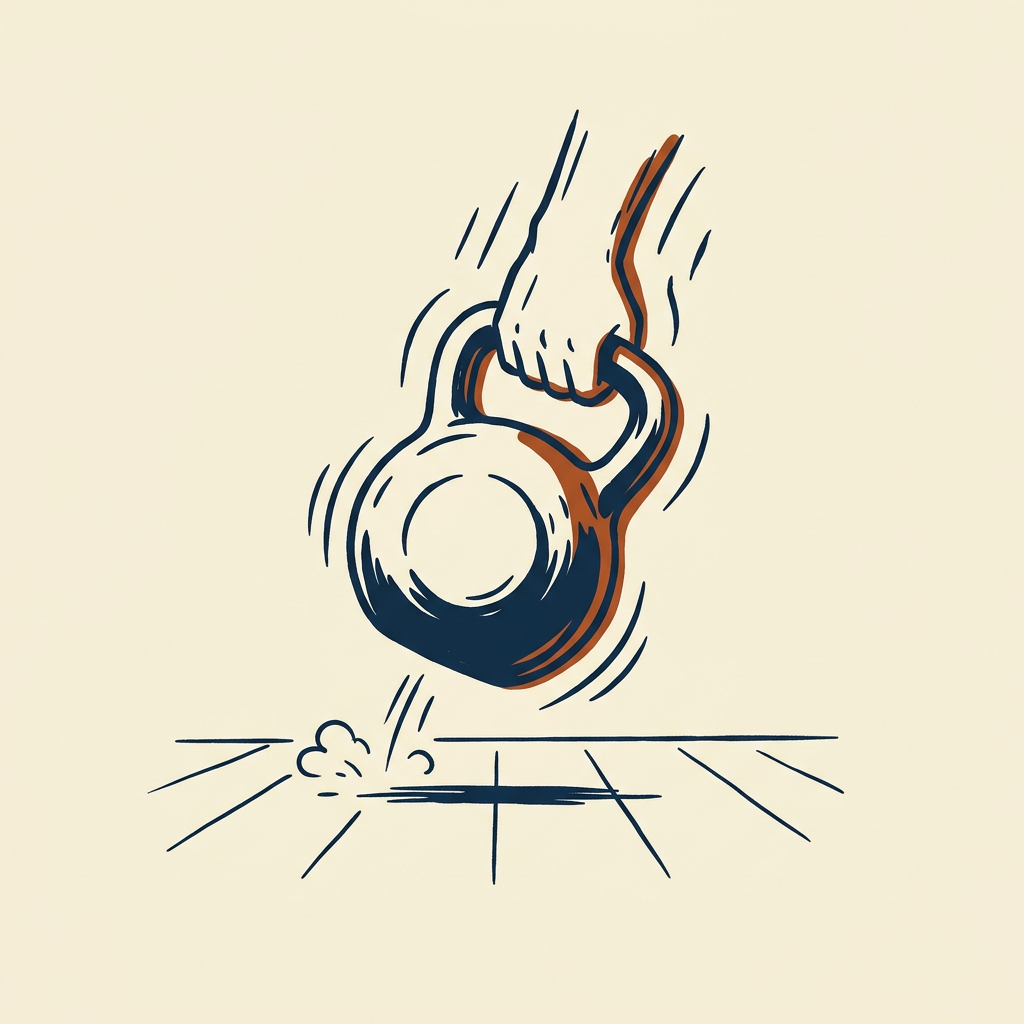
Taleb roots antifragility in biology through hormesis: a low dose of a stressor that would harm in large amounts instead triggers a useful adaptive response. Muscle grows under resistance past its current limit; bone density answers mechanical load; the immune system needs pathogen contact to build later defense.
From that he criticizes a comfort-maximizing modern pattern—climate-controlled offices, all-hours processed food, sedentary days, risk-averse parenting that blocks minor physical danger. Strip the stressors the body is built for and you buy short-term ease at the price of long-term fragility. He links the pattern, without claiming rigorous proof of causation, to the rise of modern metabolic and autoimmune disorders.
His own practice models the barbell in physiology: intermittent fasting and irregular intense exercise as the stressful leg, long low-intake or rest periods as the safe leg, instead of the moderate middle of three regular meals and mild daily workouts he treats as fragility-inducing. Hormesis itself is real; the leap to broad lifestyle rules rests more on evolutionary reasoning than on controlled trials the summary can cite.
In practice: Intermittent fasting plus brief intense training, rather than steady mild exercise and three regular meals, is Taleb’s bodily version of the barbell.

8
The Lindy filter of time
For non-perishable things, longer past survival raises expected future life, so time-tested practices deserve the burden of proof against new interventions.
The Lindy effect covers books, technologies, customs, and ideas that lack a fixed biological lifespan. Each extra year of survival lengthens expected remaining life, unlike organisms that age toward death. A book in print forty years is more likely to be read forty years on than last month’s title, because survival has already filtered out the ephemeral.
Taleb uses this to defend time-tested heuristics—fasting, walking, apprenticeship learning—against the assumption that newer scientific or technocratic knowledge automatically wins. Practices that have lived through centuries of messy stress have been selected for robustness or antifragility in ways a fresh model on a spreadsheet has not.
This is not ‘old is always better.’ It is a burden-of-proof rule: the new intervention must show it survives real chaotic conditions, not merely that it scores well inside a controlled model. The same logic loops back to iatrogenics—new additions carry unseen tails that time has not yet priced.
In practice: A book that has already lasted forty years in print is, under Lindy, a better bet to last another forty than a title published last month.
9
Tinkering over top-down plans
Decentralized trial-and-error absorbs small failures cheaply; expert theory-first planning hides tail risks models omit and fails large.
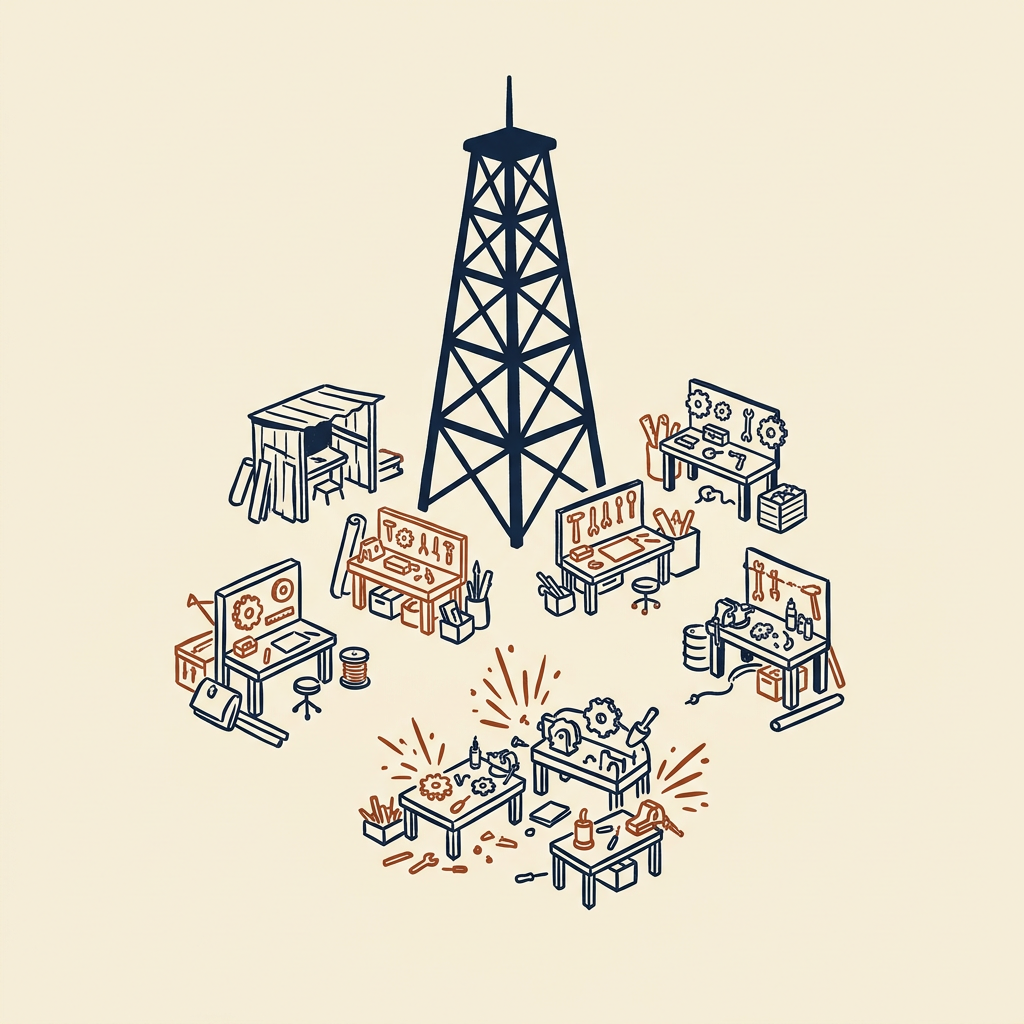
Taleb’s closing split is between the Soviet-Harvard illusion—centralized, theory-first control by credentialed experts—and bottom-up tinkering by people with skin in the game. Complex systems are too nonlinear for top-down models to capture tail risk cleanly. Models simplify; the simplifications are exactly where catastrophe hides.
Decentralized systems generate many small local failures that stay informative and cheap. At societal scale they act like the barbell’s risky leg: thousands of entrepreneurial misses produce sturdier knowledge than one centrally planned miss that takes the whole structure with it. Switzerland’s cantonal setup and its long economic stability serve as his suggestive, not controlled, illustration of antifragility through many local adjustments instead of nationwide top-down swings.
Every earlier thread lands here. Prediction fails, so use barbells and convex optionality; align incentives with skin in the game; subtract harm before adding intervention; let bodies and institutions meet stressors; trust time-tested structures over fresh models. The political result is structural distrust of centralized expert control, not from market ideology, but from where tail risk hides.
In practice: Switzerland’s many cantonal adjustments, in Taleb’s telling, absorb shocks locally instead of betting the country on one nationwide expert plan.
Key terms
- Antifragile Gains strength from shocks, volatility, and stress rather than merely resisting them
- The triad Fragile (breaks), robust (withstands), antifragile (improves)—three different responses to disorder
- Extremistan Domains where rare extreme events dominate outcomes, breaking ordinary statistics
- Turkey problem Reading a long calm stretch as proof of safety right up to a single fatal surprise
- Barbell strategy Most resources in extreme safety, a little in capped high-upside bets, nothing in the fragile moderate middle
- Optionality Decision shape with cheap bounded losses and open-ended gains; convexity in practice
- Skin in the game Decision-makers personally bear downside so they cannot dump risk on others
- Iatrogenics Harm caused by the intervention meant to help, generalized beyond medicine
- Via negativa Prefer removing what harms over adding what supposedly helps
- Lindy effect For non-perishable things, longer past survival raises expected future survival
What to do
- Audit one area of life or work by asking what rare large shock would break it, not what an average day looks like.
- Reshape one money or career choice into a barbell: cut moderate middle risk, keep a very safe core, add one small capped high-upside bet.
- Before you delegate or advise, name who pays if it fails; treat any answer other than the decision-maker as a warning.
- Add one deliberate bounded stressor this week—a fasting window, an unscripted hard talk, or a small experiment with real failure cost.
- Default to subtraction in one messy system you touch: remove a harmful habit, subsidy, or step before adding a new fix.
Questions to think with
- Where in your work or health are you mistaking a long calm stretch for evidence of safety?
- If you barbell one decision this month, what exactly sits in the safe leg and what single upside bet sits in the risky leg?
- Who currently keeps the upside of your biggest shared risks, and who would actually pay the downside?
- Which intervention you rely on could be replaced by removing a stressor-depriving comfort instead?
- What practice you trust has survived long enough to earn a Lindy presumption—and what new fix has not?
The other side
The barbell is easy to state and hard to size; Taleb stays vague on real allocations beyond illustrative percentages, which is the most actionable weakness. Historians of science find his tinkering-over-theory stories, such as penicillin, somewhat overstated even when accidental discovery plays a real role. Hormesis is well documented at cellular and muscular scales, yet the jump to broad lifestyle rules outruns what controlled studies show and leans on evolutionary reasoning he himself flags. The Lindy effect fits cultural and technical survival but is easy to over-apply: long-lived practices can persist through inertia or power rather than fitness, and the book offers no sharp ex-ante test to separate the cases.
Who it's for
Investors and risk managers who need language for asymmetric bets beyond standard deviation and Value-at-Risk, plus policy skeptics and anyone designing a career, business, or habit who wants a principled way to seek useful volatility instead of fleeing all of it.