



Yemeni forces claim gains near Bab el-Mandeb
In the geolocated footage from Cedar News and FN GEOINT, Yemeni government forces move into Dhubab Airport, the frame locked to roughly 12.895934, 43.511890 on the Red Sea coast under the shadow of the Bab el-Mandeb Strait. The clip supplies the visual record of the site back in their hands after the Houthi hold.
Colonel Majed Al Nuzaili, speaking for the Yemeni Armed Forces, placed the airport among the positions taken in a flanking coastal push by the Giants Brigades and the Nation’s Shield Forces. He said the same advance had cut the road linking Dhubab to Mokha, “We are using advanced capabilities,” Al Nuzaili stated.
Rashad al-Alimi, chairman of Yemen’s Presidential Leadership Council, announced the offensive on Sunday, 4 October 2026. He named it Operation Dawn of Yemen, also called Operation Yemen Dawn. The council is the executive body of the internationally recognised government. The stated purpose was to retake remaining Houthi-held territory and restore state institutions. “Today we are embarking on a decisive phase in the history of our nation,” al-Alimi said. He pledged the campaign would continue “until the country is liberated from the grip of the terrorist militia.”
On Monday, 5 October 2026, Saudi-backed forces claimed Dhubab district overlooking Bab el-Mandeb. Yemen’s military statement, carried by the state news agency Saba, said: “Forces from the Homeland Shield Forces and the Giants Brigades carried out a large-scale military operation with air cover targeting Houthi militia positions and movements in several areas of the district.” An unnamed army source told Saba: “During the operation they advanced and seized important positions – cutting off supply lines and roads leading to Bab al-Mandeb.” The agency reported the forces were “continuing to comb and secure the liberated areas and cut off supply routes to the Houthi terrorist militia.” A number of Houthi fighters were killed and wounded, with military equipment destroyed or damaged, the source said.

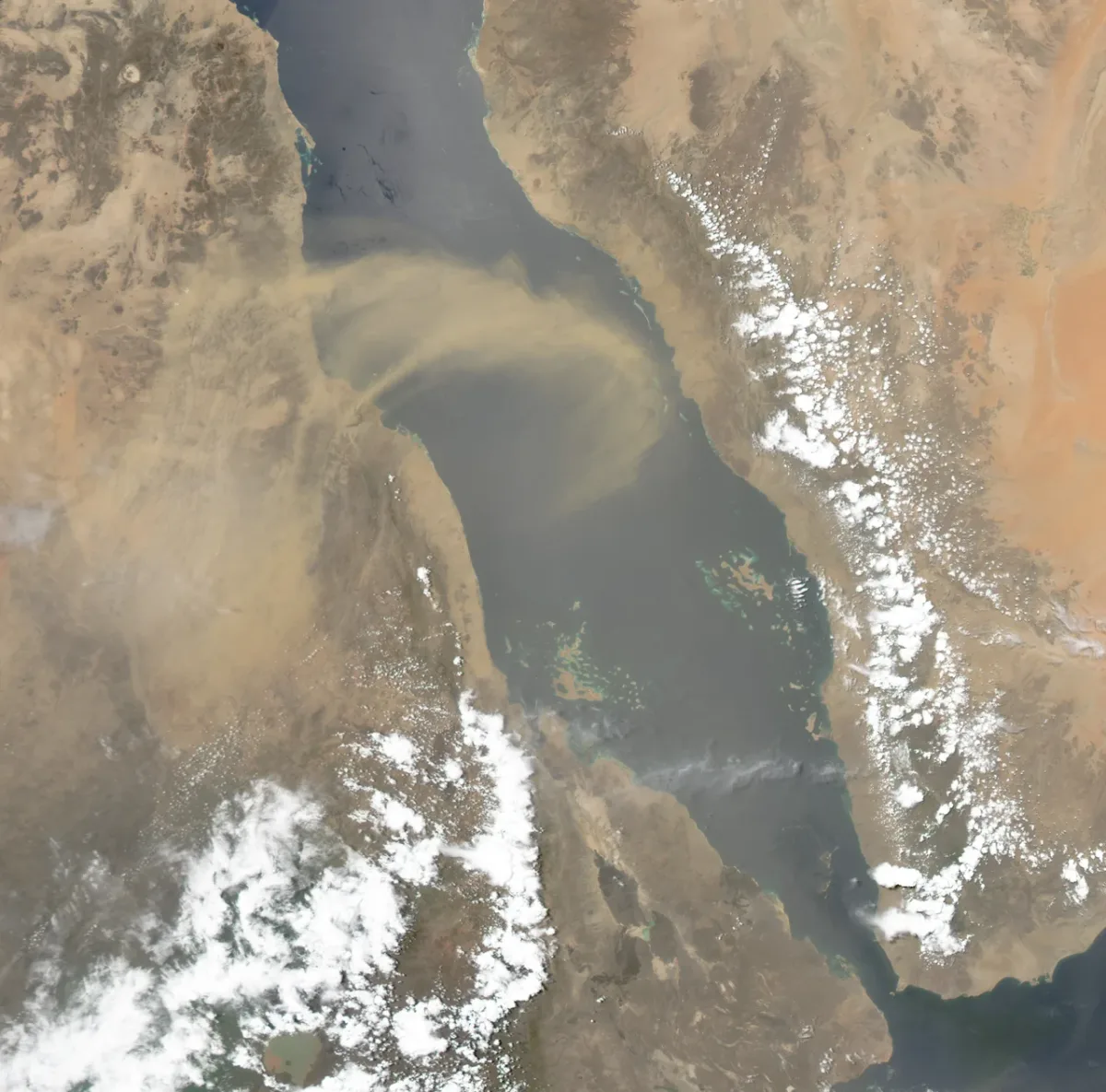
The Bab el-Mandeb Strait sits between Yemen on the Arabian Peninsula and Djibouti and Eritrea in the Horn of Africa. At its narrowest it measures 26 kilometres, forcing tanker traffic into two channels each two miles wide. Most petroleum exports from the Persian Gulf that transit the Suez Canal or the SUMED Pipeline pass through both this strait and the Strait of Hormuz. Closure can force tankers around the southern tip of Africa, adding days and cost. By 2018 an estimated 6.2 million barrels a day of crude oil, condensate and refined petroleum products moved through the strait that joins the Red Sea to the Gulf of Aden; in 2017 those flows accounted for about nine percent of seaborne-traded petroleum.
After the 2022 ceasefire held until the summer of 2026, the waterway had returned to the centre of the war. In mid-September 2026 the Houthis seized the port city of Mocha and key strategic islands in the Bab el-Mandeb Strait, sweeping across parts of western Yemen after the ceasefire collapsed that summer. The civil war had begun when Houthi forces took the capital Sanaa in 2014, forcing the government to retreat to Aden. A Saudi-led coalition intervened the following year with an air campaign aimed at restoring the government and ousting the group. Front lines largely stalled for years afterward, until the latest rupture reopened the coasts and the hills.
The heaviest fighting has been in the southwest, along the coastal approaches near the strait and in the high ground around Taiz. On 30 September 2026 a Reuters photograph showed members of the Saudi-backed Yemeni government forces riding a military pick-up vehicle as they patrolled a road leading to a frontline of clashes in Taiz province. Three days later an AFP image captured a Saudi-backed fighter looking over a damaged building near the Jabal Han front west of the city, after battles earlier that day as Houthi forces pressed the main route between Taiz and Aden. A Houthi-run news agency on Monday cited a military source saying the group had driven government forces from the al-Mawasit district of Taiz province and reached the home of al-Alimi. The mountainous district sits close to the last road running from Taiz into Aden.
Al Nuzaili said the armed forces had launched 1,122 strikes against Houthi artillery positions, rocket launchers and command centres across Saada, al-Jawf, Taiz and the coast. Field reports he cited put 1,747 Houthi fighters killed. Another 364 military vehicles, equipment and supply transport units were destroyed or disabled. Houthi-aligned media denied that government forces had made any advance.

The Saudi-led coalition put 100 fighter jets into the campaign, according to spokesman Turki Al Malki. He said 324 high-value Houthi targets had been destroyed and that the alliance was giving round-the-clock air support to Yemeni forces on the ground and air cover over Bab el-Mandeb, with operations against moving targets continuing.
Colonel Majed Al Nuzaili said hundreds of Houthi fighters were surrounded in Dhubab. Government forces called on them to surrender. Some of the fighters fled by boat. The claims could not immediately be independently verified and have not been confirmed by the Houthis. The same day Al Nuzaili said the armed forces had begun a strategic offensive on Sanaa, the Houthi-controlled capital. Houthi-run Al Masirah television confirmed attacks on the city.
Rashad al-Alimi said the operations aimed at restoring security, rights and dignity to citizens in areas controlled by the Houthis, and stressed that those citizens were not targets. He posted on X: “With God's aid, the will of our people, the valour of our armed forces and all military formations, and the support of our brothers and friends, Yemen will march towards a new dawn of freedom, peace and stability.”
Saudi Arabia, Turkiye and Pakistan signed the Mecca Joint Defence Agreement on 7 August 2026, under which an attack on one is treated as an attack on all. A Reuters photograph from 31 August shows the officials who gathered for the first committee meeting under that pact in Istanbul: Turkey’s Foreign Minister Hakan Fidan, Pakistan’s Deputy Prime Minister and Foreign Minister Ishaq Dar, Saudi Foreign Minister Prince Faisal bin Farhan Al Saud, Turkey’s Defence Minister Yasar Guler, Turkish Chief of General Staff Selcuk Bayraktaroglu, Pakistan’s Chief of Defence Forces Field Marshal Asim Munir, and Pakistani Defence Minister Khawaja Asif. Dar had now reached Riyadh for talks with his Saudi and Turkish counterparts. He had said the meetings would address a proposal for political engagement with the Houthis as an alternative to the military option. Pakistani Defence Minister Khawaja Asif and Field Marshal Asim Munir were to accompany him at the meetings.
Michael Appel of Al Jazeera said, “Civilians remain caught up in the fragmented front line of this war, and the announcement of an expanded military operation leaves tens of thousands with the prospect of continued displacement and hunger as a humanitarian crisis takes hold.”