




Snap Launches $2,195 Specs AR Glasses
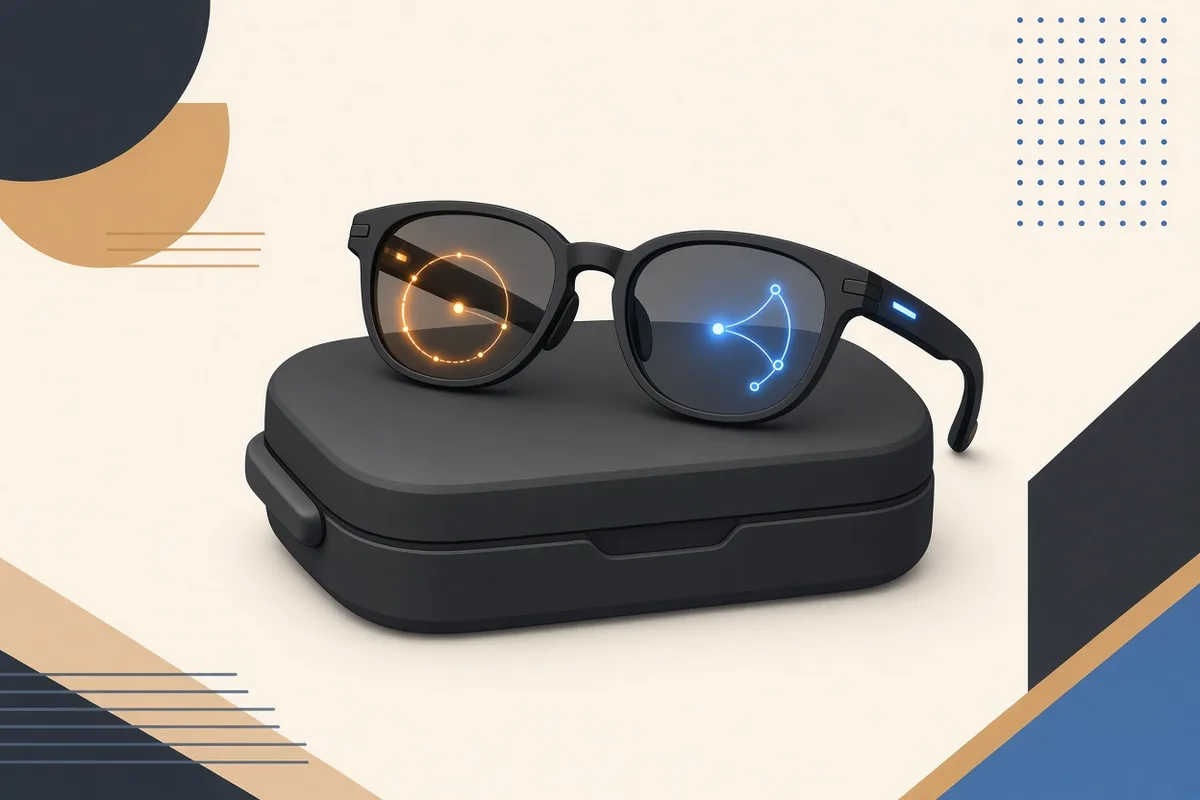
After a trippy promotional video, Evan Spiegel took the stage in Los Angeles on September 16, 2026, and moved straight into live demos. The glasses on offer were Specs, framed not as a camera gadget or filter toy but as a computer meant to sit on the face.
The demos opened new entertainment hooks. Specs could connect with HBO Max and Spotify, supplying the interactive baseline earlier smart glasses had mostly gone without. Spiegel treated the device as the next computing surface rather than an accessory, a face-worn machine built for shared digital layers over the real world.
“I will say it’s an interesting time to be launching a new computer because things in tech are pretty weird right now,” Spiegel said. “We’re being told that AI will take our jobs, that virtual worlds will replace the real one. Well, no, thank you. We do not accept that future. Making people irrelevant is not progress, and computers should make us more important, not less.”
The glasses cost $2,195.
A $200 refundable deposit held the preorder. They came in two sizes framed in Swiss TR90 polymer. The 47-millimeter model weighed 132 grams. The 52-millimeter model weighed 136 grams. Each pair ran fully standalone. The computer lived entirely in the frames, with no external battery puck and no tether to a phone or pack.
A proprietary waveguide display using liquid crystal on silicon generated images on a tiny chip and guided that light through optical layers in the lenses. A waveguide channels projected light so the wearer sees virtual elements fixed against the ordinary scene still visible through the glass. Both lenses could show the imagery. The system offered a 51-degree field of view and supported 16 million colors. Electrochromic lenses change tint by electronic means; they shifted from clear to tinted in ten seconds depending on lighting conditions and accepted removable inserts for a wide range of prescriptions. Dual Snapdragon processors split the load inside the frames: one handled computer vision, the other ran AR Lenses, Snap’s name for its augmented-reality effects. Together they enabled hand tracking with a seven-millisecond response time, the low latency Snap said would help digital content feel anchored in the real world.
On June 16, 2026, at the AWE mixed-reality conference in Long Beach, California, Evan Spiegel unveiled Specs as Snap’s first augmented-reality glasses built for consumers rather than developers alone. The work had taken more than six years. Earlier generations had been released only to select developers. Snap’s first smart glasses, the camera Spectacles of 2016, had sold for $130. In January the company created Specs Inc. as a subsidiary to house the glasses project, and Spiegel had already promised a consumer version for 2026.
“Almost 20 years since the launch of the iPhone, people are ready to think about computing differently,” Spiegel said in an interview with CNBC. “Specs really represents a way to use computing together in shared experiences in the real world, looking up through see-through lenses rather than at an opaque screen,” he said. Audio-only smart glasses drew a brief dismissal. “They’re kind of like a phone accessory or an open-ear headphone.”
At Snap’s offices a hands-on session placed people wearing Specs across a physical surface for a game of dominoes in augmented reality. Virtual tiles rested on the real surface. Both wearers could see and move them together in real time. Menus and app windows floated over the ordinary room. Pinching selected an item; dragging repositioned it. The interface was occasionally finicky and required careful hand placement. The voice assistant often needed multiple attempts to execute a command.
A demo video shown at the Los Angeles event depicted an IT technician repairing hardware with the glasses. Snap launched Specs for Enterprise and named partners that included Amazon, Salesforce and Nvidia. “We’re building out mobile device management, security controls, and ways to deploy and manage stacks across teams with the world’s most trusted providers, bringing peace of mind to IT departments,” Spiegel said.
The company also introduced Specs Intelligence, an anticipatory AI system built to pair with the glasses and with other devices including iPhones and Macs. It draws understanding of goals, priorities, relationships and routines from the apps and tools a user chooses to connect. The system does not require the headset.
“We've seen these different shifts in computing happen, and we see a shift is coming,” Russell Patton, product manager for Specs at Snap, told Tom's Guide. “Going forward, it's going to be that shift from phones to glasses, and I think it's not just taking the apps that are on our phones and putting them into glasses.”
“This is like the worst time for any company to be launching any kind of premium product,” said Jitesh Ubrani, a research manager for IDC. Snap's core audience had always skewed young, he added, and typically that audience could not afford to spend a lot.
“We've been really clear with investors since we founded the company that we're going to manage the business for the long term and really in service of our community and our customers,” Spiegel said in an interview with CNBC.
The glasses were expected to ship in fall 2026, first to the United States, the United Kingdom and France. A separate bundle paired them with a charging case that carried its own cellular radio, priced at $2,395. The connection ran through Verizon: $10 a month for existing customers, $20 a month for everyone else. That package let the frames leave home or office Wi-Fi and keep working on the move. Starting October 1, Snap set a popup inside Westfield Century City mall in Los Angeles for try-ons. Preorders already held their places.
He described testing Specs at home with his four sons. “Rather than having kids staring down at a single player on a little screen, you can run around and play laser tag, you can learn about dinosaurs, you can build Legos,” Spiegel said. “It's really, really fun to be able to play with see-through computing, because it's something that you can share.”