




Reusable Bags Pile Up at Home, Experts Advise Donations
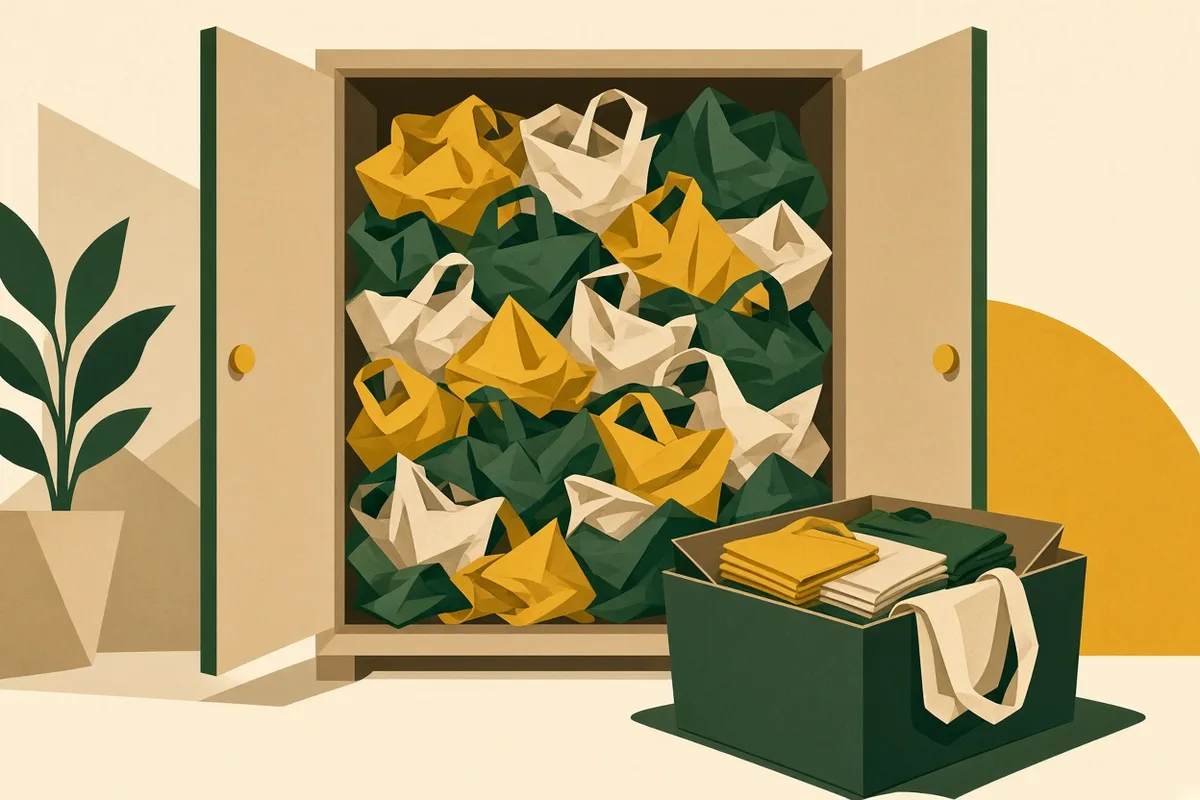
Professional home organizer Britnee Tanner of Salt Lake City finds extra reusable bags stuffed under kitchen sinks and in pantry corners and calls them "sneaky," saying she purchased a handful then somehow collected ones she never bought. Single-use plastic shopping bags are banned across 12 U.S. states, so households stock canvas, cloth or thicker plastic totes that pile up from freebies and grocery giveaways. University of Michigan sustainability scientist Shelie Miller says reusables "are generally good for the environment, with the caveat that they have to be reused," and that people want "well-loved reusable items," not an entire closet of bags. Production uses resources such as water for cotton; thicker bags need more reuses than flimsy ones to offset that cost. Environmental economist Kimberly Oremus uses hers up to a decade and says "If you forget it, it's not the end of the world." Tanner tells clients to assign each kept bag a job—library books, groceries or packed lunches—and return it after use Extras go to thrift stores or the Community FoodBank of New Jersey, collecting since 2022; Elizabeth McCarthy says "They're always something that our pantries need." No clear disagreement among sources—all cited experts agree the benefit depends on repeated use, not accumulation. Bags generally cannot be recycled curbside.
Where do you stand?