



Nixon's Hatchet Man Finds Grace
By Pursued by God (/journals/pursued-by-god)
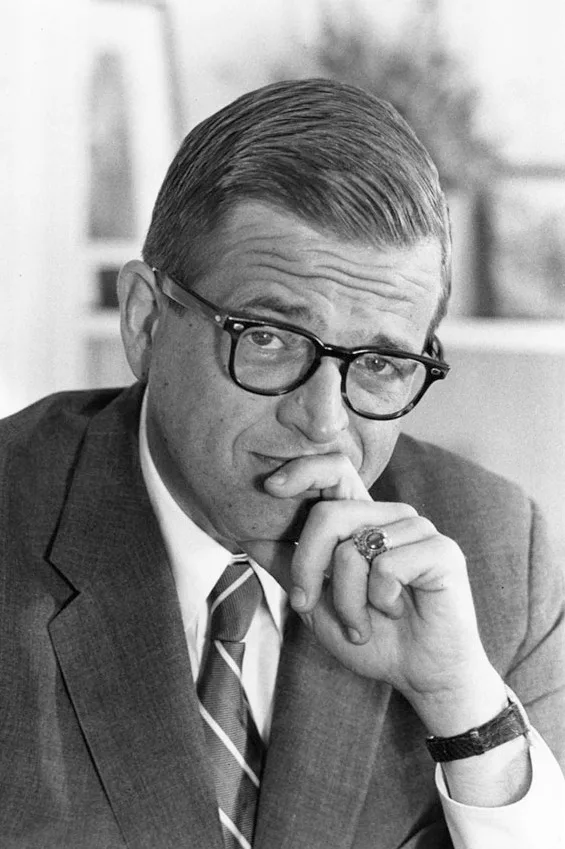
MASSACHUSETTS — Charles Colson, the man known inside the Nixon White House as the "hatchet man" and chief character assassin, found grace on a friend's porch one August evening — and spent the remaining decades of his life walking back into prisons to tell men there was a version of their story where the worst thing they ever did was not the last word on who they were.
Colson, who pleaded guilty to obstruction of justice in the Watergate scandal and served seven months in prison, described the moment of his conversion in his book Born Again. Sitting on the porch of his friend Tom's house in Massachusetts, he listened as Tom read aloud from C.S. Lewis's Mere Christianity — a chapter on pride that Colson later said was "a portrait, not an argument," one that fit him "like a coat cut to his own measurements."
He got up, walked to his car, and sat alone in the dark for nearly an hour, crying so hard he could not make his hands work the wheel. He expected to wake the next morning ashamed of himself. Instead, he woke feeling "better than he had in years. Lighter."
Skeptics had every reason to doubt. This was a man who had called himself "a flag-waving, anti-press, anti-liberal Nixon fanatic," who had been accused of scheming to dose a columnist's steering wheel with something that would leave him dead in a ditch. A columnist who had once been a marked man on Colson's enemies list later investigated the conversion himself, looking for the seams where the old Colson might still be hiding behind the new one's piety.
What the conversion involved
Colson had been Nixon's special counsel, with an office next to the President's own in the Executive Office Building — closer to the throne than almost anyone.
He left the White House after the 1972 landslide feeling only what he later described as a "flat, dead question": so what.
Four months after an old client told him plainly that he had accepted Jesus Christ and committed his life to Him, Colson called that client and asked to come by.
On the porch that August night, Tom read from Mere Christianity — the chapter on pride, the sin that convinces a man he needs no one, not even God.
He sat in his car afterward and wept for nearly an hour, thinking of his wife and wanting, for the first time in longer than he could measure, to be clean of something.
What happened next
The Watergate investigation closed every door at once. Colson pleaded guilty to obstruction of justice and went to prison for seven months — a camp with fences instead of walls, a long way down from a chair beside the President's. While he was inside, a prayer fellowship formed around him, including a former Democratic senator who, by any ordinary political arithmetic, should have wanted him buried under that prison as long as the law allowed. Instead, the senator and others from the group found an old statute that let them offer to serve out the remainder of Colson's sentence themselves, so he could go home to his family.
Nothing came of the offer legally. But Colson wrote afterward that for the first time in his life he felt genuinely free, even sitting in a cell at what should have been the lowest point of everything he'd built and lost.
He came out of prison and wrote Born Again, a bestseller that admitted things he didn't have to admit. Then he went back inside prisons — not as an inmate, but as a visitor who kept coming back on his own legs. He built an organization meant to do nothing but serve the people society had agreed to forget once the gates shut behind them.
Colson told an interviewer once that Christianity was "the religion of second chances." The apostle Paul put it this way: "Therefore, if anyone is in Christ, he is a new creation. The old has passed away; behold, the new has come" (2 Corinthians 5:17).
This story was drawn from a first-person account of the events on that Massachusetts street, combined with the public record of Colson's guilty plea, prison term, and subsequent ministry.