




Fitted with a Berlin Heart, Little Macs Is 'Absolutely Thriving' While He Waits for a Heart Transplant
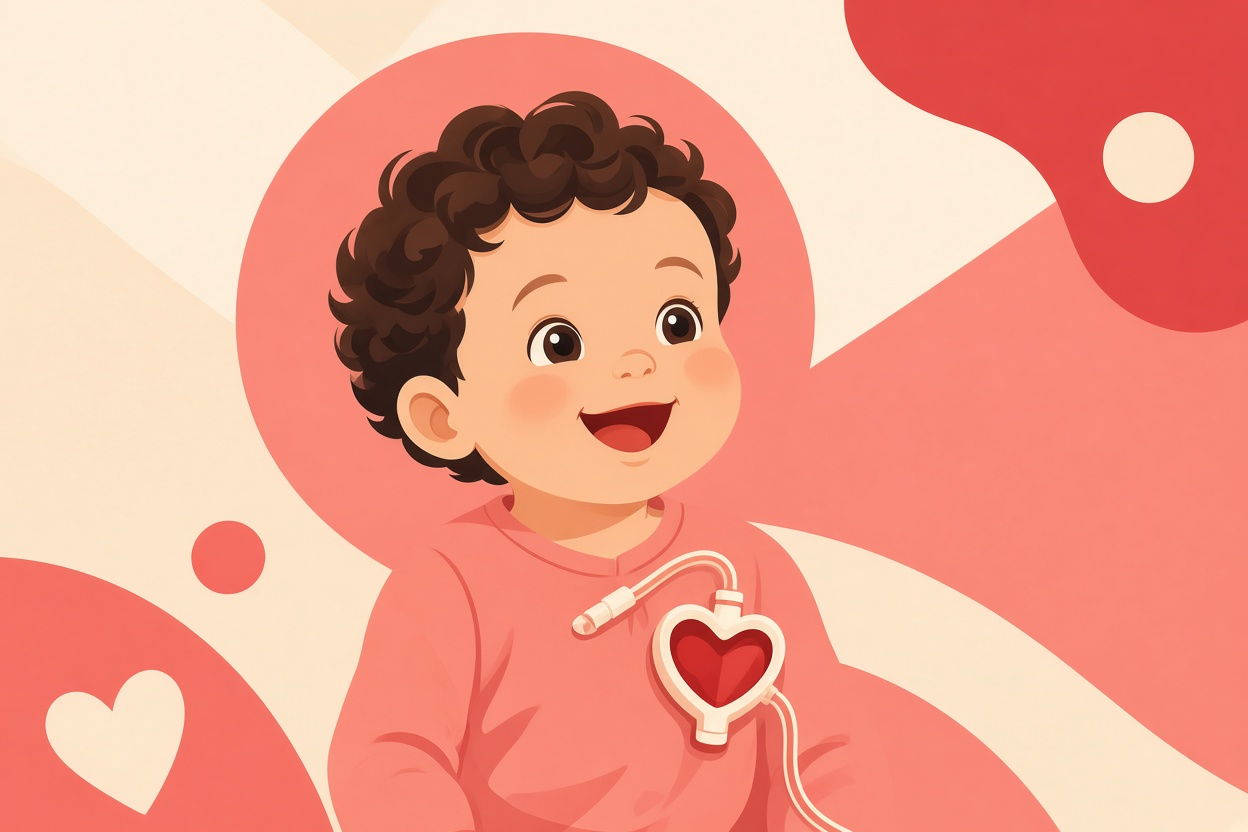
Dylan and Catrin saw their son Macs smile and respond to them once more. The change came after he received the Berlin Heart, and they described the difference as having their baby back. Before the device Macs had lain still on a bed under sedation. Macs Green had appeared to be a normal baby until he suffered two cardiac arrests. Doctors at Bristol Royal Children’s Hospital diagnosed dilated cardiomyopathy. The condition threatened to bring on final-stage heart failure. The family faced a grim outlook while Macs rested on an extracorporeal membrane oxygenation machine. Physicians advised Dylan and Catrin to prepare for an end-of-life scenario. The situation shifted when the medical team determined that Macs could receive a Berlin Heart instead. The Berlin Heart is a ventricular assist device made in Berlin that uses air power to pump blood through the body. It exists in INCOR and EXCOR models. The EXCOR model supplies full heart support for infants and children who cannot wait for a donor heart without mechanical help. The first European patient received a Berlin Heart in 1990 and the first American patient received one in 2000. By 2014 the total number of children and infants fitted with the device had reached 1,500. One toddler in 2012 lived with the EXCOR model for two and a half years. Once the Berlin Heart was in place Macs could stop the sedating drugs. He began smiling and reacting to his parents. Dylan noted that the device allowed his third son to behave like a normal infant again rather than remaining motionless. Catrin said Macs was absolutely thriving. The length of time until a heart transplant remains unknown and could stretch into years. The Berlin Heart continues to support his circulation in the meantime.