


Anduril Plans $3.7B Maryland Submarine Shipyard
Anna Kelly took the White House call with reporters on Tuesday and put the figure on the record. “The United States Navy, together with Anduril Industries, will invest $6.6 billion to create a new facility in Baltimore County, Maryland, which will manufacture critical components for the Virginia-class submarine. This delivers on President Trump’s promise to bolster America’s defense industrial base while revitalizing our manufacturing industry, creating over 13,000 direct and indirect jobs, and driving $2 billion in annual economic output.”
Six point six billion dollars for one new plant. The work, as she framed it, would turn out critical parts for the Navy’s Virginia-class boats and land more than thirteen thousand direct and indirect jobs while generating two billion dollars a year in economic output. Anduril Industries, named in the same breath as the Navy, was the private partner carrying the other half of the announcement into Baltimore County.
What Kelly had given was the scale, the county, the submarine class, and the jobs. The rest of the day would have to fill in the ground.
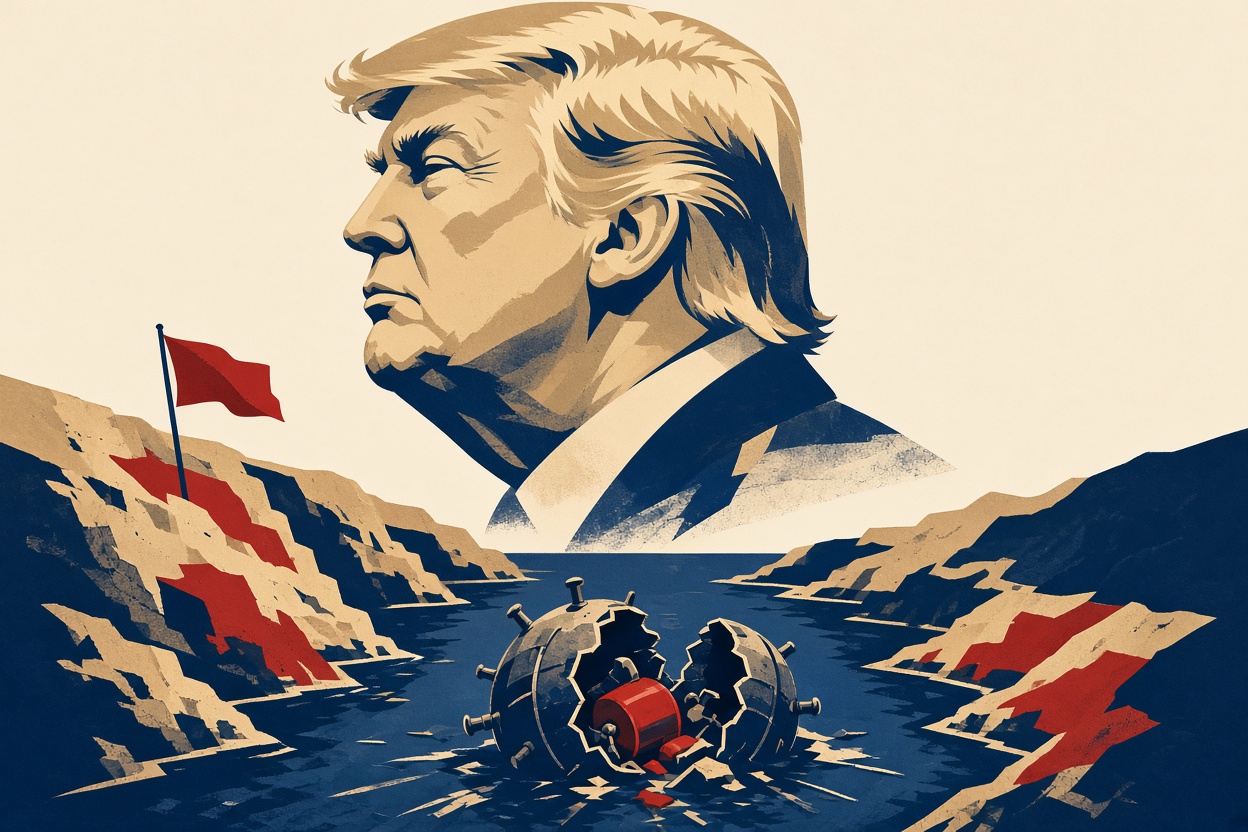
On Tuesday, Oct. 6, 2026, President Trump and Maryland Gov. Wes Moore jointly announced the facility at Sparrows Point. They named it Arsenal-2. It would stand at Tradepoint Atlantic, on ground where Bethlehem Steel once made steel and ships through both world wars.

Moore put the scale in a written statement: the largest private investment and the largest job creator in Maryland in more than a decade. With the facility, he said, thousands of Marylanders would have new pathways to work, wages, and wealth through advanced training and high-skilled maritime manufacturing jobs.
Chris Brose, Anduril’s president and chief strategy officer, spoke to the stakes on the day’s call with reporters. “The Virginia-class submarine program is, you know, one of the most critical warfighting capabilities that our nation has.” A defense-tech firm known for autonomous systems and software was stepping onto historic steel-and-ships ground. The next questions turned on how the yard itself would be built.
Brose answered on the same call. “And I think for us, you know, this is an opportunity to really reimagine how a shipyard is built and how this work is done.” He placed the idea in the talks that brought them there. “As we’ve had this conversation with the administration and with the Navy, really for the better part of the past two years, you know I think the core insight that the administration had and the Navy had is we just need new production capacity… So the goal here for Anduril is to contribute to that.”
“It’s not about, you know, the inability to bend steel in America. We know how to do that,” he said. The shortfall was capacity. The path he described was to bring software and digital methods from commercial aerospace into the yard, break complex tasks done by skilled workers into a larger number of simpler ones, and let a bigger workforce move faster. Production capacity, not metallurgy, was the problem to solve.
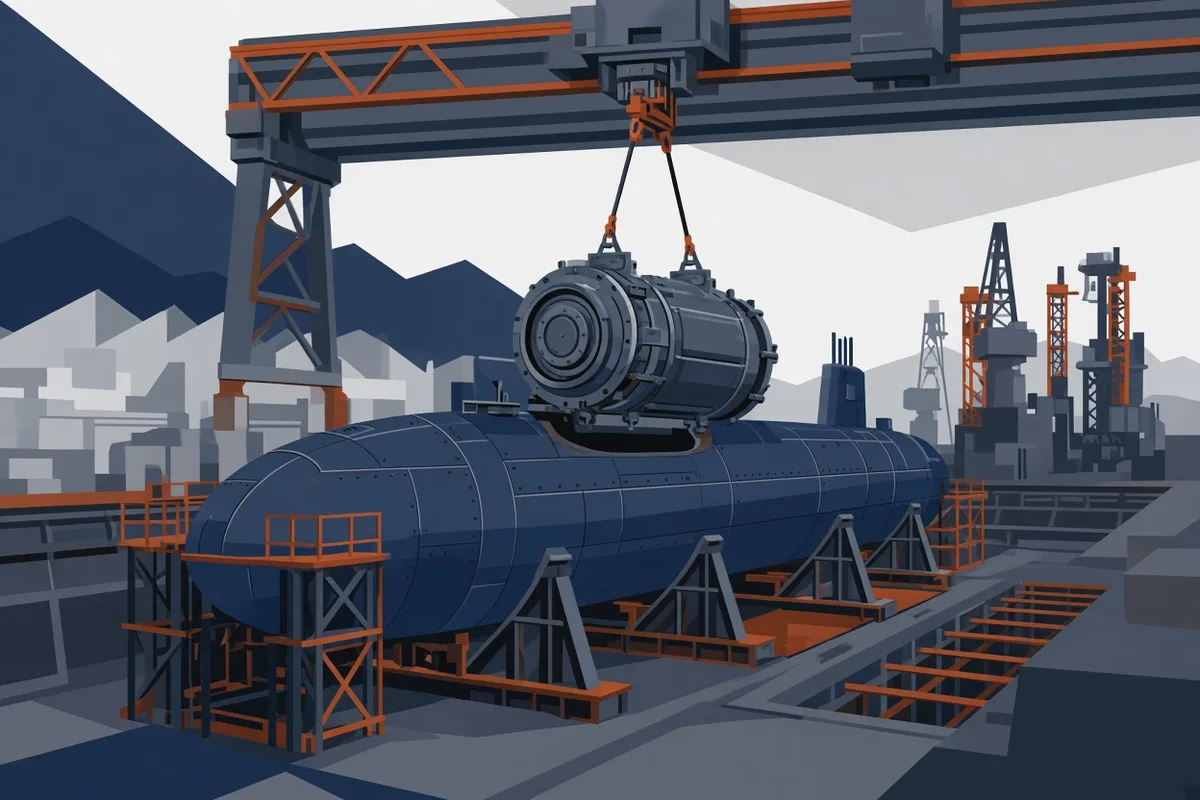
Anduril’s press release named the system that would run the floor. ArsenalOS, the company’s industrial software platform, would serve as the digital backbone, connecting fabrication workflows, outfitting sequences, material movement, inspection protocols, and documentation requirements in a single system. Digital work instructions, modern sensing, and automation would support welders, pipefitters, electricians, shipfitters, and inspectors while helping new workers train faster. Software-defined production would set the pace.

Anduril would invest $3.7 billion of its own capital. The Navy awarded a contract worth up to $2.9 billion. Chris Brose told reporters the company was already moving. “We have already made investments. We are already standing up a facility in California to get moving on the … relatively simpler, kind of more straightforward components. Things like torpedo tubes and other things that … the industrial base desperately needs to produce more of.” Once the Baltimore yard came online, the work would scale up to larger modules and larger ship sections.
Palmer Luckey co-founded Anduril in 2017. Brian Schimpf is chief executive. The company had built its name on autonomous systems and software; it was now expanding into components for manned submarines. Asked about the Navy contract, Christian Brose put the arrangement in plain terms. “It’s really the government buying the results of what we’re able to produce from the facility that we’ve invested in.”
Payments were tied to production outcomes. Anduril assumed the execution risk. California would start on torpedo tubes. Larger modules and hull sections would follow from Maryland.
Chris Brose put the household case in one line during the press briefing. “This is about putting more food on the table and being able to meet requirements that our country has to produce more submarines.”

The facility planned for Sparrows Point would occupy 187 acres and enclose more than two million square feet of production floor. Anduril would create 3,100 direct jobs on that ground. The project would support more than 14,000 jobs in total. Maryland estimated that the annual wages attached to the work would reach $312 million. Those were the numbers that sat behind Brose’s line about food on the table.
Anduril would not build complete boats at the new yard. The company would manufacture the components and ship them to General Dynamics Electric Boat and to Newport News Shipbuilding for final assembly. Parts would leave the Maryland production line and enter the two yards that finish Virginia-class submarines. Before any of that work could start, the site itself still had to be prepared.
Permitting and site preparation would begin immediately. Construction would commence as soon as the necessary approvals were in place. Initial operations were expected to come online in 2030, with production scaling progressively thereafter as Anduril built the workforce, the supplier base, the infrastructure, and the manufacturing throughput required for submarine production.
The company set that order in its press release the day of the announcement. Site work and permits would come first. Construction would follow the approvals. The buildings and production systems would rise in the years after that. By 2030 the yard was expected to open for initial operations. Output would not arrive at full strength on the first day. It would climb in stages as workers were hired and trained, as suppliers came online, as infrastructure was finished, and as manufacturing throughput was measured and raised. Each gain depended on the ones before it.
The finished facility would include fabrication and assembly areas, production lines, and a 1,200-foot graving dock.