



Boeing 737 MAX Production Ramp-Up Delayed
Kelly Ortberg faced investors at the Morgan Stanley Laguna Conference in Laguna Beach, California, on September 16, 2026, and stated the condition of Boeing’s main jet line without cushion.
“We are not stable yet at 47 a month,” the chief executive said. “That’s been our task here: to get stable.”
Boeing was turning out 47 of its 737 MAX aircraft each month after the company passed the Federal Aviation Administration’s capstone review. The 737 MAX is the fourth generation of Boeing’s single-aisle workhorse, a narrow-body family refined for efficiency and still the center of the commercial order book. Reaching that monthly figure had been one kind of progress. Holding it as a settled rhythm was another. Ortberg told the conference that stabilization was taking a little bit longer than planned. The immediate work was not yet the climb toward higher output the company still hoped to make, but the slower job of making 47 the rate the factories could keep without strain.

Just over two months earlier, on Friday, July 10, 2026, hundreds gathered beside a 737 MAX fuselage in Everett, Washington, for the ribbon-cutting of the North Line. The line assembles the MAX 8, the MAX 9, and the MAX 10. Wings for those jets are built at Renton and trucked north for final assembly. The North Line was meant to help Boeing reach a target of 52 planes a month.
Wing production at Renton is the bottleneck. “We just have not seen the flow improvements that we expected in the time frame,” Ortberg said. He told the conference that Boeing has plans to address the issues, but he did not explain what those plans entailed. Guy Norris of Aviation Week reported that the company is developing a wing-manufacturing improvement plan to relieve the choke point holding back the acceleration to higher rates. Other elements of the supply chain, including engines, already sit at levels sufficient to support ramp-up plans to 52. Once the flow issues are solved, Ortberg said, the supply chain is in pretty good shape to support the next step.
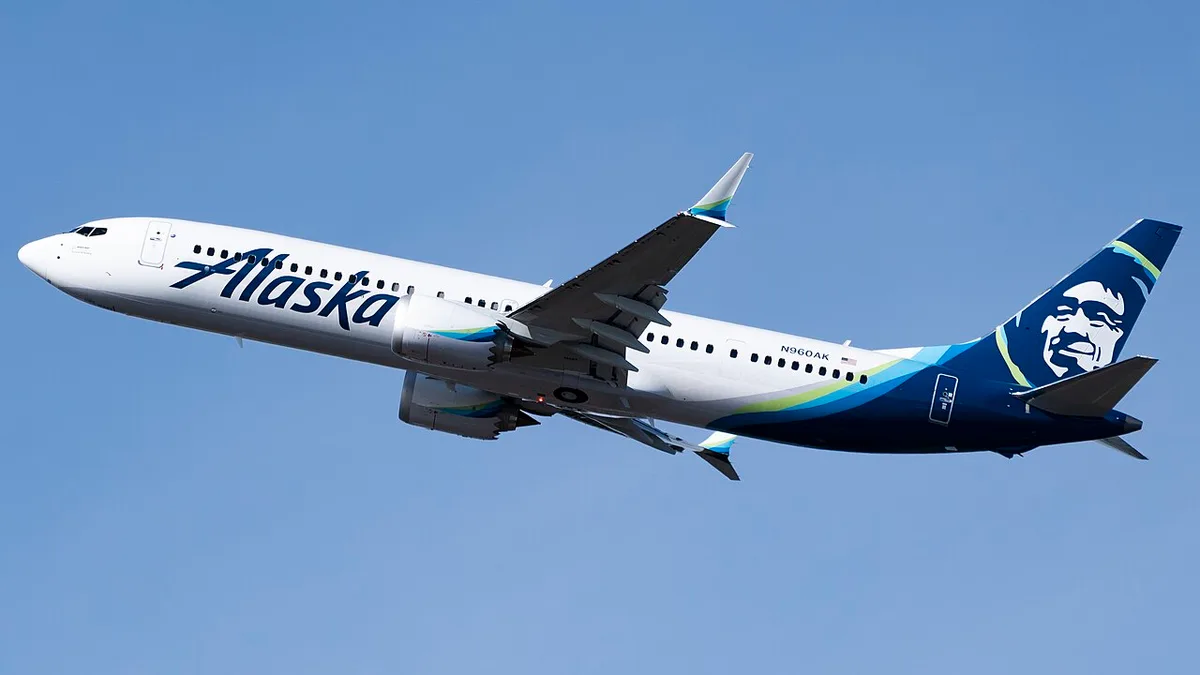
In January 2024 a door plug detached mid-flight from a 737 MAX on Alaska Airlines Flight 1282 after takeoff from Portland, causing a rapid decompression. The Federal Aviation Administration capped 737 MAX production at 38 planes a month. The agency temporarily grounded the affected MAX 9 aircraft. The production rate has increased in intervals since then. The 737 MAX series had already met earlier technical obstacles. Issues with the deicing system of the plane’s engines delayed certification of both the MAX 10 and the MAX 7. Moving past the hard stop of 38 meant proving the system could hold what it was allowed to build.

In August 2026 the Federal Aviation Administration certified the 737 MAX 7, the smallest of the four main variants that stretch, by fuselage length and seats, from the MAX 7 through the MAX 8 and MAX 9 to the MAX 10. Ortberg said certification of the MAX 10 would arrive “very soon.” Boeing is building two of those largest jets on the Everett line now, aircraft destined for line-certification work. The MAX 10 remains several years behind schedule. It represents about 30 percent of all 737 orders.
By June 2026 the company had delivered 2,360 MAX aircraft and still held orders for 4,846 more. The MAX 8 is the most widely ordered of the family, yet the uncertified largest model carries nearly a third of the backlog that must eventually leave the factory. Southwest Airlines will be the first carrier to fly the MAX 7. Tom Doxey, the airline’s chief financial officer, said the first deliveries could begin around the end of 2026, with entry into service early in 2027. Boeing has already built 27 MAX 7s for Southwest and is preparing them for hand-over.
Boeing carries nearly $26 billion in net debt. The company still expects to raise 737 MAX output in the coming year even as the work of locking the present rate into place runs longer than first planned.

A matching delay marks the 787 Dreamliner, the company’s twin-aisle jet built for longer routes. Boeing is producing eight of those airplanes a month. Engine supply shortfalls have pushed back the planned climb to ten. Slow certification of premium seats has cut deliveries further, so finished jets reach customers on an uneven calendar while the factory rate itself holds at eight.
“So, I think you’re going to still see us, even though we may have a pretty good roll out rate of eight a month, you’re going to see us be a little bit lumpy here month to month on 787 delivery,” Ortberg said.
Investors answered the same afternoon. Shares fell as much as 6 percent during the session. They closed down about 4 to 4.5 percent. On the Everett line the two MAX 10 aircraft set for certification work continue to take shape.