





America’s Emergency Oil Stockpile Is Running Low As Winter Nears
America’s emergency oil stockpile has fallen to 284.6 million barrels — and the Trump administration is counting on oil companies to repay what they borrowed.
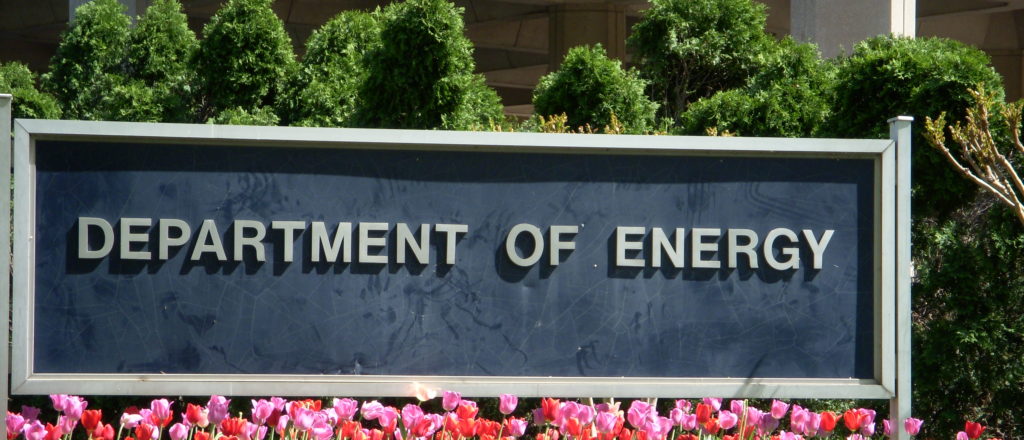

America’s emergency oil stockpile has fallen to 284.6 million barrels — and the Trump administration is counting on oil companies to repay what they borrowed.
The Strategic Petroleum Reserve lost about 405,000 barrels in the week ending Sept. 18 and held about 121 million barrels, or 30%, less than a year earlier, according to preliminary Energy Information Administration (EIA) data.
The reserve fell below 300 million barrels in August for the first time in more than four decades, CNBC reported. An Energy Department spokesperson told the outlet that the reserve needs about 70 million barrels to operate safely.
Most of the 172 million barrels President Donald Trump authorized in March went out as exchanges, loans that oil companies must repay with additional “premium barrels,” the Department of Energy (DOE) said in April.
The department said in a March 11 statement that it had arranged to return about 200 million barrels to the reserve “within the next year” and “at no cost to the taxpayer.”
The reserve held about 415 million barrels in mid-March, when the department began the exchanges, according to a March 15 DOE announcement.
The DOE did not immediately respond to the Daily Caller News Foundation’s questions about how many of the borrowed barrels have been returned.
“It’s time to stop drawing down the Strategic Petroleum Reserve and begin a measured refill as previous loans are returned and prices ease,” Jason Hayes, a senior research fellow in the Heritage Foundation’s Center for Energy, Climate and Environment, told the DCNF.
A reserve near 285 million barrels is “a very thin emergency cushion, not a working strategic stockpile,” Hayes said.
He said the reserve exists “for wars, embargoes, and real supply shocks” and should not be used “as an ATM for price management,” because “using it that way leaves taxpayers buying the oil back later at a premium.”
“As we head into winter, the stress on the system will become even more pronounced,” Hayes added.
Hayes pointed to limits on Russian exports, production and transportation problems in the Middle East and U.S. refineries running near full capacity, warning that “even more serious disruptions are increasingly likely.”
“Diesel prices are high globally because global refining for diesel is highly constrained. The U.S. produces far more diesel than we can use. We export the rest,” J.D. Foster, an economist who was previously a senior fellow in the economics of fiscal policy at the Heritage Foundation, told the DCNF.
Because the reserve holds crude oil, releases cannot directly add to supplies of diesel, a refined fuel, Foster said.
“The SPR arguably made sense at conception, and if we’re going to have an SPR, then it should be used, but now that the United States is energy independent, the justification for the SPR has largely evaporated,” he said.
Foster added that he had not decided whether the reserve should be refilled or eliminated.
High diesel and heating oil prices are “primarily caused by problems with refining capacity,” Steve Hanke, a professor of applied economics at Johns Hopkins University, told the DCNF.
Because refining capacity has been knocked out, “the supply of refined products cannot meet demand at lower prices,” Hanke said, adding that “prices are forced to rise in order to destroy demand.”
“None of this has much to do with the price of crude oil or releases from the SPR,” he added.
“The government’s record of managing prices is a catastrophe in which it buys high and sells low,” Hanke said.
“Like all socialistic operations, government price controls and price-management systems fail to deliver what is promised,” he continued.
“Most people, including so-called experts, underestimate just how much the price of diesel affects everything we do and everything we buy,” E.J. Antoni, chief economist at the Heritage Foundation’s Institute for Economic Policy Studies, told the DCNF.
“When you go to the grocery store or the hardware store, anything you grab off a shelf got there on a truck fueled by diesel,” he said.
“Since the bottleneck is increasing in refining and not just crude, additional SPR releases might not even impact heating oil prices,” Antoni noted.
Distillate inventories, which include diesel and heating oil, stood at 107.4 million barrels in the week ending Sept. 18, 12% below the five-year average, according to the EIA.
Diesel averaged $6.52 a gallon Wednesday, according to the American Automobile Association (AAA).
“There is also a Northeast Heating Oil reserve that can be tapped,” Mark Wolfe, executive director of the National Energy Assistance Directors Association, told the DCNF.
The Northeast Home Heating Oil Reserve holds about one million barrels, or 42 million gallons, of heating oil, roughly five days of regional supply, according to Wolfe.
“It’s relatively small and designed to address severe supply disruptions,” he said.
Wolfe noted that a sharp rise in prices does not automatically trigger a release and that one provision allows it when the heating oil price spread over crude runs more than 60% above its five-year average for seven straight days and keeps widening.
Unlike the Strategic Petroleum Reserve’s crude, the Northeast reserve holds refined fuel that “can be delivered directly to heating oil markets,” Wolfe said.
“It’s possible that the current situation meets the requirement to release the oil from the reserve,” he added, saying the key question is whether rising heating oil prices reflect “a market dislocation or supply shortage that meets the statutory standard for releasing the reserve.”
Congress has also directed the DOE to sell about 170 million barrels from the reserve to raise revenue, with about 90 million more barrels planned, according to a June Government Accountability Office (GAO) blog post.
Addressing the reserve’s backlog of repairs “would cost hundreds of millions of dollars, but if left undone could undermine the reserve’s ability to safely and reliably release and receive oil,” the watchdog wrote.
Oil can be pumped from the reserve at a maximum rate of 4.4 million barrels a day for up to 90 days, after which the rate declines as storage caverns empty, according to the DOE’s website.
The reserve’s authorized storage capacity is 714 million barrels, according to the DOE’s SPR Quick Facts page.
“Policymakers should restore the reserve and increase domestic production by streamlining permitting, building more pipelines, and growing refining capacity,” Hayes, the Heritage fellow, said.
Trump said in March that after tapping the reserve, “we’ll fill it up,” CNBC reported.
All content created by the Daily Caller News Foundation, an independent and nonpartisan newswire service, is available without charge to any legitimate news publisher that can provide a large audience. All republished articles must include our logo, our reporter’s byline and their DCNF affiliation. For any questions about our guidelines or partnering with us, please contact licensing@dailycallernewsfoundation.org.