



AI power Boom
Blake Scholl scrolled post after post on X and watched the same bottleneck repeat. GPU racks at AI data centers sat idle, held up not by chips but by missing electricity. He texted Sam Altman. Altman confirmed the constraint was power.
Scholl pinged Boom’s engineers next. They already held the outline of a turbine built from the Symphony engine core—the high-temperature heart the Denver company was designing for its supersonic airliner. A few conversations clarified the rest. The industry did not need another run of the old aeroderivative machines, already backlogged for years and drawn from subsonic jets that lost output in the heat. It needed a core built to run hard without pause, and Symphony was already on the board for exactly that kind of continuous thermal load.
America, the messages made plain, could not wait a decade for transmission lines and interconnection queues to catch up. Behind-the-meter plants were already the hyperscalers’ workaround. About three months after the first texts, manufacturing of the new turbine had begun. A signed path for 1.21 gigawatts was in motion.
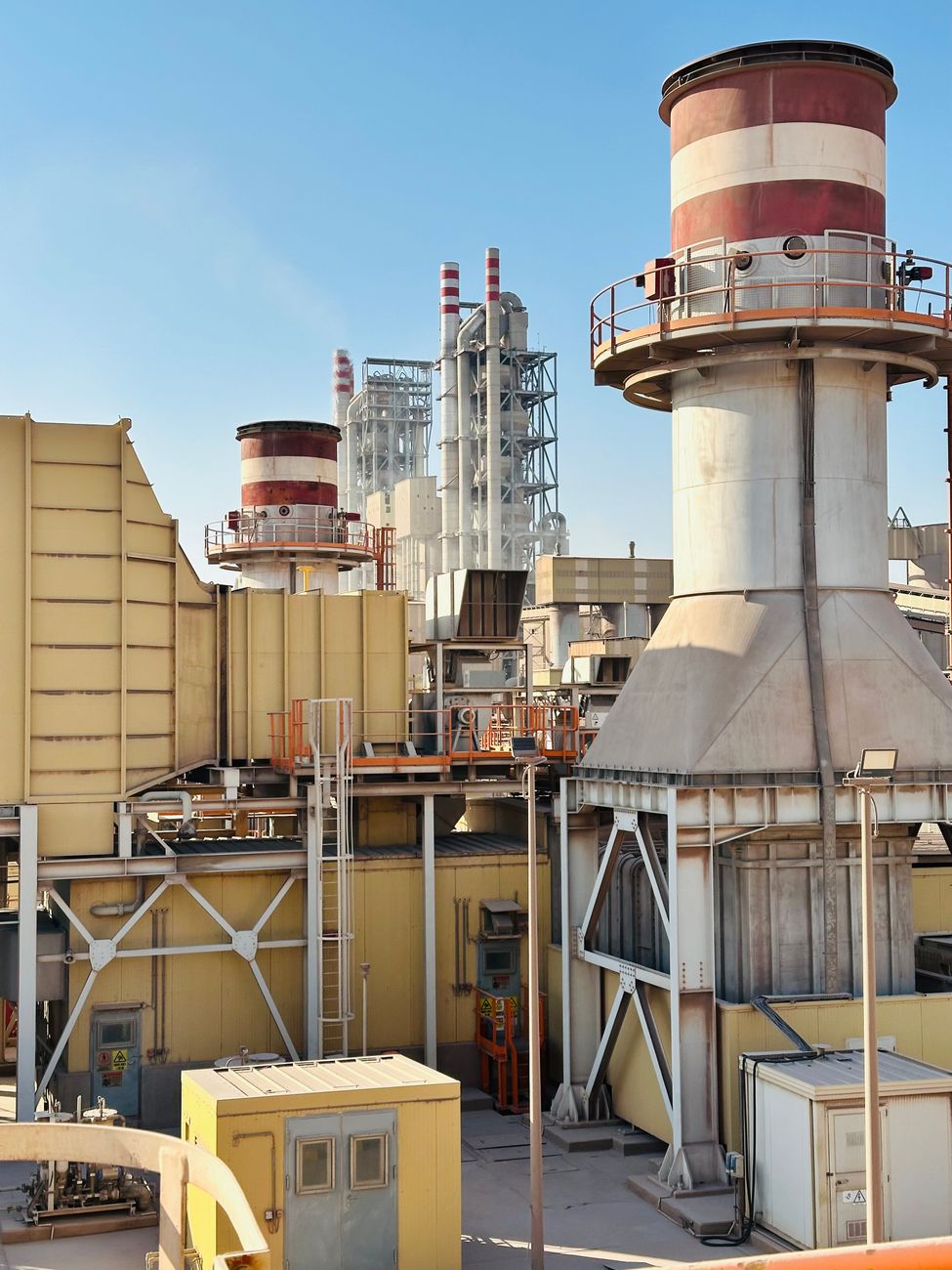
On December 9, 2025, Boom Supersonic announced Superpower from Denver: a 42-megawatt natural gas turbine in a shipping-container-scale package. It held full rated output in ambient temperatures above 110°F, needed no water, and ran on clean natural gas with diesel backup. The backlog already stood at more than $1.25 billion. Crusoe ordered 29 units as launch customer.
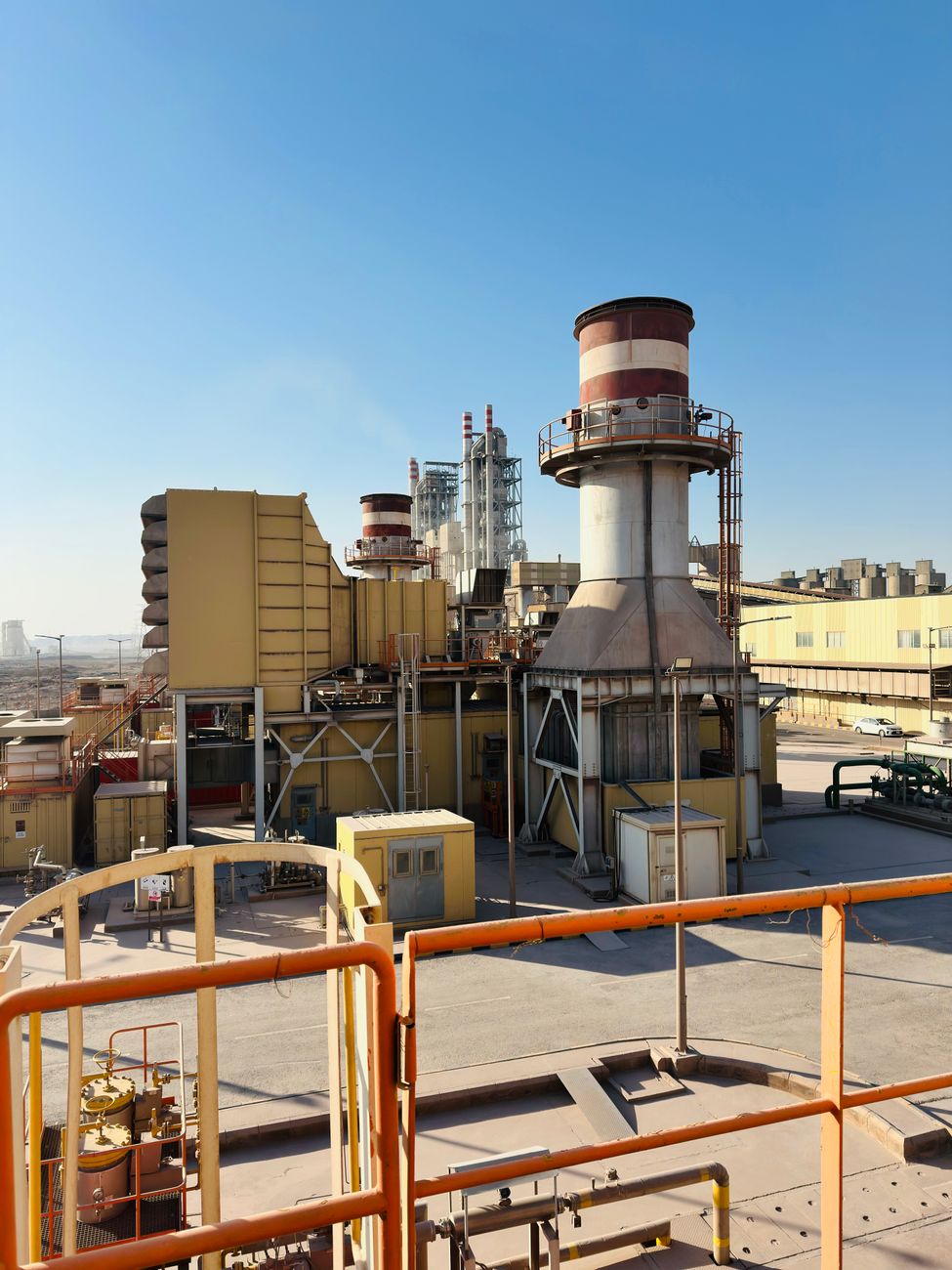
“Supersonic technology is an accelerant—of course for faster flight, but now for artificial intelligence as well,” said Blake Scholl, founder and CEO of Boom Supersonic. The same core technology drove both the turbine and the Symphony jet engine. Superpower would deliver megawatts to AI data centers while feeding reliability data back into the engine still bound for the Overture airliner. Chase Lochmiller, co-founder and CEO of Crusoe, said Boom’s innovative approach to power turbine technology built on the company’s impressive breakthroughs in supersonic flight, and that Crusoe was continuously searching for new approaches to increase real-world performance and accelerate time-to-power across its portfolio of energy assets and operations.
A $300 million round closed the same day, led by Darsana Capital Partners with participation from Altimeter Capital, ARK Invest, Bessemer Venture Partners, Robinhood Ventures and Y Combinator. “Darsana looks forward to partnering with Boom to help develop state-of-the-art energy generation to power America’s AI revolution, all at supersonic speeds,” said Steve Friedman, Partner at Darsana Capital. The path that funded the turbines was the same one that would have to carry the engine itself.
“Outsourcing engine development to a large, established company was one of my biggest strategic errors,” Scholl has said. After the partnership with Rolls-Royce ended, Boom pulled the entire powerplant inside its own walls. The company began cutting turbine blades and vanes from raw materials rather than waiting on a congested aerospace supply chain, treating the factory itself as part of the engine.
The Symphony core was never meant for the cold, short-burst world of ordinary jets. It was designed to run continuously at Mach 1.7 and 60,000 feet, where the effective temperature reaches about 160°F. That sustained thermal load is what Superpower inherits. The ground turbine shares roughly 80 percent of its parts with the flight engine: the fan comes off, extra compressor stages go on, and a free power turbine driving a generator takes the place of thrust. The same high-pressure heart does both jobs.
Ignition of the Sprint Core—the twelve-foot high-pressure spool that holds the compressor, combustor, and turbine—has already been completed. Full core prototype tests are scheduled for 2026 at Boom’s Colorado site, the former Reaction Engines facility the company acquired for the purpose. Ninety-five percent of the parts for the Symphony core prototype are already in manufacturing. Founded in Denver in 2014, Boom had already flown its XB-1 demonstrator through the sound barrier on January 28, 2025, reaching Mach 1.122, then finished its test campaign at Mach 1.18. The Overture order book stands at 130 aircraft from United Airlines, American Airlines, and Japan Airlines. The next step is the Superfactory: raw materials in one side, finished gigawatts out the other.

On February 24, 2026, Baker Hughes announced it would supply Boom Supersonic with twenty-five BRUSH Power Generation 2-pole DAX 7 air-cooled generators, plus automatic voltage regulators and cubicles. The order sat on top of six units already contracted the year before. Boom now held firm orders for thirty-one generators totaling 1.3 gigawatts. Deliveries would stretch from mid-2026 through 2028, each machine paired to a Superpower turbine for Crusoe.
The DAX units were air-cooled two-pole machines already running in more than 3,500 installations worldwide. Baker Hughes Chairman and CEO Lorenzo Simonelli framed the deal against the larger load. “This collaboration illustrates how Baker Hughes’ power systems capabilities are addressing the energy needs of the data center industry, one of the key drivers of growing global power demand,” he said.
“We are bringing a new category of scalable, onsite power to market so that the growth of artificial intelligence is no longer constrained by the grid,” said Boom CEO Blake Scholl. Turbine output was aimed above four gigawatts a year by 2030, built in the United States. The generators closed the electrical side of the package; the open question was how long the wider power system could absorb what came next.
The International Energy Agency charts data-centre electricity rising from 485 terawatt-hours in 2025 to around 950 by 2030. Separate accounting puts 2024 use at 415 TWh, about 1.5 percent of global electricity, and projects nearly 945 TWh by 2030 at growth near 15 percent a year. AI-focused facilities are expected to triple their consumption. Interconnection to the public grid still takes years. That mismatch is why operators have turned to power sitting behind the meter—generators on their own sites that never wait for a utility queue.
On September 22, 2026, VT Markets mapped the cost of that hunger across the physical complex. European natural gas had risen 204 percent from its lows that year. Heating oil climbed 149 percent and diesel 136. Gasoline more than doubled. Jet fuel gained 98 percent; WTI and Brent advanced 85 and 82. Soft markets moved with them. Cocoa roughly doubled. Rice rose 66 percent and wheat 45. Cotton gained 41 percent, sugar 35, corn 32. Arabica coffee was up 71 percent on the year. European jet-fuel inventories stood at seven-year lows. Gas storage sat near 69 percent full against an 85 percent five-year seasonal average. American pump prices had moved above six dollars a gallon.
The strain had a parallel form in China. Li Yuan reported economists warning that a heavy focus on artificial intelligence was arriving while the broader economy was already in its worst shape in decades. Huang Yiping of Peking University said widespread AI deployment could deepen the country’s imbalance of strong supply and weak demand, and that the contradiction was unlikely to vanish soon. He pointed toward market-oriented reforms, a higher share of income for residents, and increased central borrowing to repair local and corporate balance sheets. Michael Pettis and Kyle Chan described the same pattern: spectacular technology set against relatively few jobs and rising debt. Bianna Golodryga listed the markers on the ground—youth unemployment at 18.9 percent, domestic car sales down 20 percent in the first half of the year, housing sales off another 14 percent, a deflationary spiral already under way.
Stevens, a market expert quoted by Reuters on September 21, 2026, stated the worry in direct language. “There is some concern from us, and I think broadly in the market, that we won’t get the kind of resolution that leads to more lower energy prices,” Stevens said. That outcome would keep inflation elevated and fail to put a lid on Fed policy and rate hikes going forward. AI capital spending, he noted, was capital-market sensitive. “the risk from elevated inflation and bond yields and a hawkish Fed is that side of the market, which has been relatively impervious to shocks of a variety of nature, whether they’re oil shocks or rate shocks... that begins to impact AI CapEx in a material way,” Stevens added.
The next day Stockwirex trained the same pressure on Boom’s more than $1.25 billion data-centre power deal. The company had commercialized an uncertified engine core on the ground before Overture had carried a single commercial passenger. Its $1.5 billion post-money valuation rested on a dual-revenue thesis that actual deployment had not yet stress-tested. A timeline slip on Superpower would cut the funding runway for Overture certification at the same stroke. Legacy producers such as GE had fielded ground units only after millions of certified flight hours; Boom was running the sequence in reverse, a path with no direct historical precedent.
U.S. diesel inventories sat at the lowest September level since 1982. The charter rate for a VLCC from the Arabian Gulf to Asia had exceeded $1 million a day, versus about $100,000 earlier in the year.